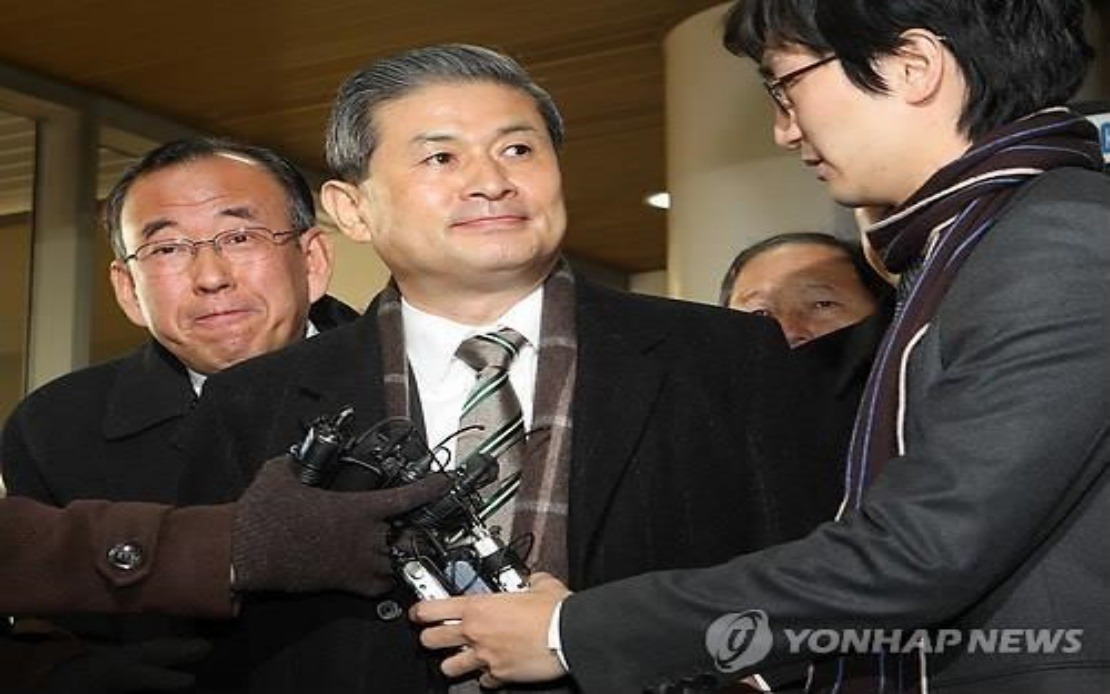
South Korea has taken the final step in stripping disgraced stem cell researcher Hwang Woo-suk of the nation's most prestigious science honour, with the interior ministry completing the revocation process this week following presidential approval. The Top Science and Technology Award, originally presented to Hwang in 2004 along with a monetary prize of 300 million won (approximately US$201,200), has been formally withdrawn more than two decades after it was first conferred. The decision comes after years of legal and administrative proceedings to address what became one of the most significant scientific frauds in modern research history.
The pathway to this final revocation reveals the complexity of stripping prestigious honours from scientists in South Korea's bureaucratic system. The science ministry had formally requested the interior ministry to withdraw the award in March of this year, initiating the process that would eventually succeed where previous attempts had faltered. The interior ministry then sought presidential approval on Tuesday, and the authorization was granted on the same day, according to officials. This streamlined approval represents a correction of previous administrative missteps that had plagued earlier revocation efforts.
Hwang's downfall stemmed from research published under his name claiming to have created the world's first cloned human embryo, work that generated international attention and seemed to position South Korea as a leader in cutting-edge biotechnology. However, investigations conducted in 2005 revealed that the foundational data underpinning his celebrated research paper had been forged, demolishing the scientific credibility that had underpinned his rapid rise to prominence. The fabrication was not a minor methodological error but rather a fundamental misrepresentation of experimental results that undermined the entire basis of his research claims.
Following the exposure of the fraud, institutional and professional consequences swiftly descended upon Hwang. Seoul National University, the institution where he held his academic position, dismissed him in 2006, effectively ending his career within South Korea's formal academic establishment. The reputational damage extended far beyond his university appointment, as the scientific community worldwide reassessed his body of work with heightened scrutiny. Yet the formal revocation of state honours took considerably longer to achieve, reflecting the procedural complexities involved in withdrawing presidential-level awards.
The Top Science and Technology Award itself represents a significant marker of national recognition, presented by the government to scientists and technologists whose work is deemed to have contributed substantially to the nation's scientific and technological advancement. The award carries both symbolic weight as a presidential honour and financial reward, making it among the most coveted recognitions available to researchers in South Korea. That such an award could have been granted based on fraudulent research raises questions about the oversight mechanisms that existed during the application and vetting process in the early 2000s.
Previous attempts to formally strip Hwang of this distinction had encountered unexpected legal obstacles. The government had already attempted to revoke the award in 2020, but this initial revocation was subsequently invalidated by a court that found procedural flaws in how the revocation had been conducted. Rather than allowing the 2020 decision to stand despite these technical defects, the government chose to restart the revocation process from the beginning, ensuring that the final outcome would withstand potential legal challenges. This deliberate approach, though time-consuming, reflects a commitment to administrative propriety even when addressing scientific misconduct.
For Malaysia and other Southeast Asian nations, the Hwang case offers important lessons about research integrity and institutional oversight. The incident occurred during a period when many Asian countries were investing heavily in biotechnology and stem cell research as part of broader strategies to develop knowledge-based economies. South Korea's experience demonstrates that rapid scientific advancement and international prestige do not guarantee the reliability of underlying research, and that institutional enthusiasm for breakthrough discoveries can sometimes outpace appropriate levels of scepticism and verification. This remains relevant across the region, where several countries continue to develop research capabilities and regulatory frameworks.
The revocation also underscores the long-term reputational consequences of scientific fraud for both individuals and institutions. More than a decade and a half after the initial exposure of misconduct, South Korea's government was still working to fully address the implications of allowing fraudulent research to receive state recognition. This extended timeline suggests that the institutional memory of such cases remains active within government and academic circles, influencing how scientific achievements are now vetted and recognized. The thoroughness with which the revocation has finally been completed reflects a determination to ensure that the honour of the award is not compromised by association with fraudulent work.
The completion of the revocation process represents administrative closure on a chapter that significantly damaged South Korea's international standing in the scientific community during the early 2000s. While individual researchers bear primary responsibility for research integrity, institutions and government bodies also share accountability for the frameworks within which scientific work is evaluated and rewarded. The extended effort to properly revoke Hwang's award suggests a maturation of institutional thinking about these responsibilities. For other nations in the region developing research sectors and considering how to recognize scientific achievement, the episode offers cautionary insights about the importance of robust verification mechanisms and the willingness to acknowledge and correct errors, even at considerable institutional and temporal cost.

