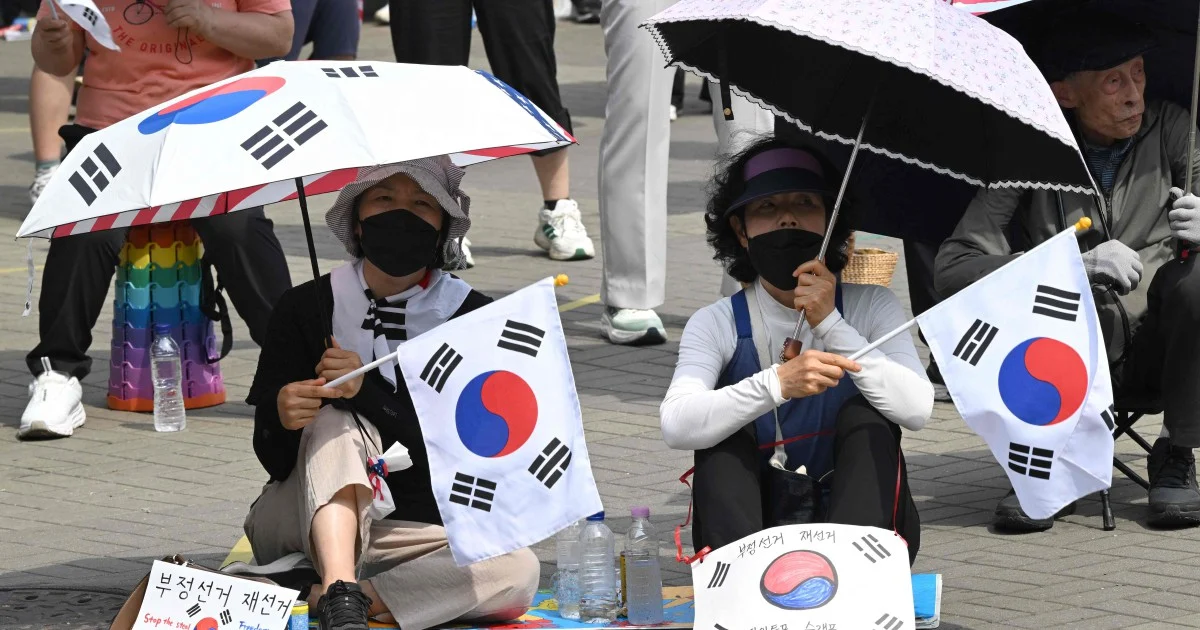
South Korea's national assembly has formally commenced a parliamentary inquiry into the National Election Commission, citing organisational failures that resulted in severe ballot-paper shortages during the country's June 3 local elections. The investigation, approved during a parliamentary plenary session on Thursday, will span 45 days and examine the systemic breakdowns that caused voting disruptions across multiple polling stations.
The ballot shortage incident represents a significant administrative failure in one of Asia's established democracies, where electoral integrity and institutional competence are typically regarded as institutional strengths. When polling stations ran out of ballots on election day, voters faced delays and uncertainty, undermining public confidence in the electoral machinery at a moment when participation rates and democratic engagement are already a concern for policymakers. The incident gained rapid traction on South Korean social media and news outlets, becoming emblematic of broader questions about government efficiency.
Election commissions worldwide face mounting pressures during voting cycles, particularly when handling concurrent municipal, regional, and administrative elections that require unprecedented volumes of ballot papers. In South Korea's case, the June 3 elections encompassed local government positions across provinces, municipalities, and district-level administration, creating complex logistical demands. The commission's apparent underestimation of ballot requirements or failure to implement adequate contingency planning exposed vulnerabilities in electoral preparation protocols that had previously escaped public scrutiny.
The parliamentary investigation will likely examine multiple dimensions of the commission's operational structure, including personnel management, supply-chain coordination, and the decision-making processes that preceded election day. Investigators will probably review whether the commission had commissioned adequate ballot printing, whether distribution protocols were sufficiently robust, and whether communication channels between provincial and national election authorities functioned effectively. Such examinations typically result in recommendations for procedural reforms and may influence future budget allocations for electoral administration.
For Southeast Asian observers, South Korea's experience offers instructive lessons about electoral resilience. While Malaysia, Singapore, Indonesia, and Thailand have conducted elections of varying scales, the ballot shortage incident demonstrates how even technically advanced and institutionally mature democracies can experience unexpected administrative failures. The visibility of South Korea's parliamentary response, conversely, illustrates how transparent scrutiny of election management can serve as a mechanism for institutional accountability and public reassurance.
The timing of the parliamentary probe reflects domestic political dynamics within South Korea's legislature. Opposition parties likely seized on the incident to criticise the sitting government's administrative competence, while ruling coalition members acknowledged the need for investigation to preserve electoral credibility. Such cross-party agreement on launching a formal inquiry signals recognition that electoral administration transcends partisan advantage and requires institutional legitimacy.
The National Election Commission operates under South Korea's constitutional framework as an independent body responsible for managing all national and local elections. Its independence from executive and legislative branches is intended to insulate electoral processes from political manipulation. However, independence does not shield commissions from operational inefficiency or inadequate resource planning. The ballot shortage revealed gaps between formal institutional autonomy and practical organisational capacity, highlighting the distinction between structural independence and functional effectiveness.
Ballot availability during voting remains a fundamental prerequisite for democratic participation. When voters encounter supply exhaustion, particularly in later voting hours, turnout can decline among working-age citizens with limited time to vote. Even where alternative procedures allow citizens to cast ballots outside normal hours, the disruption itself damages public perception of electoral competence. South Korea's relatively high education levels and technological sophistication made the ballot shortage particularly notable, as voters and media questioned how a modern state could mismanage such a basic requirement.
The 45-day timeline for investigation suggests parliament intends to complete its work before the next electoral cycle generates fresh logistical demands. Given South Korea's regular electoral calendar, the inquiry must conclude and recommendations must be implemented relatively quickly to enable the commission to incorporate reforms into future planning. This compressed timeline may limit investigation depth, potentially frustrating opposition parties seeking comprehensive examination of institutional failures.
Electoral administration failures, even in advanced democracies, carry cumulative effects on democratic participation and institutional legitimacy. While a single ballot shortage incident does not undermine South Korea's overall democratic credentials, repeated or expanded administrative failures would gradually erode public confidence in democratic institutions. The parliamentary response therefore serves both immediate accountability purposes and longer-term institutional preservation, signalling that electoral administration deficiencies demand transparent investigation and correction.
For regional election observers, South Korea's parliamentary inquiry methodology offers a model for how democracies can address administrative failures transparently. Rather than allowing election commissions to conduct purely internal reviews, involving parliament creates public oversight and ensures findings reach broader audiences. This approach contrasts with less transparent administrative review processes found elsewhere in the region, where electoral failures sometimes escape systematic public examination.
The investigation will likely produce detailed recommendations addressing specific gaps in the National Election Commission's operational capacity, supply-chain management, and contingency planning. Whether implementing these recommendations requires legislative change, budget increases, or primarily administrative restructuring will become apparent as the inquiry concludes. Regardless of specific outcomes, the parliamentary investigation demonstrates South Korea's institutional commitment to maintaining electoral credibility through transparent examination of administrative failures.