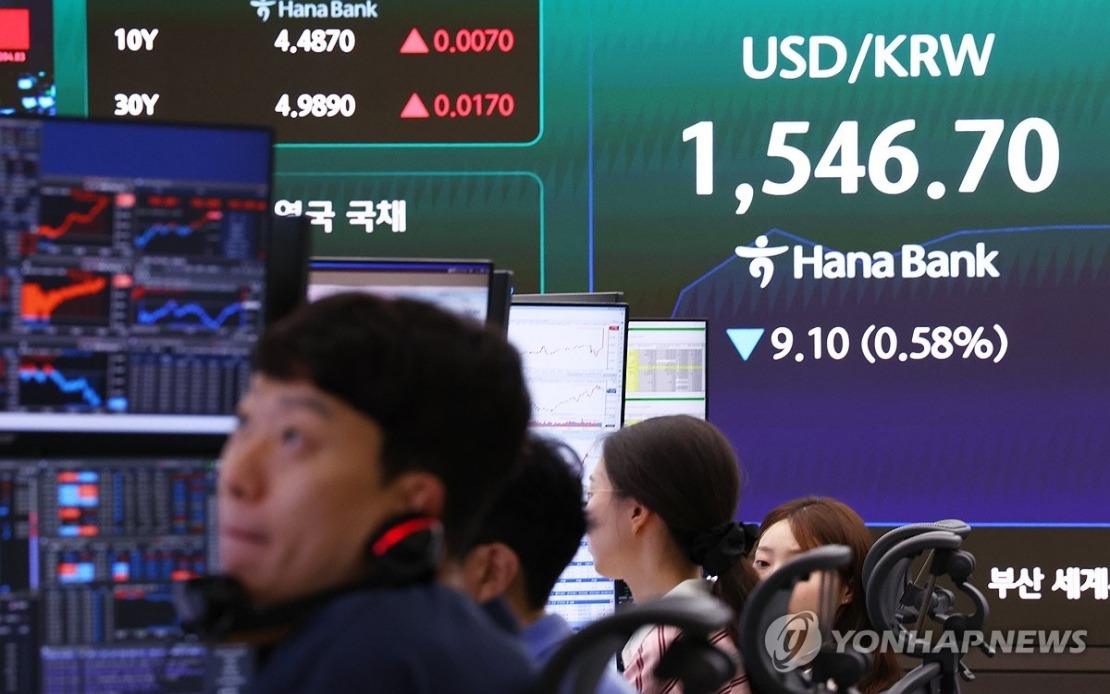
South Korea has taken another significant step to strengthen its position as a regional financial hub by introducing 24-hour foreign exchange trading, marking an escalation in the government's strategy to attract and retain foreign capital. The new system officially commenced on Monday, with Finance Minister Koo Yun-cheol visiting Hana Bank's dealing room in central Seoul to mark the occasion, underscoring the administration's commitment to liberalising its currency markets in line with global financial practices.
The around-the-clock trading framework operates without interruption from 6 am Monday through 6 am Saturday, with trading suspended only during weekends and the first day of each year. This represents a substantial expansion from the previous arrangement introduced in July 2024, which had extended trading windows from 9 am to 2 am the following day—still falling short of the continuous access now available. The progression reflects a deliberate, phased approach to market liberalisation that balances ambition with operational stability.
For Malaysian and Southeast Asian investors and traders, this development carries immediate practical implications. The extended hours mean that regional market participants no longer need to adjust their schedules to Seoul's traditional business day, reducing friction costs and making Korean won transactions more seamlessly integrated into Asian trading workflows. This could particularly benefit Malaysian fund managers, exporters, and currency traders who operate across multiple time zones, as overnight won positions can now be actively managed rather than left exposed during traditional closing hours.
Finance Minister Koo framed the launch as a manifestation of South Korea's macroeconomic confidence, citing the nation's robust external position and record-breaking current account surplus. These fundamentals—indicators of export strength and capital inflows—suggest that policymakers believe the economy can sustain deeper financial market integration without destabilising the currency. The minister also highlighted South Korea's recent inclusion in the World Government Bond Index as validation of the market's growing credibility and appeal, a milestone that typically precedes institutional investor participation.
The policy decision also signals recognition among Seoul's economic authorities that global capital allocation patterns have shifted dramatically in the post-pandemic era. Institutional investors and corporate treasurers increasingly operate across multiple markets simultaneously, and trading hour constraints now represent a competitive disadvantage. By removing temporal barriers to Korean won transactions, South Korea positions itself more favourably against regional rivals like Singapore and Hong Kong, which have long offered extended or 24-hour trading in major currencies.
Bank of Korea Deputy Governor Min Soo Kwon's commitment to monitoring the new system's market impact suggests underlying caution about potential volatility or structural risks. Central banks typically employ such oversight during major market infrastructure changes to detect adverse feedback loops—such as excessive algorithmic trading during off-peak hours or currency volatility spikes that could discourage participation rather than encourage it. The central bank's stated intention to coordinate with the government on ongoing policy refinements indicates this is viewed as an evolving initiative rather than a finalised reform.
From a Southeast Asian perspective, this development fits into a broader regional competition for financial market dominance. Malaysia's own Labuan International Financial Exchange and Kuala Lumpur's efforts to expand ringgit trading operate within a context where several regional centres are simultaneously pursuing liberalisation strategies. South Korea's move may prompt Malaysian policymakers to evaluate whether comparable reforms to ringgit trading infrastructure could enhance the currency's appeal to international traders and potentially support development of deeper domestic capital markets.
The expansion also reflects changing corporate behaviour among South Korea's multinational enterprises, many of which operate substantial operations across Southeast Asia. Samsung, Hyundai, and LG's treasury operations benefit from more flexible currency hedging windows, reducing the cost of managing exposure to multiple Asian currencies. This structural advantage—allowing Korean corporates to manage regional cash flows more efficiently—creates competitive benefits that ripple through supply chains and investment decisions across the region.
For Malaysian exporters and importers dealing with South Korean counterparts, enhanced won trading liquidity could translate into tighter bid-ask spreads and faster execution on foreign exchange transactions. Reduced transaction costs in bilateral Korea-Malaysia trade settlements might encourage greater direct trade in won rather than relying on intermediate currencies like the US dollar, potentially deepening economic ties between the two nations.
The sustainability of 24-hour trading depends significantly on participation patterns and whether sufficient liquidity emerges during off-peak hours to make the system genuinely functional rather than merely theoretical. South Korean policymakers will be monitoring whether trading volumes spread evenly throughout the 24-hour window or concentrate during overlap periods with major financial centres, which would indicate whether the reform achieves its intended effect of broadening market access.
Looking ahead, the success of this initiative will likely influence other central banks and governments in Asia to consider similar liberalisation measures. Malaysia, Indonesia, Thailand, and the Philippines may face pressure to evaluate their own trading hour arrangements, particularly if the Korean won trading system attracts significant capital flows and establishes South Korea as a preferred venue for regional currency operations. The competitive dynamics of financial market infrastructure are increasingly important determinants of which centres capture institutional investment and corporate activity.

