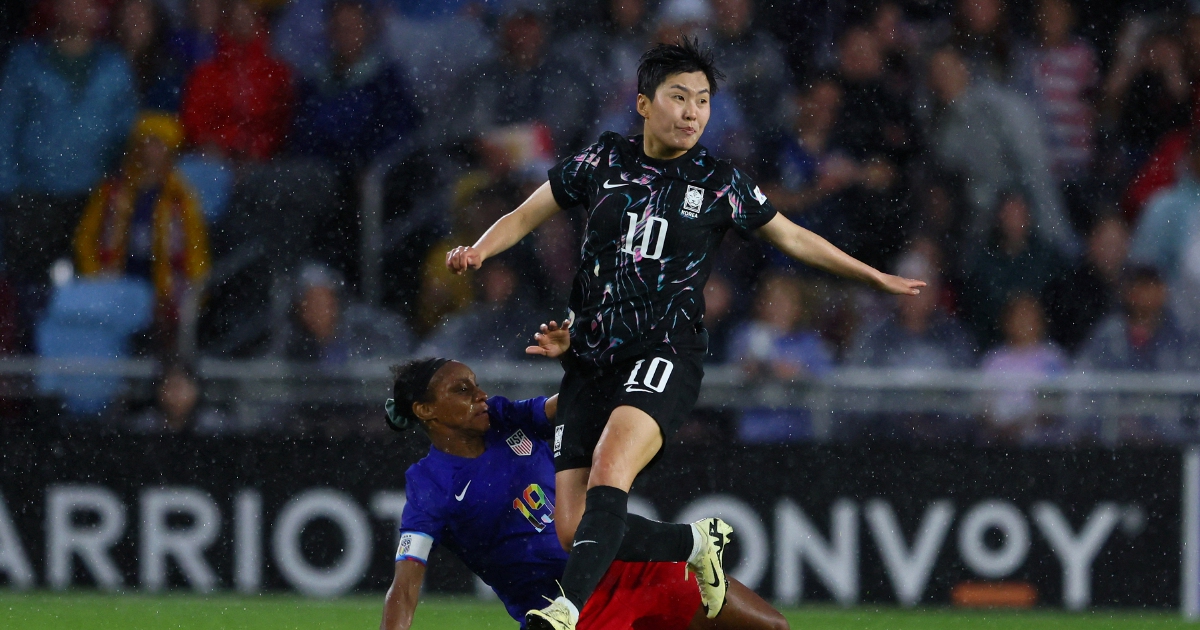
South Korea's women's football federation has launched a formal investigation after allegations emerged that a female referee made derogatory remarks about menstruation directed at Ji So-yun, a prominent midfielder who previously played for Chelsea in the English Premier League. The probe was announced publicly on Monday and marks a significant moment in efforts to address misconduct within the sport's administrative structures across East Asia.
Ji So-yun is among South Korea's most accomplished footballers, having represented the nation's women's team at multiple international tournaments and spent time in Europe's top leagues. The incident occurred during a domestic league match and the allegations suggest the referee's conduct crossed professional boundaries by invoking personal health matters unrelated to match performance or rule interpretation. Such behaviour raises concerns about the professional standards expected of match officials in Korean football and whether existing codes of conduct adequately address gender-based insults and discrimination.
The decision to formally investigate demonstrates the federation's willingness to examine internal grievances, though observers note that many similar incidents in women's sports globally go unaddressed or result in minimal consequences. The investigation's scope and methodology remain unclear, but it signals organisational recognition that referee-player interactions require scrutiny when allegations involve personal or gender-related comments rather than legitimate officiating decisions. This approach aligns with broader efforts across Asian football federations to improve professionalism and safeguard player dignity.
Menstruation-related taunts in sports have become increasingly recognised as a form of gender-based harassment that undermines female athletes' standing within their professional environments. The remarked comment, regardless of context, reduces an athlete's agency to biological function rather than acknowledging her technical abilities or competitive standing. Such incidents can contribute to broader patterns of marginalisation that female players experience in domestic leagues, particularly in countries where women's football remains less resourced and visible than men's competitions.
For Ji So-yun personally, this incident represents an unwelcome intrusion on her playing career at a time when her experience and leadership are valuable assets to the national team. Her history with Chelsea and international football brings wider visibility to Korean women's football, making the federation's response particularly important for demonstrating institutional standards. The investigation outcome will likely influence how other female players feel empowered to report similar misconduct or disrespectful behaviour without fear of dismissal or retaliation.
The federation's investigative process carries implications for South Korean sports culture more broadly. Women's sports in South Korea have gained visibility in recent years, with increased television coverage and sponsorship opportunities, yet systemic gender equality issues persist in administrative roles and decision-making positions. Referees, as officials with substantial authority over matches and player conduct, occupy positions where unbalanced power dynamics can enable inappropriate behaviour that goes unchecked without formal complaints mechanisms.
This incident also reflects international standards conversations within Asian football governance. The Asian Football Confederation and regional bodies have increasingly emphasised diversity, inclusion, and anti-discrimination frameworks in recent policy discussions. South Korea's women's football federation operates within this evolving context, where international scrutiny and peer-group expectations create pressure to demonstrate compliance with modern professional conduct standards. The federation's public acknowledgement of the investigation rather than attempting to suppress the matter suggests responsiveness to contemporary accountability expectations.
The broader football community across Southeast Asia and East Asia will monitor this investigation's progress and outcomes. Malaysian readers and regional observers have interests in understanding how neighbouring countries address similar misconduct, as standards and precedents within Asian football gradually align or diverge based on individual federation responses. Decisions made by South Korea's federation can establish reference points for how other national associations approach comparable complaints involving officials and players.
For women footballers throughout Asia, the investigation sends mixed signals. On one hand, the federation's decision to probe the allegations demonstrates institutional acknowledgement that such behaviour warrants scrutiny rather than acceptance as routine locker-room culture. On the other hand, the investigation's completion timeline and potential remedial measures remain uncertain, and female players may question whether investigations translate into meaningful policy changes or merely serve public relations purposes. Transparency regarding investigative findings will be crucial for establishing credibility and demonstrating that institutional response translates into concrete improvements to safeguards.
The incident underscores persistent challenges within women's football administration and officiating. Despite decades of progress in developing women's leagues and securing international recognition for female footballers, power imbalances within administrative structures remain pronounced. Female referees working in women's football often navigate complex professional environments where gender-based comments may be normalised or tolerated more readily than equivalent remarks in men's competitions. This investigation potentially opens broader conversations within the Korean federation about referee training, conduct expectations, and complaint mechanisms designed specifically to protect players from discriminatory or harassing behaviour.
Moving forward, the federation faces pressure to demonstrate that the investigation yields substantive outcomes rather than disappearing from public discussion. Stakeholders including players, women's rights advocates, and international football observers will scrutinise whether any disciplinary measures are implemented, what retraining or safeguards become mandatory for officials, and whether the federation establishes clearer pathways for players to report similar incidents confidentially and without fear of career consequences. These measures collectively determine whether this investigation represents a genuine inflection point in South Korean women's football culture or merely a response to external pressure that fades once media attention subsides.

