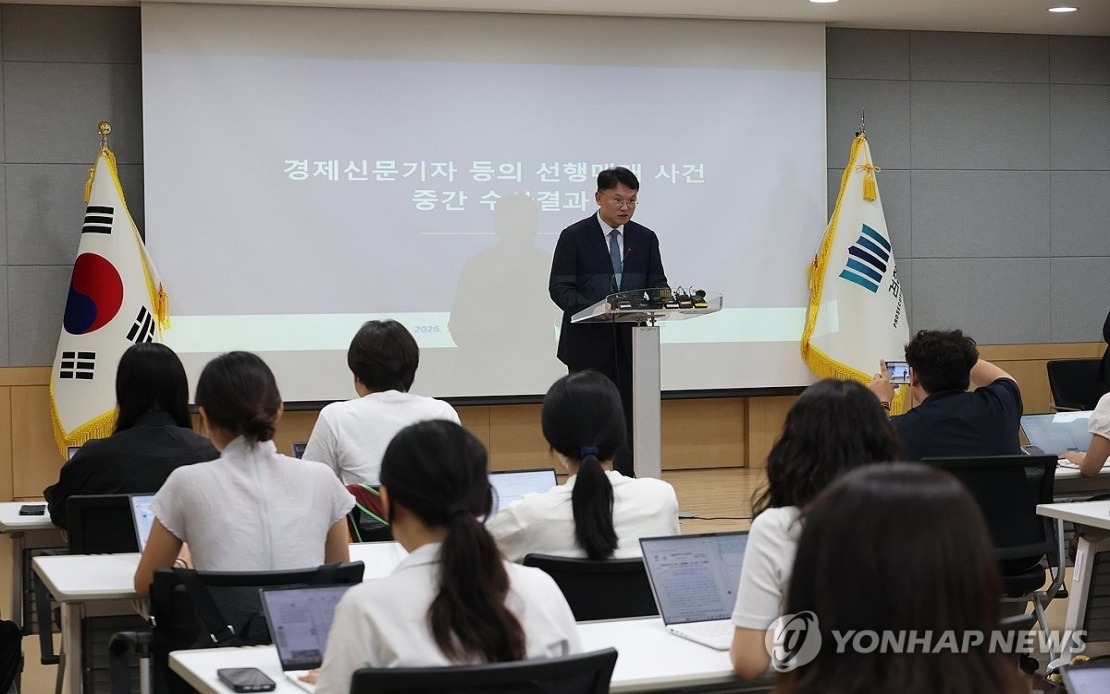
South Korean prosecutors have filed formal charges against eight individuals implicated in a coordinated stock market manipulation scheme, marking a significant enforcement action against fraudulent market practices. The charges centre on allegations that the suspects systematically purchased shares in low-volume or highly volatile companies before artificially inflating prices through strategically timed positive media coverage, subsequently selling their holdings at inflated valuations to capture substantial profits. The case underscores growing concerns about the intersection of financial journalism and market integrity across East Asian markets, including implications for media oversight frameworks across the region.
Among the eight accused are six journalists employed at a major South Korean business daily newspaper, alongside an accountant and a private investor. According to prosecutors, the core group comprising five reporters, the accountant, and the investor orchestrated approximately 1,800 articles between October 2020 and June of the previous year, accumulating illegal gains totalling 8.55 billion won through this coordinated activity. The operation functioned on a structured commission basis, with participating journalists receiving fixed compensation of 300,000 won per article published, creating a systematic incentive structure that encouraged continued participation in the scheme.
The financial rewards distributed among the core group demonstrate the scale of their involvement. Three of the five journalists in the principal scheme netted approximately 150 million won, 160 million won, and 28 million won respectively, illustrating varying degrees of participation and benefit realisation. These sums represent substantial supplementary income beyond their regular journalist salaries, suggesting that financial incentive operated as a primary motivator. The remaining journalist in this group and the accountant shared additional proceeds, while the investor positioned himself as the principal orchestrator and primary beneficiary of the coordinated market activities.
A sixth journalist operated independently within a separate but parallel scheme, generating approximately 740 million won through publication of around 340 articles spanning from October 2022 through July 2024. This individual exploited their journalistic authority and editorial access to produce favourable coverage, abusing their professional position to artificially support targeted share prices. The extended timeframe of this secondary operation, running nearly two years, suggests sophisticated awareness of enforcement risks and an ability to evade detection through deliberate spacing of activities.
The methodology employed by the conspirators reveals a sophisticated understanding of market mechanics and media influence. Rather than engaging in crude price manipulation, the scheme leveraged the credibility and reach of established business journalism to shape investor perception and behaviour. By carefully timing publication of positive articles about companies immediately after acquiring significant share positions, the perpetrators created artificial demand that drove prices upward. The subsequent sale of accumulated shares at these inflated prices realised predetermined profits before market corrections occurred.
This case carries particular significance for Southeast Asian financial regulators and media organisations monitoring market integrity. The involvement of established business journalists raises troubling questions about editorial independence, disclosure protocols, and the absence of conflict-of-interest safeguards within news organisations. Malaysian and regional financial institutions should consider whether similar vulnerabilities exist in their own markets, where journalist compensation structures or supervision mechanisms might create temptation for coordinated market manipulation schemes.
South Korean prosecutors have signalled a firm commitment to combating market distortion, with official statements emphasising zero tolerance for activities undermining stock market integrity. The prosecution office has pledged rigorous pursuit of criminal proceeds, indicating plans to confiscate all identified illicit gains and impose maximum available penalties. This aggressive enforcement stance reflects broader regional trends across Southeast and East Asia toward strengthening financial market regulations and prosecuting white-collar economic crimes.
The prosecution's success in documenting approximately 2,140 articles collectively generated across both schemes demonstrates advanced investigative capabilities and substantial evidentiary development. Identifying individual contributions, calculating precise financial benefits, and establishing causal connections between specific articles and share price movements requires sophisticated forensic accounting and market analysis. Such investigative depth suggests prosecutors possessed either whistleblower information or comprehensive digital records documenting communications and transactions among conspirators.
For Malaysian and other regional news organisations, this case provides cautionary lessons regarding structural vulnerabilities in editorial governance. The scheme succeeded partly because participating journalists operated within ostensibly legitimate institutional frameworks, publishing articles through established news channels rather than creating obvious propaganda outlets. This challenges assumptions that credible news organisations possess inherent safeguards against corrupt practices. Malaysian media outlets should examine whether compensation structures, freelance arrangements, or editorial oversight mechanisms might inadvertently create similar vulnerabilities.
The broader implications extend beyond individual criminal prosecution to questions about institutional accountability. How thoroughly did the business daily's editorial leadership vet article topics and identify potential conflicts of interest? Were there editorial policies requiring disclosure of journalist shareholdings in companies they covered? Such systemic questions deserve scrutiny from Malaysian regulatory authorities and media industry associations considering strengthened professional standards.
Regional stock exchange operators and financial regulators should examine whether adequate mechanisms exist to detect coordinated media-driven manipulation schemes. South Korea's Financial Supervisory Service and stock exchange regulators presumably failed to identify this scheme despite its scale and duration, suggesting that current surveillance systems may inadequately flag suspicious patterns of simultaneous share purchases, favourable media coverage, and subsequent sales among related parties.
The investigation also highlights the vulnerability of the journalism profession to corruption when adequate institutional protections remain absent. Independent business journalism serves critical market transparency functions, and when journalists become co-conspirators in market fraud, they fundamentally undermine their profession's credibility and utility. This case will likely prompt South Korean news organisations and regional media groups to implement stronger conflict-of-interest policies and enhanced oversight of journalist shareholdings and external compensation arrangements.

