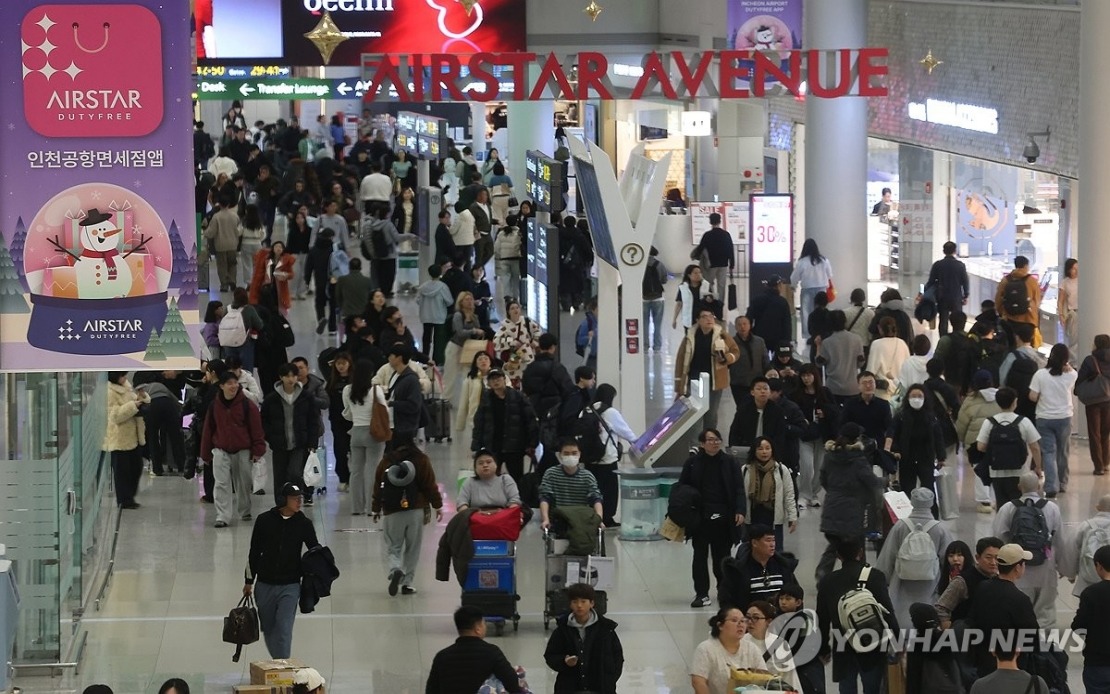
South Korea has crossed the 10 million foreign visitor threshold by mid-June, accelerating its trajectory toward a record-breaking year in international tourism. The Ministry of Culture, Sports and Tourism confirmed that the country exceeded this significant milestone roughly four weeks ahead of last year's schedule, when the figure was registered in mid-July. This represents the earliest point in any calendar year that South Korea has achieved this visitor volume, signalling a robust and accelerating recovery in the post-pandemic tourism landscape.
The momentum behind this surge reflects broader regional and global travel trends favourable to Seoul. May alone recorded 1.95 million arrivals, representing a 19.4 percent increase from the same month in 2023. This sustained growth trajectory indicates that South Korea's tourism sector has moved decisively beyond recovery into expansion mode, with each successive month delivering stronger numbers. The acceleration is particularly noteworthy given that it has been achieved despite persistent headwinds in the international aviation market, including elevated fuel surcharges stemming from geopolitical tensions in the Middle East.
The composition of visitor demographics reveals the geographic diversity driving this tourism resurgence. Chinese tourists dominated in May with 560,000 arrivals, followed by Japanese visitors numbering 360,000 and Americans at 210,000. This breakdown underscores South Korea's appeal across multiple major source markets simultaneously, a healthy distribution that reduces reliance on any single country or region. For Southeast Asian observers, the strong Chinese and Japanese numbers are particularly significant, as these nations represent close regional competitors in the tourism marketplace and their preference for South Korea indicates the country's sustained competitive advantage in experience-based travel and cultural attractions.
Beyond headline visitor numbers, the economic impact metrics paint an equally impressive picture. Foreign visitors' card expenditure in May—encompassing both physical transactions and online purchases—reached 2.12 trillion won (approximately US$1.38 billion), crossing the 2 trillion won threshold for the first time since South Korea began tracking this data in 2018. This milestone suggests that not only are more visitors arriving, but they are spending substantially, indicating a qualitative shift toward higher-value tourism that benefits South Korea's hospitality and retail sectors more meaningfully.
A crucial element of this tourism expansion involves the geographic decentralization of visitor flows away from Seoul and the capital region. Statistics show that arrivals through regional airports climbed steadily from 230,000 in January to 360,000 in May, indicating that secondary cities and provincial destinations are increasingly capturing international tourist interest. This distribution pattern is economically significant because it spreads tourism revenue more equitably across the country rather than concentrating benefits in the capital. For Malaysian officials evaluating tourism policy, this serves as a noteworthy example of how destination marketing and regional infrastructure investment can successfully draw international visitors beyond major metropolitan hubs.
Kang Jung-won, head of the tourism policy office within the Ministry of Culture, Sports and Tourism, attributed the resilience and acceleration of inbound travel to a combination of structural and promotional factors. He noted that despite the aforementioned aviation cost pressures, arrivals through May were up 21 percent year-on-year, underscoring the underlying strength of demand for South Korean experiences. This performance suggests that factors beyond pricing—including cultural products, natural attractions, and service quality—are compelling enough to overcome temporary cost increases, a dynamic that should be of interest to Southeast Asian destinations competing for similar visitor segments.
The ministry's stated intention to deepen partnerships with private-sector stakeholders, particularly K-pop artists and export companies, indicates a strategic pivot toward leveraging soft power and cultural diplomacy as tourism drivers. This approach recognizes that contemporary destination marketing extends far beyond traditional hospitality infrastructure into entertainment, fashion, food culture, and lifestyle branding. The explicit mention of K-pop underscores how entertainment exports can function as powerful upstream drivers of tourism interest, potentially introducing consumers to countries through cultural products before they decide to visit.
South Korea's trajectory toward a record-breaking annual tourism year carries implications for the broader Southeast Asian region. As one of Asia's most developed and technologically sophisticated tourism destinations, South Korea's recovery pattern offers a template for measuring regional tourism health and identifying emerging preferences among international travellers. The demonstrated ability to accelerate visitor arrivals despite global economic uncertainties and regional tensions suggests fundamental strength in demand for East Asian experiences, positioning the region competitively against other global destinations.
The timing of this achievement also carries strategic significance. With the first half of 2024 not yet complete, South Korea has already positioned itself to comfortably exceed 20 million visitors for the full year should current growth rates persist. This would represent not merely recovery to pre-pandemic levels but entry into new historic territory for the country's tourism sector. For regional competitors and observers, the question now becomes whether this South Korean momentum will generate positive spillover effects for neighbouring destinations, or whether it represents a competitive consolidation of visitor preference around South Korea's particular attractions and brand identity in the eyes of international tourists.