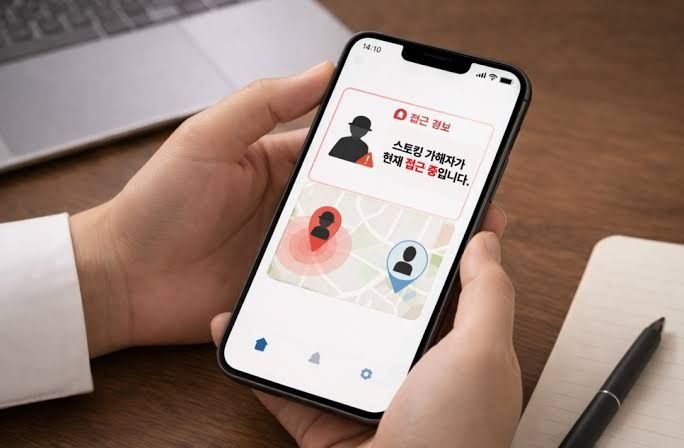
South Korea has taken a significant step in victim protection by launching a mobile application that grants stalking victims immediate access to the location and movement data of suspects fitted with electronic ankle monitors. Rolled out on June 24 through the Ministry of Justice, the system represents a marked expansion of the country's approach to safeguarding individuals at risk from serial harassing behaviour, combining digital surveillance technology with victim empowerment.
The necessity for such measures became increasingly apparent after a troubling pattern emerged in recent years. Between 2021 and August 2025, at least 23 individuals who had been provided with emergency alert devices—smartwatch-like gadgets distributed to vulnerable victims for years—were either killed or subjected to attempted murder. These tragic cases exposed fundamental gaps in the existing safety infrastructure, prompting government agencies to reconsider their protective strategies. Representative Lee Gwang-hee of the ruling Democratic Party of Korea highlighted this alarming statistic, effectively challenging the assumption that older warning systems alone could adequately shield victims from determined pursuers.
The implementation of electronic monitoring in high-risk stalking cases began only recently, with courts ordering ankle monitors for selected offenders starting in 2024. Prior to this, the state's primary tool had been the emergency alert devices, passive notification systems that could only alert authorities after a potential danger was detected. The new application transforms this reactive model into something more proactive, granting victims themselves the ability to continuously track their stalker's whereabouts rather than depending entirely on reactive law enforcement responses. This shift reflects a broader recognition that victims themselves are often best positioned to assess immediate threats and take evasive action.
The operational framework places the application under direct control of the Ministry of Justice, ensuring that data management adheres to government standards and remains subject to official oversight. When a suspected stalker wearing an ankle monitor moves, victims using the app can observe their location in real time and monitor the direction of their travel. This capability could prove invaluable during vulnerable moments—commuting to work, leaving a residence, or moving through predictable daily routines where victims might otherwise feel exposed. The granularity of information available through continuous tracking represents a dramatic departure from the binary emergency alert model.
Yet introducing such a system inevitably raises complex questions about privacy and surveillance, particularly regarding the civil liberties of individuals who have been charged with or convicted of stalking but retain constitutional protections. Seoul's authorities grappled with these tensions directly, leading the Ministry of Justice to undertake a regulatory revision process in December 2025 specifically aimed at addressing privacy safeguards surrounding the collection and sharing of location data. The revised framework presumably establishes clearer boundaries around data access, retention periods, and the scope of information visible to victims—attempting to balance victim safety against the rights of monitored individuals.
The South Korean approach carries implications extending beyond its borders. Across Southeast Asia and the broader region, stalking and harassment remain persistent public safety challenges, yet most countries lack comprehensive legislative frameworks or technological solutions comparable to what Seoul is now deploying. Malaysia, Indonesia, and other regional nations have seen rising awareness of stalking as a distinct criminal category, yet enforcement mechanisms remain fragmented and victim protections inconsistent. South Korea's willingness to invest in technological solutions and integrate victim feedback into system design offers a potential model for regional governments considering comparable investments.
Looking ahead, the government has signalled its intention to proceed further along this trajectory of victim empowerment and legal accessibility. Beginning in April 2027, the system will be supplemented by a new mechanism allowing stalking victims to petition courts directly for restraining orders, bypassing the traditional requirement that law enforcement agencies file such requests on their behalf. This structural change addresses another identified weakness—the dependency on police responsiveness and interpretation of victim claims. By enabling victims to present their cases directly to judicial authorities, Seoul seeks to reduce institutional friction and accelerate protective orders.
The cumulative effect of these measures—real-time tracking, regulatory safeguards, and direct court access—suggests a fundamental reconceptualisation of how the state approaches stalking as a crime category. Rather than treating stalking incidents as discrete events triggering isolated interventions, South Korea appears to be constructing an integrated ecosystem wherein victims retain continuous situational awareness, can petition for legal protections without intermediaries, and benefit from surveillance technologies deployed against their pursuers. This systematic approach recognises that stalking is fundamentally a crime of persistent behaviour, requiring equally persistent protective infrastructure.
For Malaysian policymakers and the broader Southeast Asian community, South Korea's initiatives warrant close examination. The persistence of high-profile stalking cases and femicide linked to harassment across the region underscores that technological and legal innovation in victim protection remains an urgent priority. As these South Korean systems mature and generate operational data, regional governments could draw on their experience to design culturally adapted versions suited to local legal frameworks and technological capabilities, potentially elevating victim safety standards region-wide.

