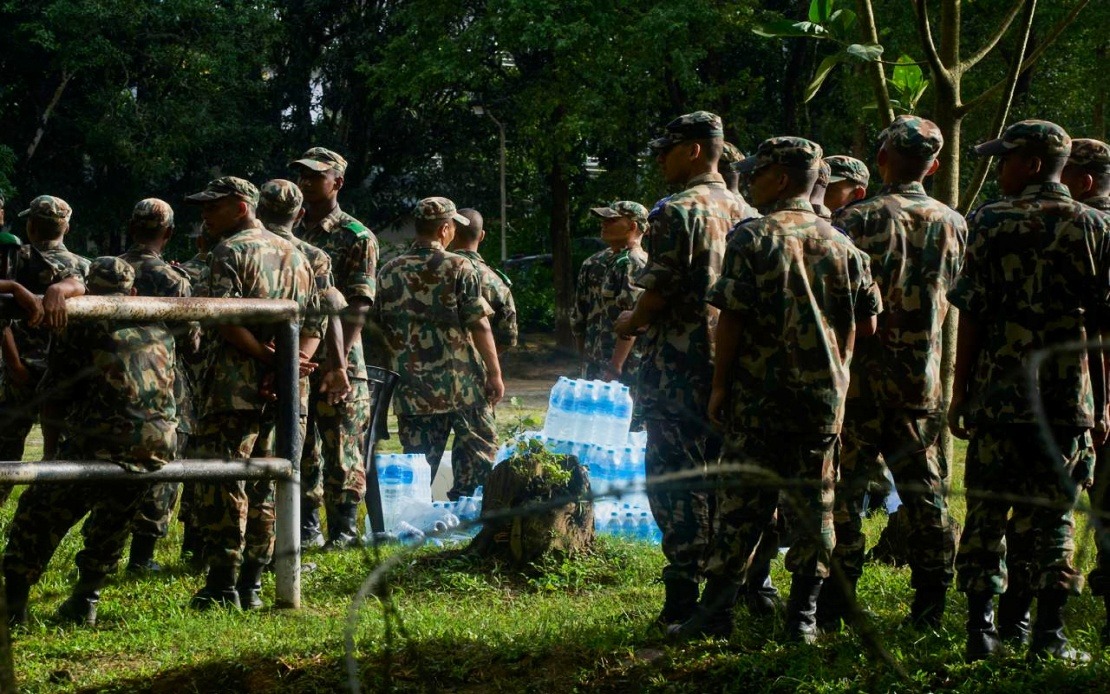
South Korea has mobilised an 11-member emergency response team bound for Nepal to help locate nine of its citizens who disappeared after a devastating flash flood and mudslide swept through a hydropower plant construction site in the Himalayan nation's Rasuwa district on Wednesday. The joint contingent, composed of officials from Seoul's Foreign Ministry, police, and fire authorities, departed Thursday with plans to arrive in Kathmandu the same evening to coordinate search and rescue operations with Nepali authorities and international partners already engaged in the crisis response.
The nine missing Koreans comprised six employees of Doosan Enerbility Co., a major South Korean plant and energy solutions builder, and three staff members from Korea South-East Power Co., a state-owned power generation enterprise. Both organisations were collaborating on construction of the Upper Trishuli-1 hydropower facility, a 216-megawatt generating station situated approximately 70 kilometres northwest of Kathmandu on the Trishuli River. The companies had deployed workforce contingents to the project site in the remote northern reaches of Nepal's territory, near the border with Tibet, when the geological disaster struck with little warning.
The calamity has created a sprawling international emergency, with the initial disaster itself proving catastrophic. At least 160 people perished in the flooding and mudslide, whilst 403 others remain unaccounted for across the affected region, with foreign nationals representing roughly 85 per cent of the missing persons. The disaster underscores the hazards faced by international construction workers operating in geologically unstable mountainous terrain during monsoon season, when Nepal's Himalayan districts regularly experience sudden violent weather events capable of triggering cascading failures.
Whilst the situation remains grave for those unaccounted for, some measure of relief emerged regarding other Korean personnel at the site. Ten additional Doosan workers who had been trapped in the disaster zone were confirmed safe by Seoul's Foreign Ministry, though they remain awaiting extraction from the area. Approximately 200 foreign workers employed across the broader Upper Trishuli-1 construction project successfully evacuated the immediate vicinity following the initial disaster, suggesting that emergency protocols and rapid response capabilities functioned adequately in preventing additional casualties among the international workforce.
Beyond the governmental response, both Doosan Enerbility and Korea South-East Power have established their own corporate emergency management structures and planned to dispatch field-based response teams to the accident site to support rescue operations and assess damage to project infrastructure and assets. The coordination between public sector authorities and private sector operators reflects the scale and complexity of managing an international humanitarian crisis involving major construction operations in a geographically remote region with limited existing emergency response infrastructure.
South Korea's diplomatic apparatus has engaged directly with Nepal's government to secure cooperation and support. Foreign Minister Cho Hyun initiated contact with his Nepali counterpart to request assistance and coordination in locating the missing nationals. Meanwhile, President Lee Jae Myung instructed the South Korean government to deploy all available resources and spare no effort in executing search and rescue operations, signalling the crisis's political significance within Seoul's policy circles and the substantial national interest in recovering the missing workers.
The Upper Trishuli-1 project itself represents a substantial investment by South Korean and regional interests in Nepal's energy infrastructure development. Construction commenced in January 2022 with an original completion target of year-end, reflecting the substantial capital and engineering expertise committed to the venture. However, industry observers anticipate that damage sustained during the flooding and mudslide will necessitate significant project delays, potentially disrupting timelines and financial arrangements underpinning the hydropower facility's commercial operation. The disaster illustrates the vulnerability of major infrastructure projects to natural hazards in seismically and meteorologically active zones.
For Malaysian and Southeast Asian readers, this incident carries multilayered relevance. Many regional construction companies and engineering firms maintain operations in Nepal and similar Himalayan locations, exposing their workforces to comparable geological and meteorological risks. The crisis underscores the necessity for robust occupational safety protocols, comprehensive emergency preparedness frameworks, and adequate insurance and medical evacuation capabilities when deploying personnel to remote mountainous regions during adverse weather seasons. Companies operating in Nepal, the Philippines, Indonesia, and other tectonically active Southeast Asian nations would benefit from examining their own disaster response protocols in light of the Upper Trishuli-1 experience.
The incident additionally reflects broader patterns of South Korean infrastructure investments extending across South and Southeast Asia, where firms like Doosan maintain substantial operations. As Korean companies deepen their involvement in regional energy and development projects, managing risks associated with natural disasters, worker welfare, and crisis response capacity becomes increasingly important for corporate reputation and stakeholder confidence. The visible activation of government resources demonstrates Seoul's commitment to protecting nationals working abroad, a message that resonates with other regional governments managing similar responsibilities.
From Nepal's perspective, the disaster exposes challenges in managing rapid-onset natural hazards in territory characterised by steep terrain, limited access routes, and vulnerable populations concentrated in river valleys susceptible to flash floods and mudslides. The monsoon season remains an annual cycle of elevated risk, and infrastructure development in Himalayan regions must incorporate enhanced hazard assessment and mitigation measures. International organisations and bilateral partners will likely increase attention to disaster preparedness and response capacity in Nepal following this incident, potentially resulting in expanded technical cooperation and resource allocation towards improving early warning systems and emergency response infrastructure in vulnerable districts.

