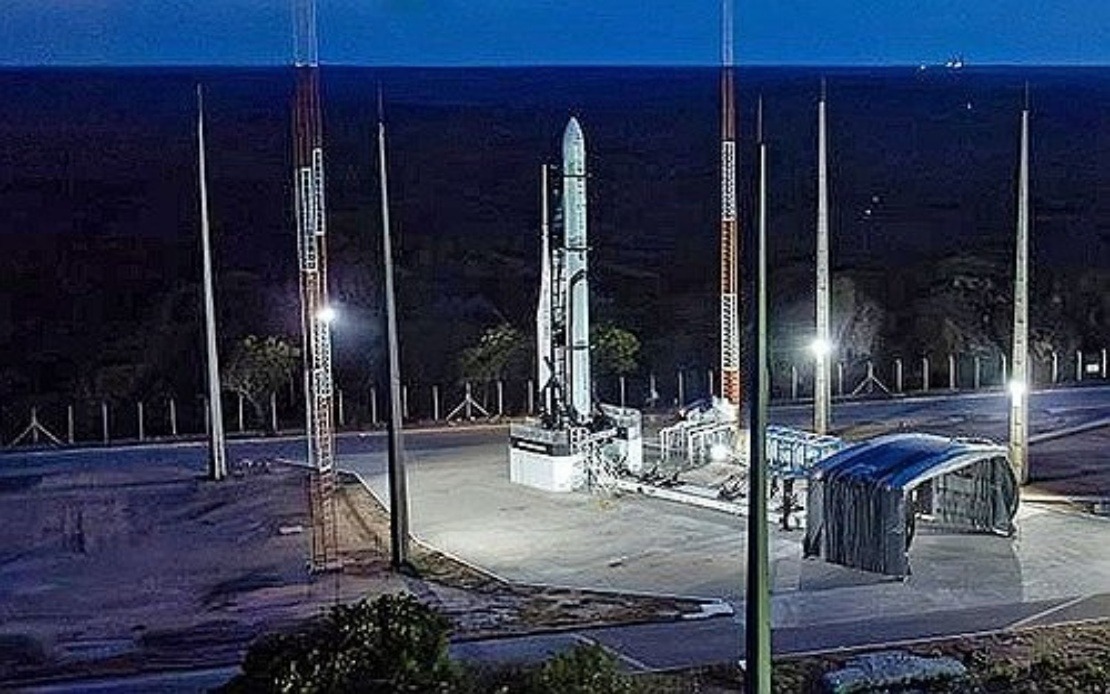
South Korea's defence ministry announced on Tuesday that it would delay the maiden launch of the Mir solid-fuel space rocket, citing unspecified safety issues that emerged during final preparations. The test flight, originally set to depart from a sea barge positioned off the southern coast near Jeju Island at 2 pm local time, has been indefinitely postponed pending a more comprehensive review of the vehicle and its systems. The ministry offered no immediate timeline for a rescheduled launch attempt, indicating that a thorough investigation into the detected problems would precede any future efforts.
This cancellation represented a significant setback for South Korea's ambitious space programme, which has positioned the Mir vehicle as a cornerstone of its strategy to achieve genuine indigenous satellite launch capabilities. The postponement is particularly notable because this test was intended to validate the rocket's full four-stage configuration for the first time. Previous trials conducted during 2022 and 2023 had examined only partial, three-stage arrangements, making this launch a critical milestone in proving the system's viability as a complete, operational platform.
The Mir programme itself originated in 2021 as part of a broader South Korean initiative to develop a domestically produced solid-propellant launch system. Unlike liquid-fuel rockets, which require more complex infrastructure and careful handling, solid-fuel vehicles offer advantages in structural simplicity and extended shelf life. These characteristics enable rapid deployment when national security circumstances demand immediate satellite reconnaissance. For Seoul, these capabilities translate directly into enhanced monitoring of potential North Korean military activities and reduced dependence on foreign intelligence assets.
South Korea's determination to build this indigenous capability reflects deeper strategic considerations within the peninsula's security architecture. The country currently operates a constellation of five larger military reconnaissance satellites, all launched aboard SpaceX's Falcon 9 rockets. While this partnership has proven successful—with five satellites reaching orbit as recently as November—it leaves Seoul partially reliant on American launch schedules and diplomatic goodwill. Developing homegrown launch capacity would grant South Korea greater autonomy in its intelligence-gathering operations and ensure uninterrupted access to critical surveillance data during periods of geopolitical tension.
The Mir programme envisions an eventual constellation of up to 60 smaller reconnaissance satellites positioned in low-Earth orbit below 500 kilometres altitude by 2030. This network, operating in parallel with the heavier five-satellite cluster, would create a densely interwoven surveillance system capable of providing persistent, comprehensive coverage of North Korean territory and coastal regions. The combination of larger, high-resolution satellites with a swarm of smaller, more agile platforms would fundamentally expand Seoul's independent intelligence-collection capacity and reduce vulnerability to any single point of failure.
For Southeast Asian observers, South Korea's space ambitions carry broader implications. The region has witnessed increasing strategic competition and the proliferation of satellite technology among major powers. Seoul's push toward launch autonomy reflects a wider Asian trend of nations seeking to reduce dependence on Western space infrastructure. Malaysia, Indonesia, Vietnam, and other regional states monitor developments in advanced technologies like indigenous launch capabilities, recognising that space capabilities increasingly underpin economic development, disaster management, and national security in the 21st century.
The technical distinction between solid and liquid propulsion systems holds importance beyond engineering circles. Solid-fuel rockets, once loaded, remain stable for years without constant maintenance or resupply, characteristics that enhance operational readiness during crises. This advantage becomes particularly acute on the Korean peninsula, where rapid response to emerging threats could prove militarily decisive. Conversely, the simplicity and reliability of solid systems come with trade-offs in payload flexibility and thrust adjustability compared to liquid-fuelled alternatives, explaining why South Korea pursues both approaches rather than abandoning one in favour of the other.
The parallel development of the military spy satellite initiative using American launch services demonstrates Seoul's pragmatic hedging strategy. Rather than waiting for Mir to mature, South Korea accelerated deployments aboard proven Falcon 9 vehicles, ensuring that critical intelligence capabilities were not hostage to any single programme's timeline. This approach has already yielded operational dividends, with the five reconnaissance satellites providing immediate capabilities while domestic systems continue development. The near-term cancellation thus represents a temporary setback rather than a fundamental programme failure.
International precedent suggests that such launch delays, while frustrating, remain common in advanced rocket development. Even established space agencies experience postponements when technical anomalies emerge during final preparation phases. The decision to cancel rather than proceed indicates that South Korean officials detected problems significant enough to warrant investigation. This conservative approach, though costly in terms of schedule and reputation, ultimately protects the programme's credibility by avoiding a catastrophic in-flight failure that could set development back years.
The ministry's commitment to announcing a revised launch schedule at an unspecified future date leaves uncertainty regarding when South Korea might next attempt a Mir launch. This ambiguity could reflect the severity of the detected issues or simply the need for additional time to conduct thorough diagnostics and implement any necessary modifications. Either scenario points toward a programme that, despite temporary setback, remains integral to South Korea's long-term strategic vision of space autonomy and enhanced intelligence capabilities directed toward regional security challenges.

