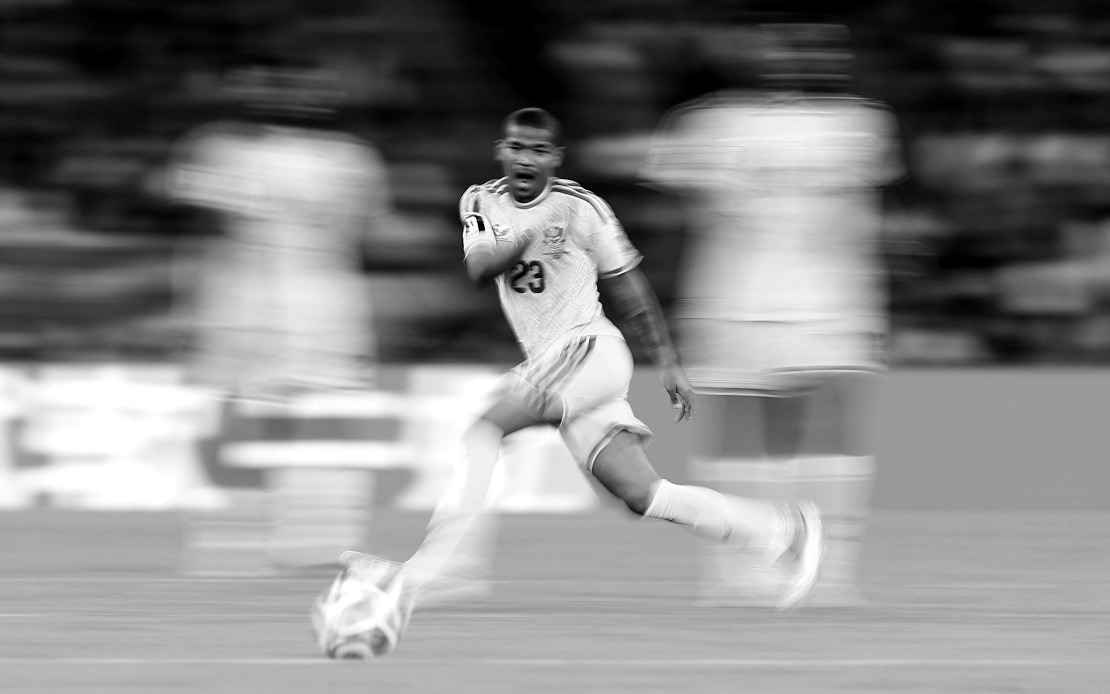
South Africa's football community is mourning the loss of Jayden Adams, the 25-year-old international midfielder who represented his country during this year's FIFA World Cup in Canada. The Confederation of African Football confirmed his death on Saturday, marking a significant loss for both domestic and continental football. Adams was discovered at a residence in Schotschekloof, in central Cape Town, on Saturday morning, with South African police launching an investigation into the circumstances surrounding his passing. The official cause of death remains unconfirmed as inquiries continue.
Adams had established himself as a key figure in South Africa's resurgent national team, having appeared in all three of his country's group-stage matches during the World Cup tournament. His participation underscored the confidence the coaching staff placed in the young midfielder's abilities at a major international stage. The player's performances contributed to a historic achievement for South African football, as the team advanced to the knockout stage of the tournament for the first time in the nation's World Cup history. That progress was ultimately curtailed when Canada, one of the co-hosting nations, eliminated South Africa on June 28 during the round of 32 encounter.
Adams' footballing trajectory had been steadily ascending before his untimely death. He made his senior international debut in 2022 and went on to feature prominently for the national side, including during the 2023 Africa Cup of Nations, where South Africa reached the semifinals of the continental championship. These achievements demonstrated his growing importance to the national team setup and suggested a promising future at both domestic and international levels. For Malaysian readers familiar with regional football development, Adams' progression represented the kind of emergence of talent that elevates national teams within competitive continental frameworks.
At club level, Adams had recently joined Mamelodi Sundowns in January 2025, one of South Africa's most successful franchises. His move to the Johannesburg-based outfit represented a significant career step, as Sundowns have consistently dominated domestic competitions and competed at the highest level of African club football. During his tenure at the club, Adams contributed to their winning of the domestic league title and featured in their African Champions League campaign, adding professional silverware to his resume at a relatively young age. Prior to this appointment, he had developed his craft at Stellenbosch FC, where he honed his skills in South African football's competitive environment.
The impact of Adams' death has reverberated throughout South African sporting circles and beyond. Gayton McKenzie, South Africa's Minister of Sports, Arts and Culture, issued a formal statement expressing profound sorrow at the loss of what he described as one of the nation's brightest young football talents. McKenzie appealed to the public and media to exercise restraint and avoid speculation regarding the circumstances of Adams' passing, emphasizing the importance of allowing his family, club, and the relevant authorities space to process official information. This measured approach reflected the sensitive nature of the situation and the need for accurate reporting during an investigation.
The global football community has also acknowledged the loss. FIFA President Gianni Infantino released a statement expressing condolences and noting that Adams would be deeply missed by the international football fraternity. Such statements from the sport's highest governing bodies underscore the significance of the player's profile and his contribution to football at multiple levels of competition. For those following South African football's trajectory, particularly within Southeast Asian sporting circles where there is growing interest in African football development, Adams represented the emerging generation of talent capable of challenging traditional powerhouses.
Adams' career, though cut short, reflected broader patterns in contemporary South African football. The nation's football infrastructure has produced increasingly competitive international teams, with the 2023 World Cup campaign symbolizing the country's capacity to compete on the world stage. Players like Adams, who emerged from domestic competitions to represent their nation at football's premier tournament, embody the potential within the South African game. His participation in the World Cup served as validation of the development pathways within South African football, even as his death now represents a tragedy within that narrative of progress.
The circumstances of Adams' investigation will likely extend across the coming weeks as authorities complete their inquiries. The privacy of his family and the club has been emphasized as paramount during this period of grief. For South African football specifically, the loss highlights broader discussions about player welfare, mental health support systems, and the pressures facing young athletes operating at elite levels. These conversations have gained prominence across global football in recent years, and Adams' death will inevitably contribute to ongoing dialogue within South African sporting institutions.
Mamelodi Sundowns, the club with which Adams had most recently been associated, is expected to release formal statements regarding the player and arrangements for commemorating his memory. The club has a responsibility to support affected staff, players, and supporters through this period. In the wider South African football context, this tragedy will likely prompt reflection on the support systems available to young professionals navigating the demands of international competition alongside domestic club responsibilities. For regional observers, the incident underscores both the global nature of professional football and the vulnerabilities that accompany its intense competitive environment.

