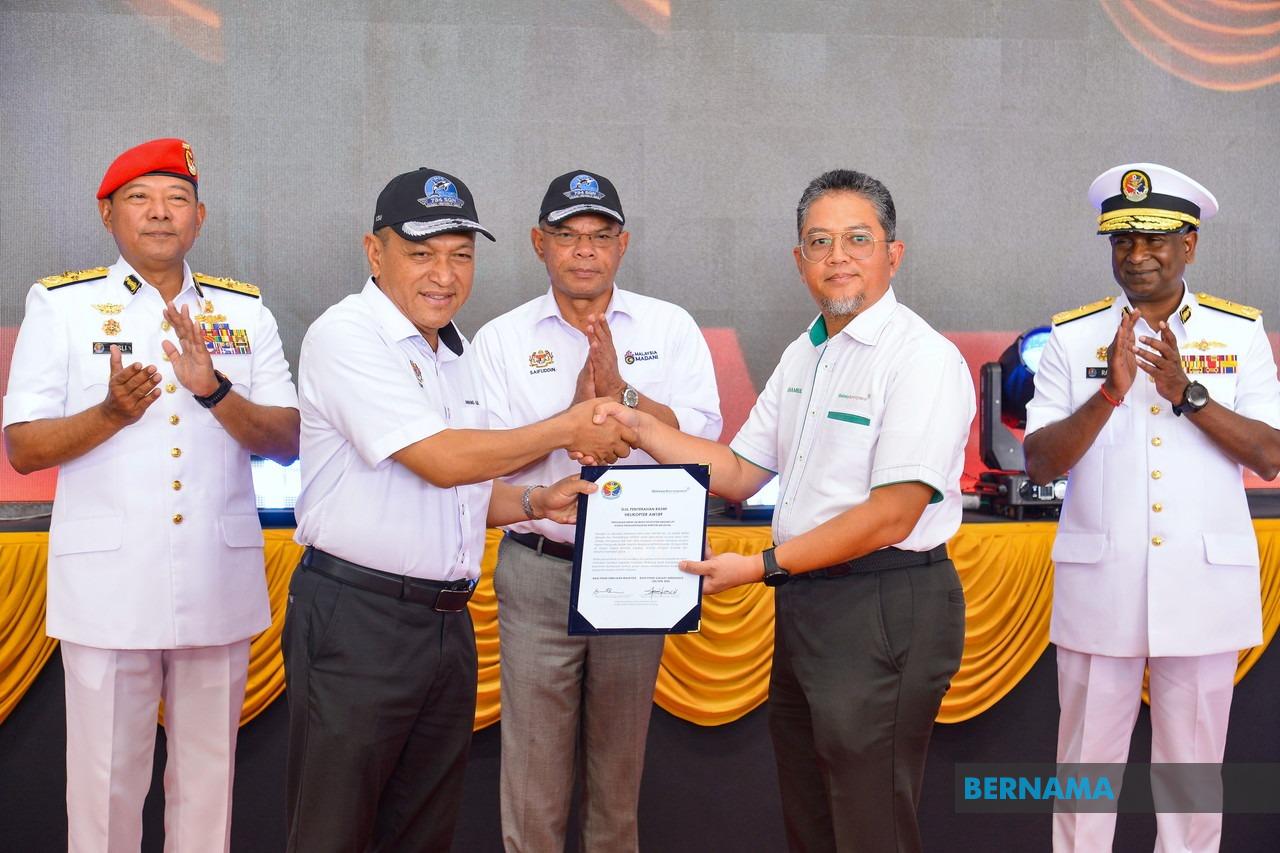
Home Minister Datuk Seri Saifuddin Nasution Ismail has called for comprehensive reassessment of two critical policy areas affecting national security and humanitarian concerns: the Security Offences (Special Measures) Act 2012 (SOSMA) and the handling of refugee populations in Malaysia. Speaking after chairing a discussion on both matters, the minister underscored the importance of moving beyond conventional thinking to address how these frameworks function within Malaysia's evolving security and social landscape.
The SOSMA legislation, enacted over a decade ago to replace the controversial Internal Security Act 1960, has become a focal point for scrutiny from civil society organisations, legal experts, and international human rights bodies. The act provides law enforcement agencies with expanded powers to investigate and detain individuals suspected of security offences, but its implementation has frequently triggered debate about the balance between security imperatives and individual liberties. Saifuddin's push for deeper examination reflects growing recognition that statutory frameworks introduced more than ten years ago may require recalibration to reflect contemporary threats and safeguards.
The minister's comments suggest that the government recognises SOSMA cannot be viewed through a narrow security lens alone. Instead, any review must weigh practical effectiveness against concerns about due process, judicial oversight, and proportionality in enforcement. This approach acknowledges that previous criticisms—ranging from lack of parliamentary accountability mechanisms to questions about the consistency of its application across different cases—merit serious consideration rather than dismissal. By framing this as a matter requiring discussion platforms and multi-stakeholder input, Saifuddin indicates the government's openness to dialogue beyond internal policy circles.
The refugee question presents distinct but intersecting challenges. Malaysia hosts one of the largest displaced populations in Asia, with Myanmar nationals representing a significant portion owing to the military coup and subsequent conflict in that country. The influx has generated tension between humanitarian obligations, security concerns, and the practical capacity of Malaysia's social services and detention infrastructure. Unlike SOSMA, which is purely a domestic security statute, refugee policy involves international legal frameworks, bilateral relations, and the complex interplay between Malaysia's 1951 Refugee Convention status and its operational constraints.
Rather than treating refugees as a security problem to be managed purely through detention or restrictive policies, Saifuddin's comments suggest a willingness to explore whether current approaches genuinely serve national interests or simply shift challenges without resolving them. The humanitarian dimension is particularly significant for Southeast Asia, where Myanmar's instability sends waves of displaced persons across borders. Malaysia, as a regional economic hub and relative haven of stability, faces pressure from both the international community and its own civil society to demonstrate responsible stewardship of vulnerable populations while maintaining border integrity.
The timing of these discussions also matters. Over recent months, several high-profile cases involving SOSMA detentions have reignited debate about whether the legislation is being applied judiciously or whether it functions as an instrument for suppressing dissent. Simultaneously, incidents involving unauthorised refugee movements and criminal elements exploiting migrant vulnerabilities have reinforced public anxiety about security risks. By acknowledging that both issues warrant «in-depth scrutiny», Saifuddin addresses mounting pressure from multiple directions to demonstrate that policy is evidence-based rather than reactive.
For Malaysia's standing in the region and internationally, how these issues are resolved carries weight beyond borders. Countries across Southeast Asia face comparable challenges managing displacement from Myanmar, and Malaysia's approach influences how others calibrate their responses. A transparent, well-reasoned review of both SOSMA and refugee frameworks could establish a model that neighbours look toward. Conversely, decisions perceived as driven by security hawks without genuine consideration of humanitarian and legal dimensions risk damaging Malaysia's credibility on human rights matters and diplomatic relationships.
The emphasis on ensuring that measures are «practical, well-founded and suited to current circumstances» reflects a shift away from ideology-driven policy-making toward pragmatism. This is particularly important for SOSMA, where critics have long argued that the legislation was designed for a different era of security threats. Terrorism tactics, radicalisation pathways, and the nature of organised crime have all evolved significantly since 2012. A framework created for one threat environment may be poorly calibrated for another, creating either gaps in coverage or overbroad enforcement.
Saifuddin's insistence that neither issue should be viewed from «a single perspective» acknowledges the legitimate tensions embedded in both domains. SOSMA cannot satisfy both maximum security and maximum individual freedom simultaneously; the review must articulate clear priorities and transparent trade-offs. Similarly, refugee policy involves genuine dilemmas between humanitarian responsibility and state sovereignty that cannot be resolved by pretending the tension does not exist. Honest policy-making requires naming these conflicts and making deliberate choices, then defending those choices with evidence.
The call for discussion platforms represents an implicit recognition that internal government working groups, while necessary, are insufficient for building public confidence in sensitive areas. By opening space for wider input, Saifuddin signals that the government understands it must earn legitimacy for its policies through demonstrated engagement with critics and affected communities. For refugees, this might include conversations with civil society organisations, legal advocates, and religious groups. For SOSMA, it likely requires engagement with lawyers, academics, and security experts who can interrogate whether specific provisions continue to serve their intended purpose.
Implementing substantive review of both SOSMA and refugee policies will test whether Malaysian governance can balance competing values in an honest, transparent manner. The outcomes will influence not only how the country manages security threats and humanitarian obligations but also its broader credibility as a regional power committed to the rule of law and evidence-based governance.

