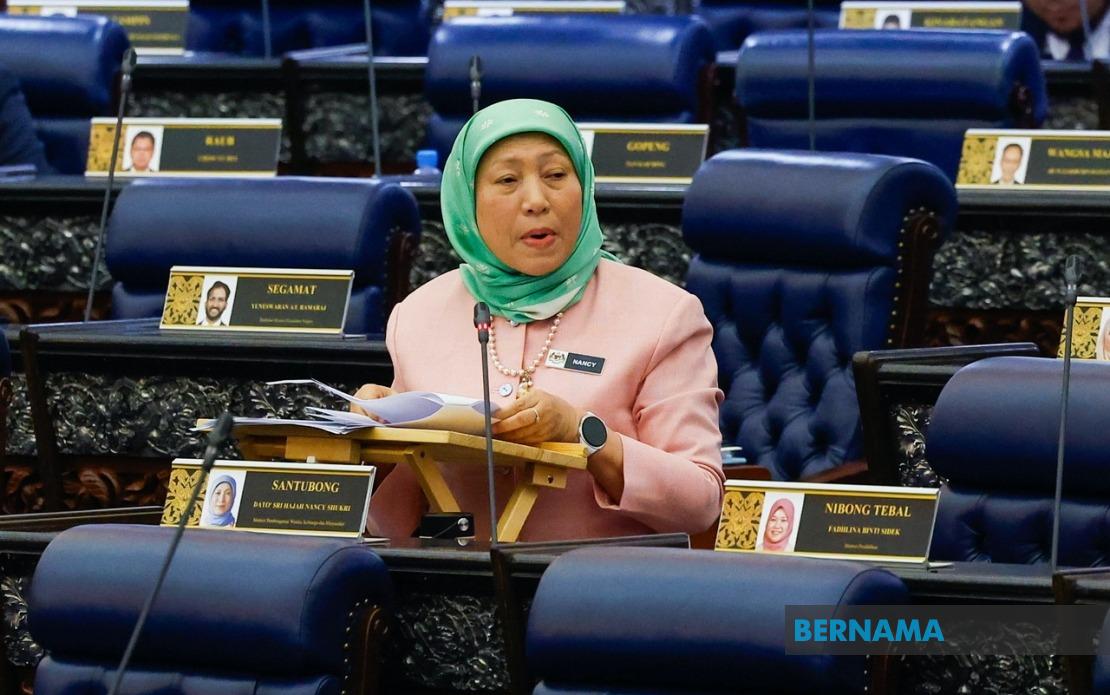
Parliament has taken a significant step in formalising Malaysia's social welfare infrastructure by passing the Social Work Profession Bill 2026, legislation that elevates social work from an unregulated field into a formally professionalised sector with enforceable standards and oversight mechanisms. The measure, approved by the Dewan Rakyat following debate involving 23 Members of Parliament from government and opposition benches alike, represents the culmination of a decade-long collaborative effort between the Ministry of Women, Family and Community Development and a broad coalition of stakeholders including federal and state agencies, educational institutions, civil society organisations, and practicing social workers themselves.
Datak Seri Nancy Shukri, the minister overseeing the portfolio, characterised the legislation as a reflection of the MADANI Government's broader agenda to strengthen accountability and professionalism across Malaysia's social services delivery. The law establishes the Malaysian Social Work Profession Council as the central regulatory authority tasked with issuing practising certificates, enforcing ethical standards, and maintaining a registry of qualified professionals. This framework creates a mechanism through which members of the public can independently verify the credentials of social workers before engaging their services, thereby introducing a layer of consumer protection previously absent from the sector.
The timing of this legislative intervention reflects mounting pressures on Malaysia's social welfare system stemming from demographic and economic shifts. An ageing population, sustained urbanisation, rising cost-of-living pressures, and the emergence of novel social challenges—from mental health crises to digital-age vulnerabilities—have collectively strained existing institutional arrangements. The bill's architects argue that without formal professional regulation, the quality and consistency of social interventions cannot be assured across diverse contexts and service providers. By establishing clear competency benchmarks and ethical guidelines, the legislation aims to standardise practice and ensure that citizens receive assistance meeting nationally determined professional standards.
For practitioners currently working in the field, the bill carries mixed implications. Registration requirements and competency standards will formally credential qualified workers, enhancing their professional standing and potentially improving remuneration prospects through greater recognition of their expertise. However, the legislative framework will also impose compliance obligations and potentially restrict entry to the profession, creating barriers for individuals without formal qualifications. This professionalisation process, common globally, typically strengthens the sector's reputation while narrowing its workforce composition—a trade-off that advocacy groups have weighed throughout the legislative process.
The council's establishment carries institutional significance for Malaysia's broader governance architecture. By creating an independent regulatory body—a model increasingly adopted across Southeast Asia—the government essentially delegates professional standard-setting to practitioners and sector experts rather than centralising control within the ministry itself. This approach theoretically insulates professional decisions from political pressure and allows for more responsive, evidence-based policy refinement as challenges emerge. The council's success will largely depend on its composition, independence, and adequacy of resources, factors that remain to be clarified in implementing regulations.
The social work profession in Malaysia encompasses workers addressing poverty alleviation, child protection, family counselling, elder care, disability support, and community development across government agencies, NGOs, and private practice. Bringing this fragmented ecosystem under unified professional standards should, in principle, improve coordination and effectiveness. The legislation explicitly envisages enhanced public-private collaboration and stronger linkages between government bodies and the NGO sector, implying that professionalisation is intended as a platform for systemic integration rather than mere regulatory constraint.
For Malaysia's regional positioning, the bill signals alignment with international social work standards and professional associations. Many developed nations regulate social work through similar council structures, and Malaysia's adoption of this model potentially facilitates labour mobility within ASEAN and beyond, allowing Malaysian-certified social workers to seek international opportunities whilst attracting qualified professionals from overseas. Given Southeast Asia's shared demographic challenges, particularly ageing societies in Thailand, Vietnam, and Singapore, Malaysia's example may encourage neighbouring countries to similarly formalise social work regulation.
The broad parliamentary support that enabled the bill's passage—acknowledged by Nancy in her statement—suggests cross-party recognition of social work's legitimacy as a public good deserving formal status. This consensus carries practical value, insulating the legislation from rapid reversal and providing continuity across potential government transitions. The minister's commitment to incorporating parliamentary recommendations into implementing regulations indicates that the legislative debate process will continue shaping the sector's development beyond formal passage.
Implementation will determine whether the legislation fulfils its aspirational goals. The ministry must now draft detailed regulations governing council membership, registration procedures, competency assessment frameworks, and disciplinary mechanisms. Resource allocation will be critical—inadequately funded implementation invites compliance failures and undermines professional legitimacy. Additionally, transitional provisions for existing practitioners lacking formal qualifications require careful calibration to avoid destabilising the workforce whilst establishing meaningful entry standards for newcomers.
The broader implication extends to how Malaysia conceptualises social protection in an era of economic uncertainty. By professionalising social work, the government signals that social welfare constitutes skilled work warranting specialised training, ongoing education, and ethical accountability—not merely charitable labour or bureaucratic case processing. This philosophical reframing carries consequences for resource allocation, workforce development, and public perception of social workers themselves, potentially elevating their status and enabling more effective advocacy for adequate funding and staffing levels.
For Malaysian civil society, the bill represents both opportunity and responsibility. NGOs and community organisations must adapt to working within professionalised frameworks, potentially investing in staff training and qualification pathways. The council's effectiveness ultimately depends on practitioner cooperation, meaning the social work community must invest in building collaborative relationships with the new regulatory structure rather than viewing it as external imposition. The decade of prior engagement that preceded parliamentary passage suggests stakeholders recognise this mutual dependency.
Looking forward, the Social Work Profession Bill 2026 positions Malaysia to address emerging social challenges with greater systematic coherence and professional rigour. Whether this legislative recognition translates into tangible improvements in service delivery—the true measure of success—will become apparent as implementation unfolds over coming years. The bill itself represents necessary institutional foundation-building; its value ultimately depends on how effectively the Malaysian Social Work Profession Council harnesses the profession's expertise toward improving outcomes for vulnerable populations.

