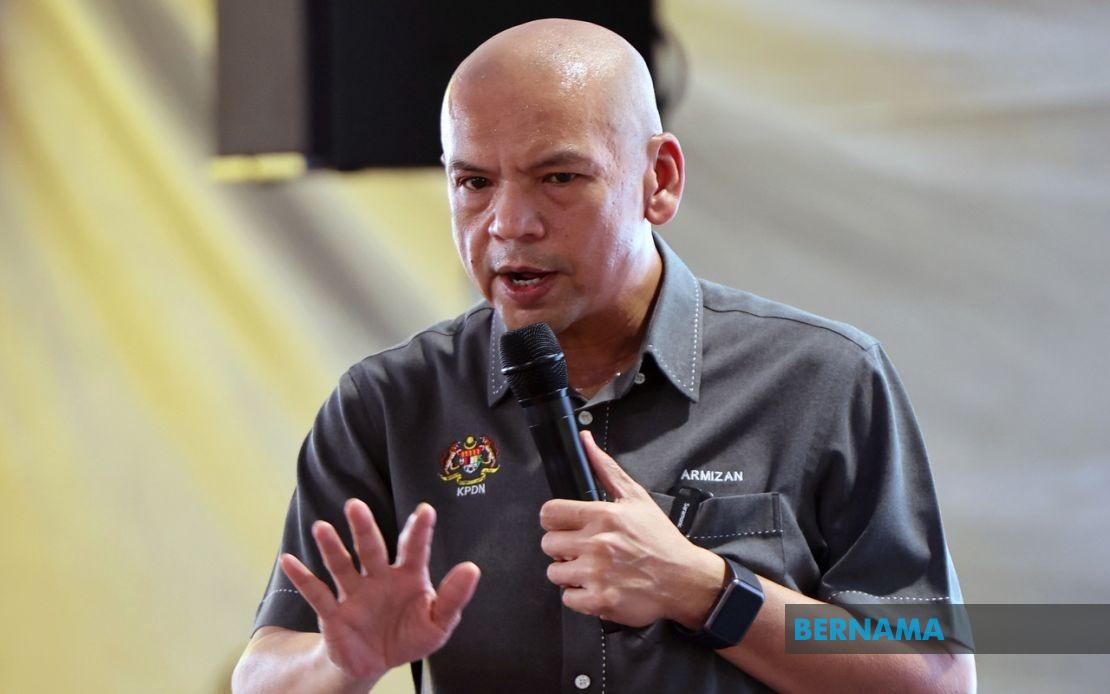
Domestic Trade and Cost of Living Minister Datuk Armizan Mohd Ali has unveiled a support package designed to cushion small enterprises from escalating operational expenses following the introduction of Malaysia's targeted diesel subsidy programme in Sabah, Sarawak, and Labuan from July 1. Under this initiative, small companies and local contractors operating as partnerships or sole proprietorships nationwide will access monthly allocations of 300 litres via fleet card arrangements, providing a direct injection of cost relief as fuel expenses continue to pressure profit margins across the small business sector.
This intervention addresses a critical gap that emerged during the subsidy rollout. The Subsidised Diesel Control System, which commenced in early July, primarily benefited two established categories: public transport operators and companies engaged in goods distribution or consumer necessities logistics. Micro-entrepreneurs who depend on diesel vehicles for their operations but fall outside these formal sectors found themselves unable to obtain assistance through conventional individual application channels. The new provision rectifies this oversight by explicitly incorporating small business structures that have historically struggled to navigate large-scale support mechanisms, particularly sole traders and partnership entities.
Armizan emphasised that this measure represents an immediate intervention approved by the Federal Cabinet to bridge the support gap. He articulated the philosophy underlying this approach during comments at the MADANI Foster Village Project launch in Kampung Sekalong, Menumbok, Sabah—noting that the programme recognises the unique circumstances of micro-entrepreneurs who previously encountered barriers when attempting to secure assistance through individual-based registration systems. The flexibility embedded in the fleet card approach allows businesses to manage their fuel allocation efficiently without navigating bureaucratic constraints that had historically excluded them from earlier assistance frameworks.
The minister outlined three foundational pillars guiding the Federal Government's commitment to refining subsidy implementation across Sabah, Sarawak, and Labuan. These principles reflect a measured approach balancing competing policy objectives: the government must first prioritise the cost-of-living pressures faced by ordinary citizens and business operators; second, it must implement robust mechanisms to minimise subsidy leakage and prevent diversion to unintended users; and third, it must ensure that fiscal allocations remain sustainable within the government's budgetary envelope. This tripartite framework reveals the inherent tensions in subsidy design—policymakers must extend genuine support without creating perverse incentives, misallocation, or unsustainable fiscal commitments that ultimately undermine broader economic stability.
To strengthen operational delivery in remote and interior regions of Sabah and Sarawak, the ministry intends to mobilise state-level agencies and local structures to manage registration and eligibility verification. This devolved approach acknowledges that centralised administration struggles to reach dispersed populations effectively. By leveraging existing state machinery, the programme aims to ensure comprehensive coverage of eligible beneficiaries while reducing administrative friction and the likelihood that deserving small businesses remain unregistered through ignorance or geographic isolation. This recognition of implementation challenges reflects pragmatic governance—policy design must account for ground-level realities in delivering services across geographically challenging terrain.
The announcement arrives amid broader efforts to support rural development and narrow urban-rural disparities. Armizan revealed that his ministry has allocated RM500,000 to Kampung Sekalong as part of the MADANI Foster Village Programme, a government-wide initiative aimed at providing foundational infrastructure and amenities in underserved communities. The village will benefit from construction of an open multi-purpose hall, road upgrades, culvert repairs, installation of solar lighting systems, and creation of a distinctive landmark. These projects, scheduled for completion within 2024, exemplify integrated rural development—combining immediate fuel subsidy support with longer-term infrastructure investment to enhance living standards and economic productivity.
The MADANI Foster Village Programme represents a strategic pivot toward closing development gaps between urban centres and rural peripheries. Beyond basic utilities like water and electricity, the scheme targets internet access and community facilities—recognising that modern economic participation requires digital connectivity and appropriate social infrastructure. This holistic approach suggests policymakers understand that fuel subsidies alone cannot sustain rural enterprises; complementary investments in roads, electrification, and digital infrastructure are essential for sustainable development. The Kampung Sekalong project constitutes the ministry's third such initiative, following earlier work in Mukim Kaiduan, Papar in 2024 and Mukim Tikam Batu, Kedah in the previous year.
For Malaysian businesses operating in interior regions and rural areas, the 300-litre monthly allocation represents meaningful but modest support. A small logistics operator or contractor consuming more than this threshold would need to fund additional requirements at market rates, potentially limiting this measure's impact for capital-intensive operations. Nevertheless, for micro-enterprises operating at tight margins—construction contractors, agricultural transporters, and rural service providers—this consistent monthly allocation provides budgetary predictability. The fleet card mechanism also creates an audit trail reducing leakage and preventing resale of subsidised fuel, addressing a persistent vulnerability in previous subsidy arrangements across Southeast Asia.
The timing and scope of this initiative reflect evolving policy learning within Malaysia's subsidy administration. Earlier broad-based diesel subsidies created perverse incentives and fiscal drains; the current targeted approach attempts surgical precision, directing support toward economically productive users while minimising deadweight loss. However, the programme's success depends critically on implementation fidelity. Border smuggling, falsified registration, and resale of subsidised fuel through informal channels remain persistent challenges in Malaysia and neighbouring economies. The ministry's emphasis on state-level verification and community-based oversight suggests acknowledgment of these risks.
Regional perspectives illuminate the policy's significance. Across Southeast Asia, governments have struggled to balance fiscal sustainability with protections for vulnerable businesses during energy price volatility. Thailand, Indonesia, and the Philippines have each experimented with targeted subsidies and removal strategies, with mixed outcomes. Malaysia's approach of combining sectoral targeting (public transport and essential goods), enterprise-type targeting (small businesses through partnership structures), and geographic deployment (via state agencies) represents a more nuanced model. Whether this architecture survives contact with implementation realities and political pressure to expand coverage will substantially influence the programme's ultimate effectiveness and fiscal impact.
The minister's commitment to ongoing programme refinement signals flexibility in policymaking. Armizan explicitly invited feedback and indicated openness to adjustments informed by ground experience in Sabah, Sarawak, and Labuan. This pragmatic stance contrasts with rigid bureaucratic approaches and suggests the government recognises that subsidy design involves inherent tradeoffs and learning curves. Nonetheless, transparent communication regarding programme parameters, eligibility criteria, and application processes will prove essential to ensure small businesses—often marginalised in policy debates and implementation—can effectively access these allocations and integrate them into operational planning.

