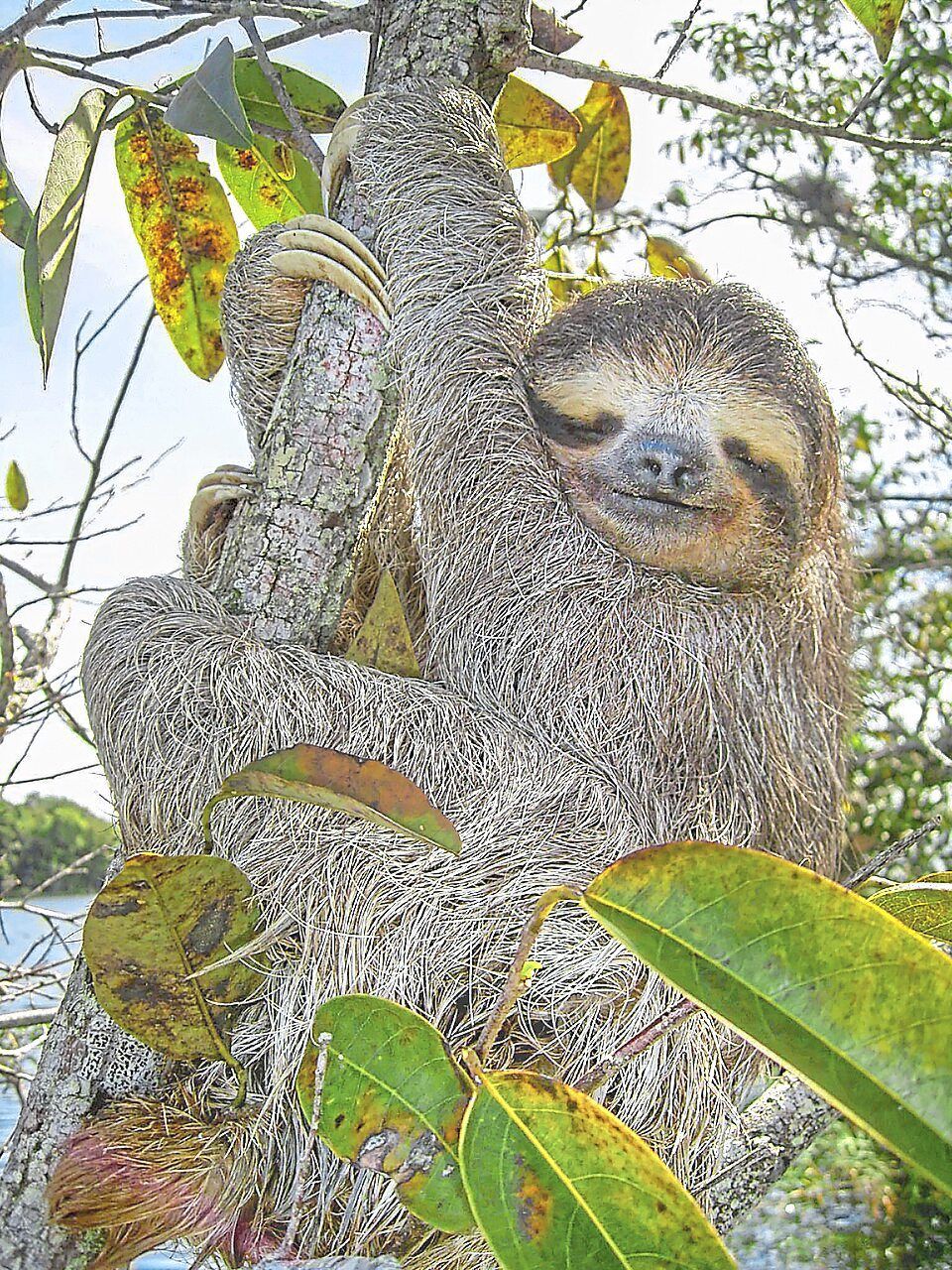
An international team of geneticists has uncovered a remarkable biological puzzle hidden within the sloth genome: active jumping genes that have persisted for millions of years and may fundamentally change how scientists approach ageing and metabolic disease in humans. The discovery, reported by researchers from the Wellcome Sanger Institute, the Leibniz Institute for Zoo and Wildlife Research, Hospital Sirio Libanes, and partners, represents a scientific first in sequencing and analysing the complete genome of this peculiar tree-dwelling mammal, revealing genetic mechanisms that could eventually benefit human medicine and even enable longer space missions.
The research began with a straightforward question: what genetic factors explain the sloth's famously sluggish metabolism, the lowest among all mammals? Scientists extracted DNA samples from a captive sloth, sequencing the genetic material at the Max-Planck Institute for Molecular Cell Biology & Genetics in Germany. Using comparative genomics—a technique that identifies differences between species by aligning their genetic codes—the team then methodically compared the sloth genome against other mammals, particularly the anteater and armadillo, which share a common South American ancestry within the clade known as Xenarthra.
The analysis revealed something unexpected and potentially significant: the sloth genome contains multiple active copies of transposable elements, commonly called jumping genes. These are DNA sequences with an unusual ability to move or copy themselves from one location within the genome to another, a process that usually occurs over evolutionary time and typically becomes inactive as species evolve. In humans, transposons are largely ancient and dormant, having been rendered inactive by evolutionary pressures. However, in sloths, these genetic elements have remained functional, a characteristic that traces back approximately 30 million years to the last common ancestor of all modern sloth species.
What distinguishes this finding from mere genetic curiosity is where these jumping genes are located and what they appear to control. The research team discovered that many of these active transposons cluster near genes responsible for mitochondrial function and energy metabolism. Mitochondria, often called the powerhouses of cells, generate the chemical energy that fuels all cellular processes. This connection between jumping genes and energy production suggested that the sloth's genetic inheritance includes a sophisticated biological solution to operating efficiently on minimal energy—a trait that evolution has selected for and preserved across millions of years.
Dr Pedro Galante, co-lead researcher at Hospital Sirio Libanes in São Paulo, articulated the profound implications of this discovery for human medicine. He noted that numerous human conditions—diabetes, age-related disorders, neurodegeneration, and muscle wasting—fundamentally involve disruptions to energy production and mitochondrial dysfunction. Rather than viewing sloths as evolutionary curiosities, Galante suggested that they represent a living laboratory for understanding how organisms maintain health despite operating under severe energy constraints. Sloth cell cultures, he argued, could provide a natural experimental model to investigate how cells adapt to low-energy environments and identify what mechanisms fail when disease develops.
The potential applications extend far beyond terrestrial medicine. Galante highlighted that sloth research might eventually inform advances in tissue preservation for transplantation, critical care medicine for severely ill patients, and strategies for maintaining human health during extended space missions where resupply and resource constraints parallel the sloth's low-energy lifestyle. These connections may seem speculative now, but they reflect how studying nature's solutions sometimes reveals biological strategies that human medicine has never independently developed.
Dr Marcela Uliano-Silva from the Wellcome Sanger Institute offered a broader perspective on why studying unusual animals matters in the genomic age. She emphasized that evolution operates as a vast experiment, conducting billions of trials across millions of species over billions of years. By examining organisms that have taken evolutionary paths radically different from humans, scientists can discover biological solutions that human ancestors never developed because they weren't necessary for human survival. The sloth's genetic toolkit—evolved under the specific pressures of tropical forest life, limited food resources, and predation—contains answers to questions that human biology has never faced.
Uliano-Silva's colleague, Dr Camila Mazzoni, head of evolutionary and conservation genomics at the IZW in Berlin, articulated a particularly intriguing hypothesis emerging from the data: sloths may have evolved genetic backup systems that compensate for and support their characteristically slow mitochondrial function. This concept suggests that rather than having a single optimal solution to metabolism, sloths possess redundant genetic pathways that allow cells to maintain function and health even when operating far below the energy thresholds that would cause disease in most mammals. Understanding how such genetic redundancy works could illuminate why humans suffer mitochondrial diseases that sloths, with their similarly low-energy existence, manage to avoid.
For Malaysian and Southeast Asian readers, the implications deserve consideration within the regional context. The tropical forests where sloths evolved share certain characteristics with Southeast Asian rainforests—high heat, humidity, and limited energy availability for some species. Understanding how animals have genetically adapted to these conditions could inform research into tropical diseases linked to metabolism and energy deficiency, as well as better understanding of how local wildlife maintains health in resource-constrained environments. Additionally, as Southeast Asia develops increasingly sophisticated biotech sectors, the genomic tools and approaches used in sloth research represent the cutting edge of techniques that regional scientists can adopt.
The research also raises important questions about how genomic diversity in wild animal populations contributes to global medical knowledge. As habitats shrink and species face extinction pressures, the unique genetic information encoded in organisms like sloths becomes increasingly valuable. This discovery underscores the practical medical rationale for conservation efforts beyond simple ecological arguments—maintaining biodiversity preserves potential solutions to human health challenges that we have yet to imagine.
Moving forward, the research team plans to conduct deeper investigations into the specific functions of these sloth-derived jumping genes and how they interact with mitochondrial pathways. Cell culture experiments using sloth cells are already underway, designed to test how these organisms manage low-energy states and what happens when researchers experimentally disrupt these genetic systems. Early results, though preliminary, suggest that the jumping genes do indeed play active roles in regulating cellular energy management.
The broader implication is that genomic medicine is increasingly becoming a discipline that learns as much from nature's outliers as from human genetics itself. Sloths, armadillos, and other organisms that have taken evolutionary paths fundamentally different from humans represent untapped libraries of biological solutions. As human populations age and metabolic diseases become increasingly prevalent, these natural experiments in evolutionary adaptation may hold keys to interventions that could improve health and extend healthy lifespan. The jumping genes discovered in sloths might ultimately prove to be one of nature's greatest gifts to human medicine.

