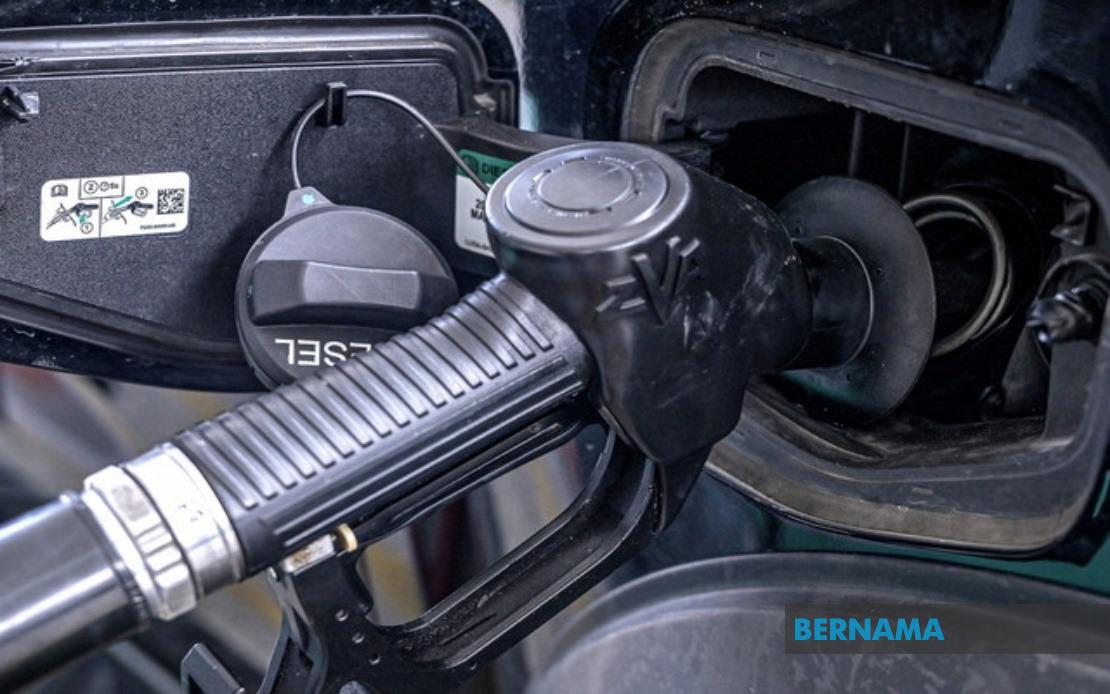
The Malaysian government has opened the application window for the Subsidised Diesel Control System (SKDS) to encompass company-owned land transport vehicles, according to Domestic Trade and Cost of Living Minister Datuk Armizan Mohd Ali. The initiative, announced in Putrajaya on July 3, extends diesel subsidy eligibility to operators of commercial jeeps and pickup trucks as part of a broader strategy to support small-scale transport enterprises navigating Malaysia's cost of living pressures.
Approved applicants will begin receiving diesel subsidies from July 15, contingent upon successful verification and the issuance of a dedicated fleet card by authorities. This timing reflects the government's push to streamline the subsidy disbursement process and ensure funds reach eligible operators with minimal administrative delays. The fleet card system represents a technological approach to tracking subsidy usage and preventing misappropriation of fuel allowances across the transport sector.
To qualify for the SKDS programme, vehicle owners must satisfy specific registration requirements that position their assets within the formal business economy. Crucially, each vehicle must be registered with the Road Transport Department (JPJ) under the Company Private Use classification, identified by the AE code within the MySikap digital registration system. This requirement ensures that only vehicles officially designated for business purposes—as opposed to personal use—can access the subsidy, maintaining programme integrity and preventing abuse.
Beyond vehicle registration criteria, applicants must demonstrate that their business entities possess legitimate legal standing. Sole proprietorships and partnerships must be formally registered either with the Companies Commission of Malaysia (SSM) for peninsula-based operations or with relevant state authorities in Sabah and Sarawak. This dual-track requirement accommodates Malaysia's federal structure while ensuring all businesses, regardless of geographic location, meet uniform standards for programme participation.
The SKDS programme deliberately targets micro and small enterprises, a segment that constitutes the backbone of Malaysia's land transport ecosystem but often struggles with volatile fuel costs that directly erode operational margins. By restricting eligibility to properly registered proprietorships and partnerships rather than larger incorporated companies, the government aims to prevent rent-seeking behaviour by established logistics firms while channelling resources toward entrepreneurs operating with limited capital reserves. This calibrated approach reflects growing recognition that fuel price volatility disproportionately affects transport operators with thin profit margins.
The expansion of SKDS eligibility represents the third phase of programme rollout following earlier extensions to public land transport operators and the consumer goods distribution sector. Each successive phase has broadened the base of beneficiaries while introducing distinct operational safeguards tailored to each sector's characteristics. The inclusion of company jeeps and pickup trucks acknowledges that many small businesses across Malaysia rely on these versatile vehicles for commercial purposes—from construction site transport to rural service delivery—rather than exclusively utilising large commercial trucks.
Applicants must navigate the MySubsidi portal, the government's centralised digital platform for subsidy administration, to submit their documentation and applications. This online system consolidates multiple subsidy schemes under a single interface, reducing administrative friction for business owners seeking various forms of government support. The portal's design reflects Malaysia's broader digital transformation agenda, though adoption challenges remain in regions with inconsistent internet connectivity, potentially creating access disparities between urban and rural operators.
The programme's design carries implications for Malaysia's broader approach to managing inflation and supporting business competitiveness. By subsidising a key input cost for transport operators, the government implicitly acknowledges that market mechanisms alone cannot bridge the gap between global fuel prices and domestic purchasing power for marginalised business segments. However, economists have noted that targeted subsidies create fiscal pressures and potential distortions in resource allocation, warranting periodic review of programme efficacy and sustainability.
For Southeast Asian observers, Malaysia's incremental expansion of the SKDS programme contrasts with approaches adopted by regional peers. Thailand and Indonesia have experimented with broader universal fuel subsidies, while Singapore relies primarily on market pricing. Malaysia's segmented approach—extending benefits progressively to different transport sectors based on perceived vulnerability—suggests confidence in administrative capacity to identify and reach intended beneficiaries while maintaining fiscal discipline.
The timing of this expansion coincides with renewed global commodity price volatility and regional inflationary pressures affecting Malaysia's transport sector. Fuel costs represent typically 20-35 percent of operating expenses for small transport operators, making subsidy relief politically popular and economically consequential for business viability. The government's decision to widen SKDS coverage reflects electoral considerations alongside genuine concern for small enterprise sustainability, particularly in constituencies where transport operators constitute significant voter populations.
Small business owners in the transport sector are encouraged to apply promptly, as government-administered subsidy schemes often experience high application volumes immediately following announcement, potentially creating processing backlogs. Early submission through MySubsidi increases the likelihood of timely verification and qualification within the announced implementation timeline. For operators unfamiliar with digital application processes, various government agencies have established assistance centres to facilitate submission and verify documentation compliance.

