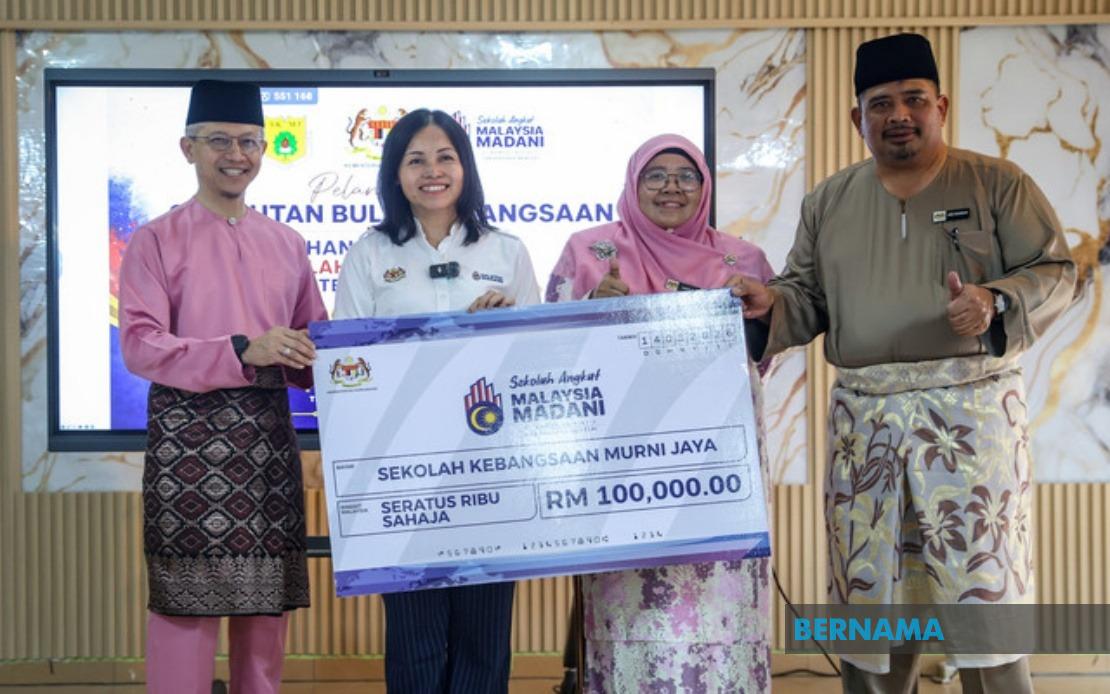
Sekolah Kebangsaan Murni Jaya in Layang-Layang, Kulai, has become the latest beneficiary of the Ministry of Communications' MADANI Adopted School programme, receiving RM100,000 in development funding during a handover ceremony held at the school. The financial allocation represents part of the ministry's broader commitment to enhancing educational infrastructure across the country by partnering with government institutions to modernize learning environments and support Malaysia's transformation agenda.
Deputy Communications Minister Teo Nie Ching presided over the 2026 funding handover, unveiling a comprehensive spending plan designed to elevate both the physical environment and technological capabilities of the institution. The investment reflects a strategic approach to school development that balances tangible infrastructure improvements with digital learning tools, recognizing that contemporary education requires both comfortable facilities and modern teaching resources.
The allocation has been strategically distributed across several categories of enhancement. Four new school signboards will improve wayfinding and institutional branding, while the installation of two Smartboards specifically designated for the hall and resource centre will modernize teaching delivery and community engagement spaces. Complementing these upgrades, comprehensive lighting improvements throughout the facility will create safer, more conducive learning environments during extended school hours, and a complete beautification initiative for the main hall will enhance the aesthetic quality of the school's central gathering space. A new public address system will strengthen communication capabilities for daily announcements and emergency procedures.
The technology component of the funding allocation underscores the ministry's recognition that digital literacy and technical competency are fundamental to 21st-century education. Ten iPads designated for the computer laboratory will expand student access to interactive learning platforms and coding applications, while a Robot Sumo set specifically procured for STEM and TVET activities will introduce hands-on robotics training. These investments align with Malaysia's broader educational policy priorities emphasizing science, technology, engineering, and mathematics disciplines alongside vocational and technical education pathways.
Climate control and comfort improvements have also been prioritized, with two additional air-conditioning units budgeted to maintain optimal temperatures throughout the school, particularly crucial in Malaysia's tropical climate where heat can significantly impact student concentration and teacher effectiveness. These infrastructure elements, though often overlooked in discussions of educational advancement, constitute essential prerequisites for maintaining productive learning environments.
According to Teo Nie Ching, the facility upgrades at SK Murni Jaya are scheduled for completion by October of the current year, establishing a clear timeline for implementation and allowing the school community to benefit from the improvements before the year concludes. Other educational institutions receiving equivalent funding under the same MADANI Adopted School initiative must ensure their respective projects achieve full implementation within calendar year guidelines, as stipulated by the Ministry of Finance. This standardized timeline ensures equitable progress across participating schools and maintains accountability throughout the programme.
An additional allocation of RM20,000 has been earmarked specifically for furnishing the school canteen with 19 sets of tables and chairs, recognizing that functional dining facilities represent an important component of the overall school experience. Adequate seating capacity and quality furniture in canteen areas directly influence student nutrition, meal preparation efficiency, and social interaction during break periods, thereby contributing to holistic student development and wellbeing.
The MADANI Adopted School programme reflects the communications ministry's interpretation of broader national development goals, linking government institutional support to educational outcomes. By adopting schools as strategic partners, the ministry creates direct engagement opportunities with communities and establishes measurable improvement benchmarks. This approach differs from more centralized funding models by creating individualized partnerships between government entities and specific educational institutions.
For SK Murni Jaya specifically, this funding injection addresses a range of infrastructure deficits that have likely constrained the school's capacity to deliver contemporary education. The combination of physical upgrades, technological enhancements, and facility improvements provides a holistic solution addressing multiple dimensions of school functionality simultaneously. Such comprehensive funding packages are relatively uncommon and represent significant institutional development opportunities.
The investment in STEM and TVET activities through the Robot Sumo equipment reflects Malaysia's strategic pivot toward technical skills development. As the country navigates economic transformation and sectoral shifts, vocational technical education assumes increasing importance as an alternative pathway to traditional academic progression. Schools equipped with modern robotics and automation tools can better prepare students for emerging career opportunities in technology and manufacturing sectors.
The timing of this funding announcement, occurring during the government's fiscal year cycle, suggests that institutions in Johor and the broader Klang Valley region have been prioritized within current development allocations. SK Murni Jaya's selection as a MADANI Adopted School indicates recognition of either specific institutional needs or strategic importance within regional educational planning. Such targeted allocation decisions reflect broader policy choices about where to concentrate developmental resources.
Implementation of these improvements will require coordination among school administration, the Ministry of Communications, and relevant contractors. The October completion deadline for major upgrades establishes accountability measures for timely delivery and quality standards. For Malaysian parents and students, such facility improvements translate into immediate educational benefits including enhanced learning spaces, better technological access, and improved school infrastructure quality.

