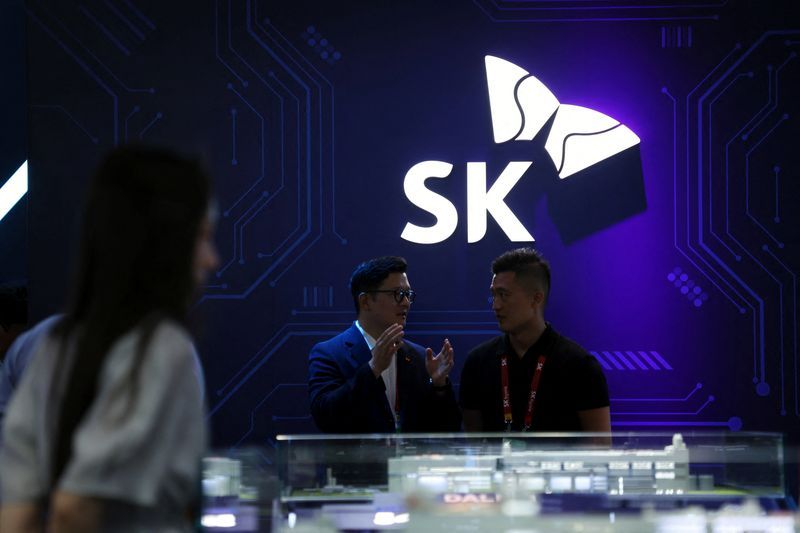
South Korea's SK Hynix, the world's second-largest memory chipmaker, announced plans on Wednesday to raise up to 45.45 trillion won (approximately $29.43 billion) through an American Depositary Receipts listing, marking a pivotal moment for the company as it capitalises on soaring global demand for artificial intelligence components. The Seoul-based semiconductor manufacturer intends to issue 17.79 million new shares to support the ADR listing on the Nasdaq exchange, with trading set to commence on July 10. Should the offering proceed at the upper end of the intended valuation range, it would eclipse the previous record for ADR issuances, surpassing the $21.8 billion that Chinese e-commerce powerhouse Alibaba garnered during its 2014 New York market debut.
The potential proceeds represent a transformative injection of capital for SK Hynix's manufacturing ambitions. The company has designated the funds for constructing a new chip fabrication facility in Yongin, developing an advanced packaging plant in Cheongju, and acquiring sophisticated chipmaking equipment including an Extreme Ultraviolet Scanner—technology essential for producing cutting-edge semiconductor architectures. This capital deployment reflects SK Hynix's strategic determination to expand its capacity precisely when demand for high-performance memory components shows no signs of abating.
A consortium of heavyweight investment banks—BofA Securities, Citigroup Global Markets, Goldman Sachs, and JP Morgan Securities—will orchestrate the offering. The company noted that ten ADRs will correspond to a single common share, a structure commonly employed to make share prices more accessible to international investors unfamiliar with Korean market conventions. The final fundraising amount remains subject to adjustment following bookbuilding, the process by which underwriters gauge institutional investor appetite and establish appropriate pricing.
SK Hynix's prominence in the artificial intelligence ecosystem cannot be overstated. The company supplies high-bandwidth memory chips—critical components that enable rapid data processing in AI systems—to major technology titans including Nvidia and Google. These specialised memory solutions are foundational to modern AI infrastructure, powering everything from large language models to machine learning acceleration platforms. As enterprises worldwide intensify their artificial intelligence investments, suppliers like SK Hynix occupy irreplaceable positions within the value chain.
The timing of this listing underscores the momentous shift in South Korea's corporate hierarchy. Earlier this week, SK Hynix surpassed Samsung Electronics to become the nation's most valuable publicly traded company, a remarkable achievement that reflects changing market valuations and investor sentiment regarding semiconductor specialisation. This milestone signals recognition that focused expertise in high-demand memory technologies potentially commands greater investor confidence than diversified conglomerates spanning multiple sectors.
For Southeast Asian markets, SK Hynix's expansion carries significant implications. The region hosts numerous electronics manufacturing facilities and technology companies that depend upon reliable, advanced semiconductor supplies. Enhanced capacity from SK Hynix could stabilize supply chains that have experienced volatility in recent years, benefiting electronics manufacturers across Malaysia, Vietnam, Thailand, and the Philippines. Additionally, the success of this landmark fundraising may encourage other Asian technology champions to access international capital markets through similar mechanisms.
The ADR mechanism itself deserves scrutiny as a vehicle for expanding SK Hynix's shareholder base beyond traditional Korean institutional and retail investors. American Depositary Receipts essentially allow non-US investors to hold shares of foreign companies through a convenient wrapper, simplifying cross-border investment procedures while maintaining regulatory clarity. By listing on Nasdaq, SK Hynix gains direct access to the world's largest concentration of technology-focused institutional capital, potentially enhancing the company's valuation and providing currency diversification benefits.
The semiconductor sector remains extraordinarily capital intensive, with modern fabrication plants requiring multi-billion-dollar investments to achieve operational relevance. SK Hynix's determination to fund expansion through this public market offering rather than debt financing demonstrates management confidence in long-term demand trajectories for memory chips. The company's strategic emphasis on artificial intelligence applications—where memory bandwidth represents a key performance bottleneck—positions it advantageously against historical commodity price cycles that have ravaged semiconductor manufacturers during previous downturns.
Moreover, the geopolitical dimension surrounding semiconductor manufacturing capacity cannot be ignored. As Western nations increasingly prioritise supply chain resilience and reducing dependence upon Asian semiconductor production, companies like SK Hynix face mounting pressure to establish manufacturing facilities within allied jurisdictions. The Yongin and Cheongju plants under construction may partly address such considerations whilst simultaneously serving the insatiable regional demand emanating from Asia-Pacific markets. SK Hynix's expansion strategy thus reflects both commercial opportunity and strategic positioning within evolving global technology competition frameworks.