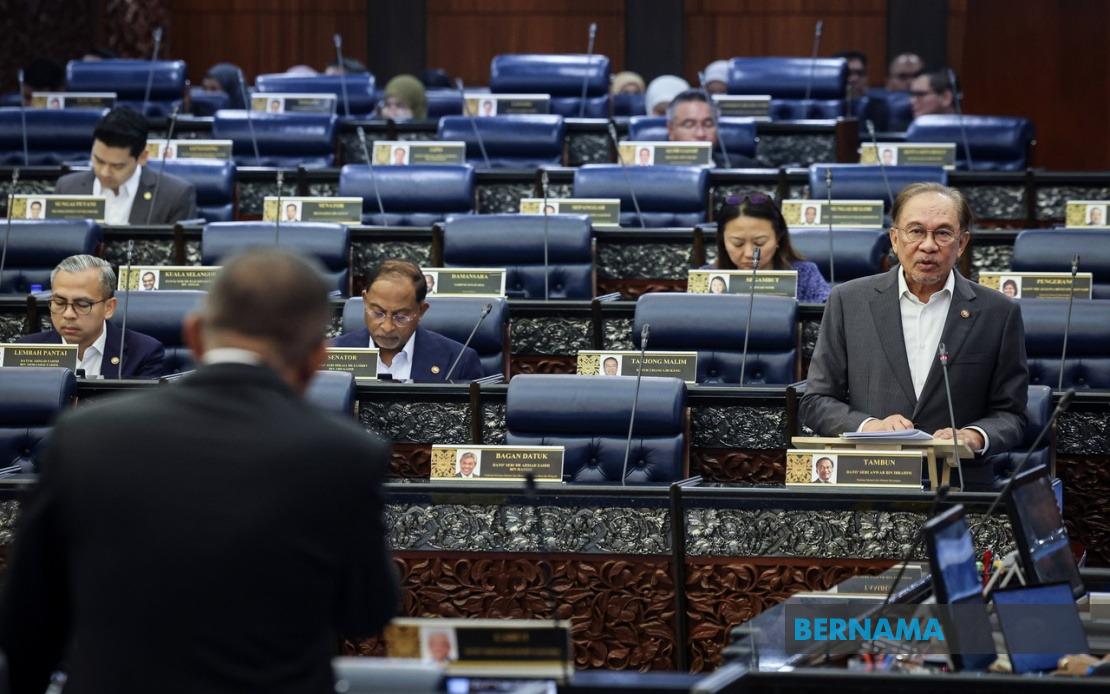
Prime Minister Datuk Seri Anwar Ibrahim has highlighted a substantial push by the government to bolster Malaysia's small business sector, revealing that Syarikat Jaminan Pembiayaan Perniagaan (SJPP) has greenlit RM4.9 billion in financing facilities for over 6,000 micro, small and medium enterprises throughout the opening six months of 2026. The announcement underscores the administration's commitment to addressing persistent concerns about credit accessibility among Malaysia's entrepreneurial base, a demographic that forms the backbone of the nation's economic resilience.
SJPP, which operates as a wholly owned subsidiary of the Minister of Finance (Incorporated), functions as the principal vehicle through which the government channels credit guarantees and financing support to businesses that traditionally struggle to secure conventional bank lending. Anwar, who holds the dual portfolios of Prime Minister and Finance Minister, disclosed these figures during parliamentary debate, responding to questions raised by Lee Chuan How from Petaling Jaya (PH-Ipoh Timor) regarding the government's awareness of headwinds facing the entrepreneurial community in the current global environment.
The financing approvals represent a targeted intervention designed to ease operational pressures on small business operators by reducing barriers to working capital and improving cash flow management. For many MSMEs in Malaysia, access to affordable credit remains a critical constraint on business expansion and operational stability. By channelling funds through SJPP's guarantee mechanisms, the government effectively de-risks lending decisions for commercial banks, encouraging them to extend credit to borrowers who might otherwise be deemed too risky under standard underwriting criteria. This intermediary role has proven instrumental in democratising access to finance across Malaysia's diverse entrepreneurial landscape.
Beyond the headline RM4.9 billion figure, Anwar revealed that the government has mobilised over RM15 billion in total loans and financing guarantees specifically designated to support the working capital requirements of MSMEs. This broader commitment reflects a strategic recognition that small businesses require sustained access to credit to maintain operations, invest in inventory, and manage seasonal cash flow volatility. The scale of this intervention suggests that policymakers view MSME financing as a cornerstone of inclusive economic development, particularly as the nation navigates uncertainties stemming from global trade tensions and shifting supply chain dynamics.
A particularly notable dimension of the financing strategy involves earmarking RM5 billion from the RM15 billion pool exclusively for Bumiputera businesses. This allocation acknowledges the historical disparities in entrepreneurial capital access among different demographic groups within Malaysia and reflects a deliberate policy choice to address structural inequities in the business ecosystem. By reserving a third of total financing for Bumiputera entrepreneurs, the government signals its commitment to broadening wealth creation opportunities across Malaysia's ethnically diverse population, an objective that extends beyond mere economic metrics to touch on social cohesion and shared prosperity.
The timing of these announcements carries significance given the macroeconomic backdrop against which Malaysian businesses currently operate. Global economic uncertainties, inflationary pressures, and potential disruptions to regional trade networks create an environment where access to affordable financing becomes even more critical for survival and growth. MSMEs, which typically lack the balance sheet strength and collateral of larger corporations, face heightened vulnerability during such periods. Government intervention through mechanisms like SJPP becomes a stabilising force, enabling small business operators to bridge financing gaps that might otherwise force them to curtail operations or forgo growth investments.
The SJPP's operational approach reflects lessons learned from decades of MSME support initiatives across Southeast Asia and beyond. Rather than providing direct subsidised credit, which risks creating inefficient allocation of capital, the guarantee model leverages private sector banking infrastructure while using public funds to absorb credit risk. This approach encourages banks to maintain lending discipline while simultaneously broadening their customer base into segments that generate sustainable fee income and relationship-building opportunities. From a fiscal perspective, the arrangement also constrains direct budgetary outlay since guarantees only crystallise into actual government expenditure when underlying loans default.
For Malaysian entrepreneurs navigating an increasingly complex business environment, these financing mechanisms represent tangible policy support that can translate into operational flexibility and competitive resilience. A MSME struggling with working capital constraints, for instance, might use SJPP-guaranteed financing to purchase inventory at discounts or invest in technology that improves productivity. Over time, such investments accumulate into sectoral improvements in efficiency and innovation capacity. The aggregate effect of thousands of individual MSMEs accessing additional capital extends beyond individual firm performance to influence entire value chains and supply networks.
The parliamentary context in which these announcements were made also merits attention. By addressing MSME concerns during question time, the government demonstrates responsiveness to backbench concerns and public anxiety about economic conditions. This transparency regarding specific quantum of financing and beneficiary numbers builds public confidence in the administration's engagement with pressing economic challenges. For Malaysian voters and business owners, concrete figures and parliamentary accountability provide more tangible reassurance than rhetorical commitments alone.
Looking forward, sustaining these financing levels will require continued fiscal discipline and economic growth to support adequate tax revenues. As Malaysia navigates its post-pandemic recovery trajectory, the government faces the challenge of maintaining support for MSMEs whilst managing broader fiscal consolidation objectives. The success of SJPP and related initiatives will ultimately be measured not merely in disbursement volumes but in tangible outcomes such as business survival rates, employment generation, and contributions to household income across Malaysia's diverse business communities. The coming months will reveal whether these RM4.9 billion in first-half approvals translate into the operational stability and growth momentum that the MSME sector urgently requires.

