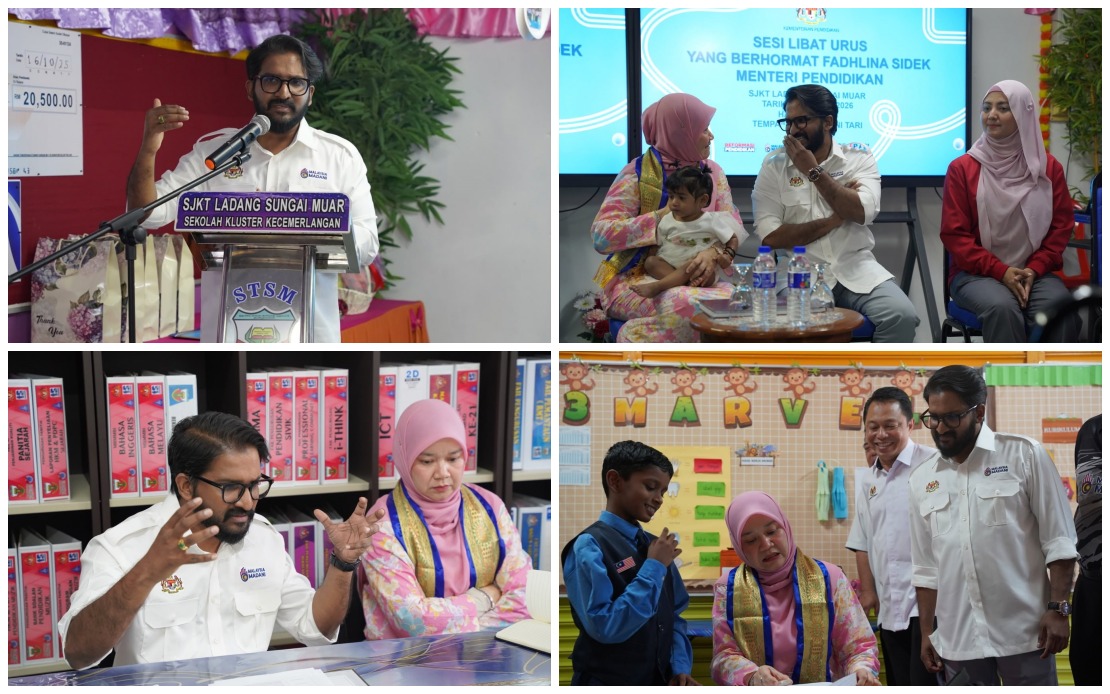
The relocation of Sekolah Jenis Kebangsaan Tamil (SJKT) Ladang Sungai Muar in Segamat has entered a critical phase, with land ownership formalities now being processed through the Segamat Land and Mines Office. The milestone was announced during an engagement session between Segamat Member of Parliament R. Yuneswaran, school representatives, and Education Minister Fadhlina Sidek, signalling visible momentum in a project that has lingered for years despite growing concerns about student welfare.
Yuneswaran's announcement carries particular weight given his consistent advocacy for the school's relocation since winning the Segamat seat in 2022. His framing of the initiative emphasises the convergence of multiple institutional failures at the current location: inadequate safety standards, geographical isolation from the surrounding Tamil community, and insufficient infrastructure to support modern educational delivery. These issues have accumulated over time, creating conditions that prompted the initial relocation proposal and sustained political pressure to act.
The presence of Education Minister Fadhlina Sidek at the Segamat engagement underscores federal-level recognition of the project's importance. In Malaysia's education system, ministerial attendance at school-level events typically signals departmental commitment to following through on announced initiatives, particularly where infrastructure deficiencies have become politically salient. Her participation suggests the Ministry of Education views the SJKT Ladang Sungai Muar relocation as consistent with broader MADANI Government priorities around educational equity and student safety.
The transition to land ownership procedures marks the project's passage beyond the preliminary consultation and planning phases. Land acquisition in Malaysia involves coordinated action between multiple agencies, most notably the land office overseeing the jurisdiction where the new site is located. The involvement of the Segamat Land and Mines Office indicates that a specific location has likely been identified or is under final consideration, though details remain undisclosed. This procedural stage typically consumes several months and requires navigating title clearances, survey documentation, and administrative approvals before land can be formally transferred for educational development.
For Tamil-language education in Malaysia, school relocations carry broader implications beyond individual institutional improvements. Vernacular schools serve culturally and linguistically diverse student populations whose educational outcomes directly influence intergenerational language retention and community cohesion. SJKT facilities operating under substandard conditions therefore represent not merely individual school problems but potential systemic deficits in the provision of quality Tamil-medium education across Peninsular Malaysia. The Segamat relocation thus becomes emblematic of whether the government genuinely prioritises vernacular education infrastructure or treats it as a lower-tier priority.
Segamat itself presents a particular context for this relocation. The constituency encompasses both urban and rural areas with historically significant Tamil-speaking populations, particularly among estate workers and their descendants. Educational infrastructure in such mixed demographic zones often reflects historical under-investment in rural and semi-rural Tamil communities. A successfully executed relocation would demonstrate that political pressure and ministerial engagement can translate into tangible improvements for historically marginalised educational communities.
Yuneswaran's invocation of the MADANI Government's education-centred mandate attempts to situate the relocation within the broader policy narrative of the current administration. MADANI governance rhetoric emphasises inclusive development and institutional responsiveness to community needs. By linking the school relocation to these broader governmental commitments, Yuneswaran positions it as consistent with federal priorities rather than merely a local constituency concern. This rhetorical strategy may prove useful if implementation encounters delays or budgetary constraints later.
The engagement session format itself deserves scrutiny as an indicator of implementation culture. Rather than issuing a bureaucratic directive, the government convened stakeholders—school administrators, the MP, the education minister—for collaborative discussion. This consultative approach may increase stakeholder buy-in but also suggests the relocation requires careful navigation of competing interests, whether land compensation negotiations with current property holders or decisions about site specifications and timeline.
Practical timelines for school relocations in Malaysia frequently extend beyond initial projections. Land acquisition, architectural design, construction procurement, and phased student movement typically unfold over two to four years minimum. Yuneswaran's commitment to continued monitoring and follow-up signals recognition that periodic public accountability may be necessary to prevent the project from stalling once immediate political attention subsides. The frequency and visibility of such follow-up efforts will substantially influence whether the relocation materialises or becomes another delayed infrastructure initiative.
For Malaysian education policy more broadly, the SJKT Ladang Sungai Muar relocation represents one test case among numerous vernacular school infrastructure projects awaiting attention nationwide. The project's success or failure will likely inform political appetite for similar relocations elsewhere and demonstrate whether sustained constituency-level advocacy combined with ministerial support can overcome the implementation challenges that typically attend educational infrastructure development. Regional readers should monitor subsequent announcements regarding land acquisition completion, design phase commencement, and construction timelines as indicators of genuine government commitment versus symbolic action.

