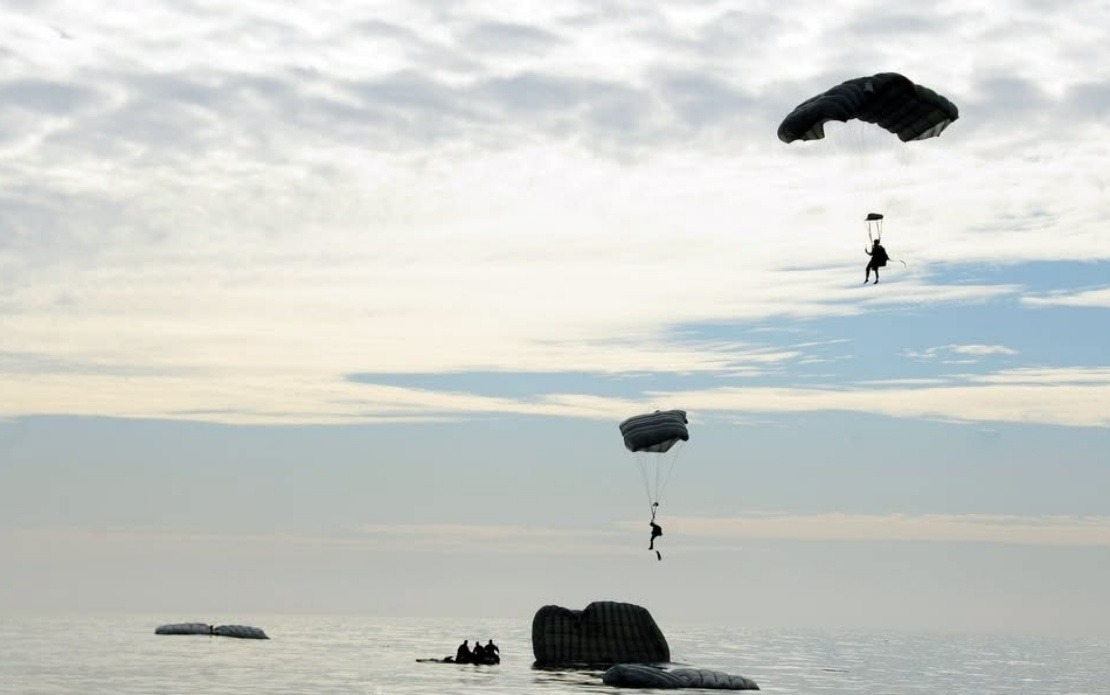
The Royal Malaysian Navy has confirmed that all six personnel from the Naval Special Warfare Forces, commonly known as PASKAL, were recovered safely following an incident during a free-fall parachuting drill conducted in the South China Sea. The servicemen drifted away from their intended landing zone after sudden meteorological changes drastically reduced visibility in the operational area. An RMN vessel located and retrieved the personnel from the water without incident.
The training exercise, which took place on August 12, represented a routine component of the Navy's commitment to maintaining combat readiness among its most elite personnel. Free-fall parachuting operations are among the most technically demanding disciplines within special warfare training, requiring extensive preparation, precision timing, and coordination between multiple teams. Even minor environmental shifts can significantly alter jumping trajectories and wind patterns, creating unexpected challenges that demand rapid adaptation from trained operators.
Weather patterns in the South China Sea are notoriously volatile, particularly during the monsoon season when rapid atmospheric changes can materialise within minutes. The sudden shift that affected visibility during this particular exercise underscores the inherent unpredictability of maritime training operations in this region. Such conditions are not aberrations but rather characteristic features that personnel must anticipate and navigate successfully, making weather-related complications valuable teaching moments within operational frameworks.
The Navy's official statement characterised the incident as evidence of the programme's effectiveness in preparing PASKAL operatives for genuinely challenging circumstances that extend beyond standard tactical scenarios. The organisation emphasised that their selection and training methodology deliberately incorporates exposure to realistic adversity, ensuring that personnel develop the psychological resilience and technical competence necessary for extreme conditions. This philosophy, reflected in PASKAL's motto "Sentiasi yang Terbaik" (Always the Best), permeates all aspects of the unit's developmental curriculum.
Beyond the immediate tactical competencies expected of special warfare personnel—weapons proficiency, navigation, and direct action capabilities—the training regimen explicitly cultivates what military theorists term "stress inoculation." By exposing operators to situations that test their physical endurance, cognitive processing under pressure, and capacity for independent decision-making, the force builds personnel whose performance remains dependable when conditions deteriorate unexpectedly. The incident off the South China Sea functioned as an unscripted validation of these preparatory methods.
PASKAL's standing as Southeast Asia's premier naval special operations unit rests substantially upon the calibre of personnel produced through this demanding training architecture. The unit regularly conducts operations across Malaysia's extensive maritime zones, executing everything from anti-piracy and counter-terrorism missions to classified intelligence gathering and direct action assignments. Maintaining operational competency across such varied mandates necessitates continuous, progressively challenging training that cannot be safely replicated in controlled environments alone.
The RMN's framing of the incident carries particular significance given ongoing regional security concerns. Malaysia's maritime domain extends across strategically vital waterways where competing national interests periodically generate tension. PASKAL personnel frequently operate in these contested spaces, requiring not merely proficiency in standard techniques but the adaptability to respond to unanticipated circumstances without compromising operational objectives. Recovery procedures that demonstrated effective inter-unit coordination during this incident reinforce confidence in the institution's capacity to execute complex operations under adverse conditions.
The organisation's emphasis on "balancing combat readiness with personnel safety" reflects a mature operational philosophy. Elite military units traditionally navigate a challenging equilibrium between maintaining exacting standards and protecting personnel from unnecessary risk. The Navy's statement suggests confidence that current training protocols occupy appropriate middle ground—rigorous enough to develop genuine capability, yet incorporating safeguards that prevent training fatalities or catastrophic injuries. The presence of recovery assets positioned to intervene when circumstances deteriorate exemplifies this balance in practice.
For Malaysian defence policy observers, the incident carries broader implications regarding military modernisation and force development. Maritime security challenges in Southeast Asia—ranging from conventional state competition to transnational maritime crime—demand special operations capabilities that only continuous, realistic training can produce. The incident demonstrates the Navy's commitment to developing such capabilities while maintaining professional standards that distinguish the Malaysian military from less disciplined regional counterparts. This distinction carries value beyond operational effectiveness, contributing to Malaysia's diplomatic standing and influence within regional security frameworks.
The swift and successful recovery operation also reflects institutional confidence and competence in maritime operations more broadly. The ability to locate personnel adrift in open water and execute extraction procedures seamlessly indicates sophisticated coordination systems and professional seamanship among the broader RMN complement. Such capabilities, demonstrated through routine operations and training incidents alike, underpin Malaysia's capacity to police its expansive maritime zones and contribute meaningfully to regional security cooperation initiatives that increasingly depend upon advanced naval capabilities.

