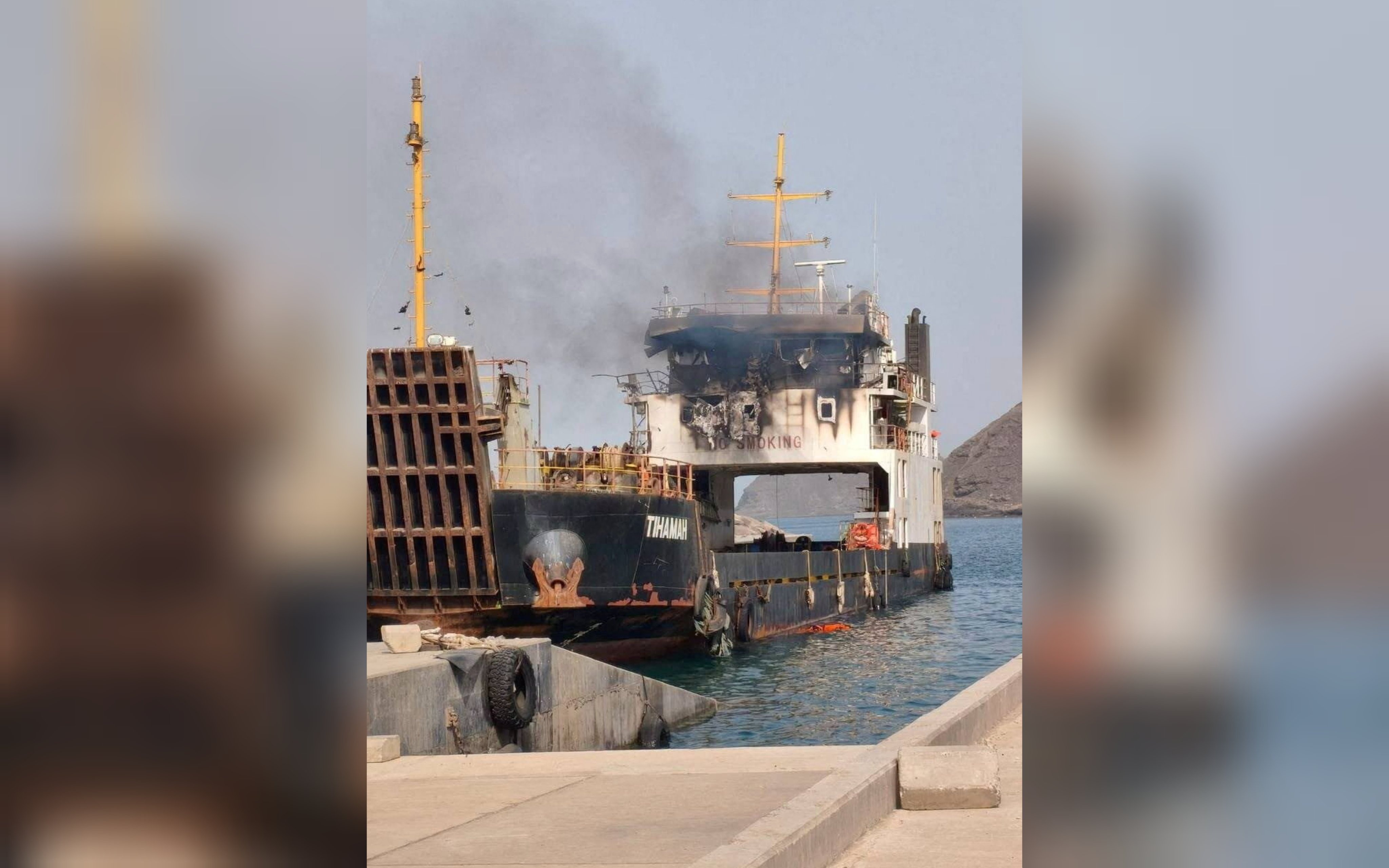
Yemen's Houthi rebel group struck a commercial cargo ship carrying food supplies in the Bab al-Mandeb Strait on Tuesday, killing six people and injuring ten in an incident that underscores mounting instability in one of the world's most strategically vital waterways. The attack on the Yemeni-flagged Tihamah killed four crew members — three Pakistani nationals and one Indonesian — along with two personnel from Yemen's armed forces' 2nd Naval Brigade, according to Yemen's Coast Guard. The casualties also included seven wounded crew members, two injured coast guard personnel, and one wounded member of the naval brigade.
The vessel came under repeated assault during the incident. Three separate ballistic missile strikes hit the Tihamah, igniting a fire aboard the vessel and causing extensive structural damage. In a tactic apparently designed to maximize casualties, Houthi forces fired an additional missile toward the ship even as rescue teams were attempting to reach survivors, demonstrating a deliberate effort to obstruct recovery operations and inflict further loss of life. The aggression resulted in the successful rescue of eleven Pakistani and Indonesian sailors, though the circumstances surrounding the attack and rescue operation remained tense throughout.
Yemen's Transportation Ministry condemned the assault as a terrorist act and characterized it as part of a systematic pattern of Houthi aggression. The ministry's statement emphasized that the targeting of a food supply vessel represents an escalation in what it describes as a sustained campaign by Houthi forces to strike ports, destroy civilian infrastructure in government-controlled territories, and attack commercial shipping serving those areas. This framing positions the incident not as an isolated military action but as evidence of coordinated strategy aimed at destabilizing government-controlled regions and disrupting legitimate economic activity.
The implications of such attacks extend far beyond the immediate loss of life. By targeting food supply vessels, the Houthis create humanitarian risks for millions of Yemenis, threatening the supply chains that sustain populations across both government-held and Houthi-controlled territory. Yemen's transportation authorities warned that these operations directly endanger the flow of essential foodstuffs and consumer goods to civilians, potentially exacerbating an already severe humanitarian crisis in a nation ravaged by conflict. The dual impact — disrupting supply lines while demonstrating the vulnerability of commercial shipping — creates psychological and economic pressure on those dependent on maritime trade.
The Bab al-Mandeb Strait occupies a position of extraordinary strategic importance in global commerce and geopolitics. Situated at the entrance to the Red Sea, the strait functions as a critical gateway for international shipping between the Mediterranean and Indian Ocean regions. It sits opposite the Strait of Hormuz, another vital chokepoint controlling access to the Persian Gulf. Together, these two waterways represent essential infrastructure for global trade, with millions of barrels of oil and countless containers of goods passing through daily. Disruptions to shipping in either location reverberate through supply chains worldwide and affect energy markets globally.
The Houthis, a Yemen-based rebel group aligned with Iran, have previously demonstrated capacity and willingness to target maritime traffic in the Red Sea and Gulf of Aden. Such attacks reflect both their military capabilities and their strategic calculation that disrupting shipping serves their broader political and military objectives within Yemen's ongoing civil conflict. The organization has stated that maritime strikes are intended as leverage in regional disputes and responses to military operations by regional adversaries. However, the indiscriminate targeting of civilian vessels carrying humanitarian cargo raises questions about the distinction between military and civilian targets in their operational calculus.
The attack on the Tihamah adds another chapter to a concerning trend of maritime insecurity that threatens legitimate commercial activity and international navigation rights. Shipping companies operating in the region face genuine security dilemmas: vessels transiting the Bab al-Mandeb cannot easily detour around the strait given geographical realities and fuel constraints, yet sailing through exposes them to demonstrated threats. Insurance costs for vessels operating in contested waters rise substantially, effectively adding a security premium to the cost of goods shipped through the region. These economic pressures eventually reach consumers worldwide through increased prices for goods transported via these routes.
The incident also illustrates the humanitarian paradox embedded in Yemen's conflict. A vessel explicitly carrying food supplies — a commodity essential for civilian survival — became a military target. This dynamic reflects the complexity of Yemen's civil war, where distinctions between civilian and military objectives have become increasingly blurred. International humanitarian law theoretically protects civilian supply operations, yet practical enforcement of these protections proves difficult in active conflict zones. The Houthis' apparent willingness to attack food shipments suggests either a dismissal of humanitarian considerations or a calculation that disrupting supply networks serves their broader strategic interests regardless of civilian consequences.
The lack of immediate Houthi response or clarification regarding their motivations for this particular attack leaves interpretation to observers and affected parties. In previous similar incidents, the group has justified attacks on shipping by citing regional tensions, Israeli actions, or their role as a resistance movement. However, justifications, however articulated, do not alter the fundamental reality: six people died, many more were wounded, and civilian maritime commerce faced another demonstration of vulnerability in a critical shipping lane.
For Malaysia and other Southeast Asian nations, this incident carries particular significance. Malaysian-registered vessels and crews regularly transit the Red Sea and Bab al-Mandeb corridor as part of vital shipping routes connecting Asian ports to Middle Eastern and European markets. The attack on the Tihamah serves as a stark reminder of the real risks facing regional shipping interests in contested waters. Malaysian shipping companies, port authorities, and maritime workers must factor such threats into operational planning, insurance calculations, and risk assessments. The regional implications extend beyond immediate security concerns to encompass broader questions about maritime freedom of navigation and the sustainability of global supply chains that depend on passage through unstable regions.
The incident underscores the urgent need for international attention to maritime security in the Red Sea and surrounding waters. Regional and global actors must balance legitimate security concerns with protection for civilian commerce and humanitarian operations. Without effective mechanisms to reduce tensions and establish maritime security frameworks, incidents like the attack on the Tihamah will likely continue, with cascading effects on international trade, energy markets, and humanitarian assistance operations across the Middle East and beyond.

