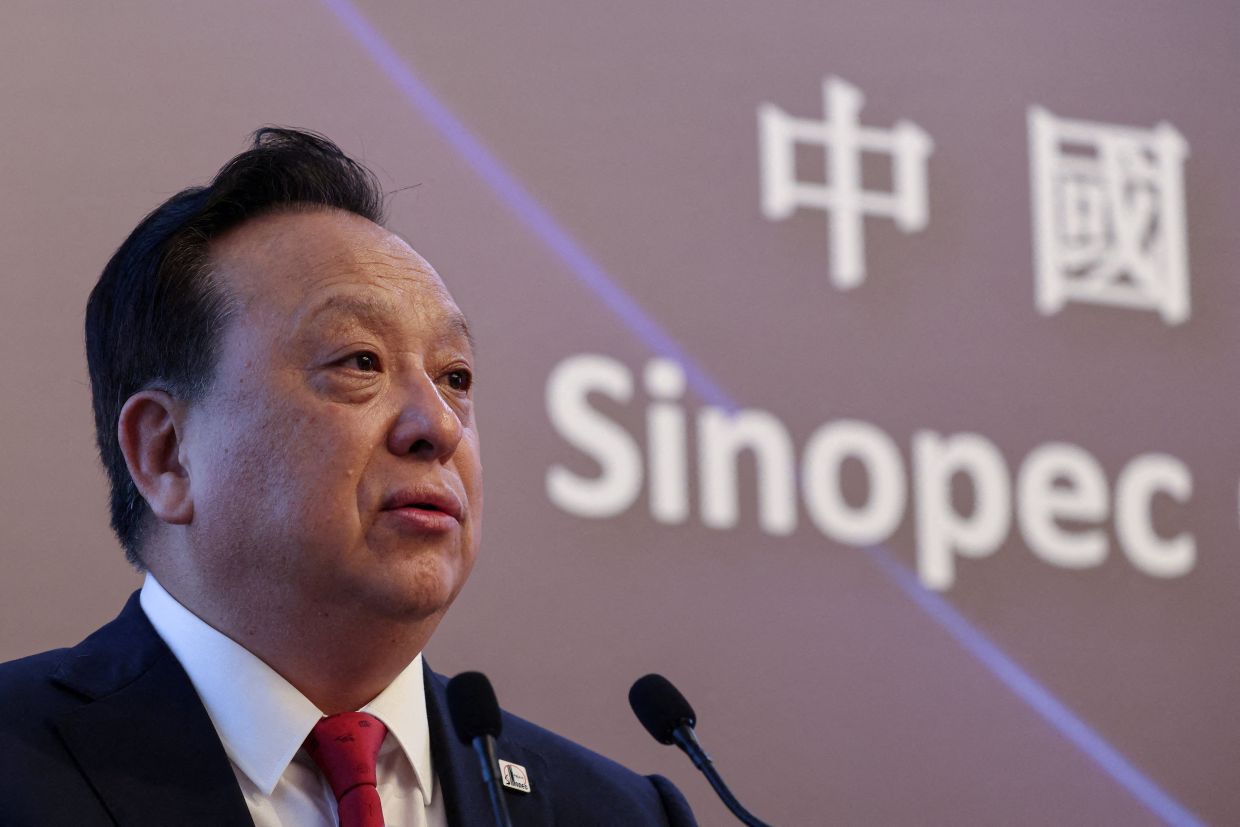
Hou Qijun, the newly appointed chairman of Sinopec, is pursuing an unusually aggressive transformation strategy for a Chinese state-owned enterprise, reorganising the world's largest oil refiner into specialised profit centres while simultaneously pivoting toward new energy production. Appointed just over a year ago, Hou has moved swiftly to address mounting structural pressures facing the company, most notably the steady erosion of demand for transport fuels as vehicle electrification accelerates globally. Rather than coast toward retirement at the typical age for state enterprise executives in China, the 60-year-old geologist is spearheading what he characterises as a company-wide self-revolution designed to combat what he calls the "big company syndrome" and institutional paralysis that has slowed Sinopec's ability to respond to market upheaval.
The restructuring initiative divides Sinopec's sprawling operations into four distinct profit centres: oil, gas and new energy operations; refining and chemicals; finance and strategic ventures; and a combined global trading and marketing segment encompassing fuel, natural gas and chemicals distribution. This decentralised approach aims to grant greater autonomy to individual business units, enabling faster decision-making and accountability for financial performance. Speaking with unusual candour for a state enterprise leader in a July publication by China's State-owned Assets Supervision and Administration Commission, Hou acknowledged that the company's most formidable obstacles stem not from technological shortcomings or resource constraints but from systemic inflexibility and ingrained institutional resistance to change. His willingness to publicly articulate such structural critiques signals a departure from the measured rhetoric typically employed by senior state firm executives and reflects the urgency with which Sinopec's leadership views the company's competitive predicament.
The refiner's deteriorating position in transport fuels underscores the urgency of this transformation. Sinopec's fuel sales have contracted to 2017 levels despite population growth and economic expansion, with the company selling approximately 3.6 million barrels daily of gasoline and diesel last year, predominantly for domestic consumption. This massive volume, which once represented a crowning achievement of scale, has become a strategic liability as new vehicle registrations increasingly skew toward electric models. During an earnings briefing in Hong Kong, Hou posed a pointed rhetorical challenge to existing business assumptions, questioning how the refiner could maintain revenue growth when half of newly purchased vehicles no longer require petroleum-based fuels. His candid framing of this existential challenge suggests a leadership team acutely aware that incremental adjustments will prove insufficient; the company must fundamentally reorient its value-generation mechanisms toward higher-margin chemicals and emerging energy vectors.
To execute this strategic pivot, Sinopec is committing substantial capital resources to new energy and advanced materials development. The company plans to allocate approximately 20 percent of total capital expenditure over the 2026-2030 period toward these segments, translating to more than 30 billion yuan, or roughly USD 4.46 billion, annually. This investment trajectory reflects a deliberate decision to build competitive capabilities in sectors where traditional fossil fuel refining expertise may offer less advantage than in petrochemicals, sustainable aviation fuel production, and renewable energy infrastructure. Hou has outlined an ambitious target of completing more than thirty major projects by the end of the decade, encompassing reserve development, shale oil commercialisation, and cost reduction initiatives across refining operations. The stated emphasis on "converting technology into productivity" and "expediting execution" indicates an awareness that first-mover advantages and rapid implementation timelines will prove decisive in a crowded field of competitors pursuing similar strategies.
The shift toward higher-value petrochemicals, however, confronts formidable competitive obstacles within China's industrial ecosystem. Sinopec faces increasingly aggressive competition from both government-backed producers such as Wanhua Chemical and nimble privately-held competitors including Satellite Chemical, both of which are pursuing analogous diversification strategies. The petrochemical sector itself is burdened by chronic overcapacity, particularly in ethylene, a fundamental building block for plastics and synthetic fibres where margins have compressed substantially. This competitive intensity suggests that Sinopec's scale advantages may not automatically translate into superior returns; the refiner must develop distinctive technological capabilities or cost advantages to establish defensible market positions. The company's historical orientation toward capital-intensive, large-scale operations may prove either a competitive advantage in sectors requiring substantial infrastructure investment or a strategic liability if nimbler, better-capitalised competitors can innovate more rapidly.
Sinopec is also pursuing unconventional hydrocarbon development to supplement declining conventional reserves, with particular emphasis on commercial-scale shale oil extraction at the Jiyang trough within its flagship Shengli oilfield. This project assumes heightened strategic importance as conventionally accessible reserves within existing fields deplete at accelerating rates, threatening the productive lifespan of Sinopec's upstream portfolio. Hou, leveraging his background as a trained geologist who spent his early career at China's prestigious Daqing oilfield, has personally positioned himself as commander-in-chief of this initiative, signalling its centrality to corporate strategy. The shale development programme reflects a broader recognition that Sinopec must pursue technically sophisticated, capital-intensive projects where state-backing and access to government incentives provide competitive advantages that private operators might struggle to replicate.
Hou's appointment as Sinopec chairman in June 2025 brought an executive with proven credentials in complex organisational restructuring and energy sector integration. His previous role leading PipeChina from 2019 to 2021 demonstrated his ability to coordinate the consolidation of pipeline assets across China's three major oil corporations into a unified state entity, a politically sensitive undertaking requiring both technical expertise and organisational acumen. Prior to this assignment, he served as general manager of China National Petroleum Corporation, Asia's largest oil and gas producer, providing him with comprehensive exposure to integrated upstream, midstream and downstream operations across multiple geographies and regulatory environments. His geological training differentiates him from many Chinese state enterprise executives, potentially enabling more sophisticated technical engagement with engineering challenges inherent in shale development, carbon capture initiatives and emerging energy technologies.
Chinese institutional investors holding Sinopec shares view Hou's appointment as a positive signal despite the formidable challenges confronting the company. Observers characterise him as unusually dynamic and reform-minded for an executive approaching conventional retirement age, demonstrating willingness to advocate forcefully for internal transformation even when such arguments challenge entrenched interests. One investor representative noted that Hou's demonstrated commitment to substantive change distinguishes him from many state enterprise leaders who coast through their final years in office, suggesting that his appointment reflects a deliberate corporate and governmental commitment to revitalising Sinopec's competitive position. His capacity to articulate compelling strategic narratives and demonstrate conviction in public forums provides some reassurance that restructuring initiatives possess genuine leadership commitment rather than representing merely symbolic gestures.
The company's financial performance in the first half of 2026 provides a complex backdrop for evaluating transformation progress. Despite reporting a 19 percent increase in net profit, Sinopec confronts substantial headwinds stemming from oil supply disruptions related to the Iran conflict and government restrictions on the company's ability to pass elevated crude costs directly to consumers. This profit increase, while superficially encouraging, masks underlying vulnerabilities; profitability appears partially dependent on geopolitical factors and regulatory forbearance rather than reflecting genuine operational improvement or market share gains. The profit growth may prove transitory if supply disruptions ease or if government price controls are tightened further, underscoring the necessity of executing the transformation strategy to establish more resilient, less commodity-dependent revenue streams.
Sinopec's transformation strategy must navigate a profoundly altered competitive landscape where new energy development no longer represents an optional strategic supplement but rather a fundamental requirement for survival. Energy analyst Michal Maiden of the Oxford Institute for Energy Studies notes that Hou's extensive experience across China's integrated energy value chain and his historical association with commercially challenging government-backed investments position him favourably to capitalise on state support for hydrogen production, carbon capture infrastructure and other emerging technologies where private sector participation remains limited. Yet she identifies a critical uncertainty: whether Sinopec and its state-owned peers can effectively compete against increasingly capable non-state actors entering the new energy space. This question encapsulates the core challenge confronting Sinopec; transforming from a commodity-focused refining corporation into an agile, innovation-driven clean energy producer demands capabilities and cultural attributes that Chinese state enterprises have historically struggled to cultivate, regardless of leadership commitment or financial resources deployed.
For Southeast Asian economies and energy importers across the region, Sinopec's transformation carries significant implications. The company's pivoting toward petrochemicals and new energy production may reshape regional supply chains for both traditional chemical feedstocks and emerging clean energy components. Malaysia, as a major petrochemical producer and energy consumer, could experience both competitive pressures from a more aggressively positioned Sinopec in regional chemical markets and potential opportunities for collaboration in new energy development and technology transfer. Conversely, a prolonged struggle by Sinopec to execute its transformation successfully could signal broader challenges facing regional energy security and the transition to lower-carbon economic models, as the competence of major regional energy producers in navigating this transition directly affects energy availability and pricing for neighbouring economies. The success or failure of Hou's restructuring programme thus extends beyond corporate performance metrics to encompass consequential implications for regional economic dynamics and energy independence.

