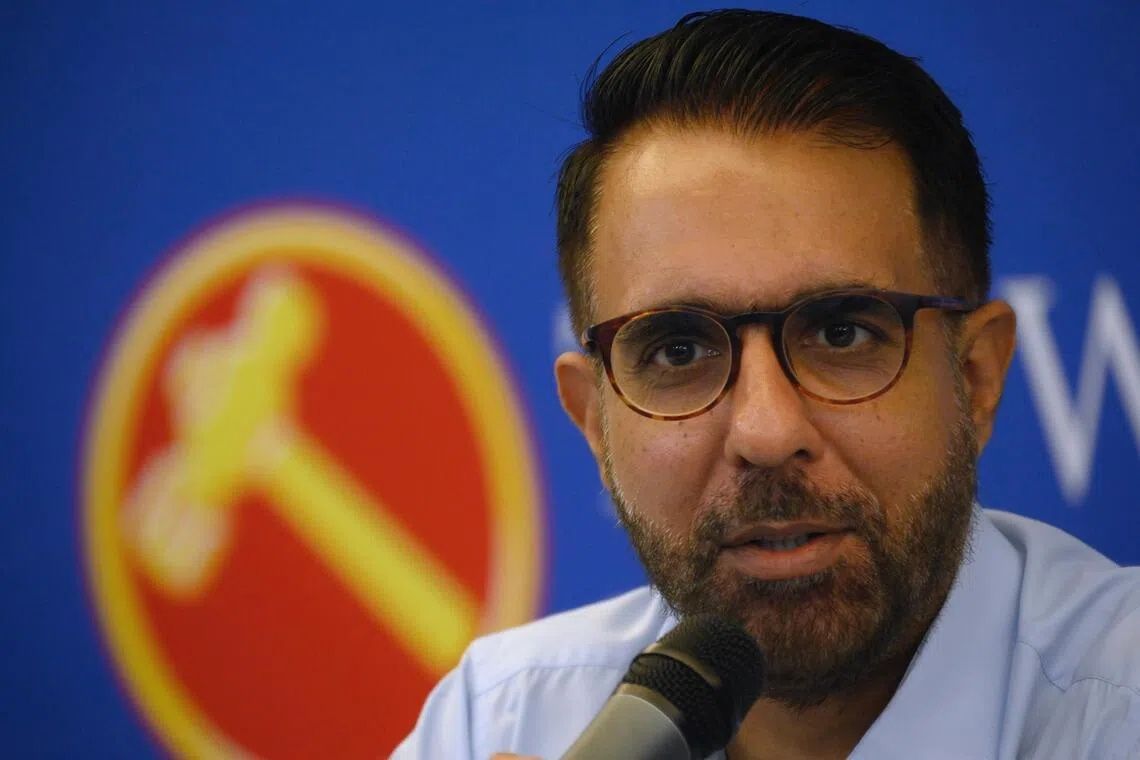
The Singapore opposition Workers' Party confronts a defining moment in its leadership structure as internal discord threatens to topple Pritam Singh from his position as secretary-general. A coalition of restive party cadres, numbering around 25, have formally requested a special conference to be held on June 28 to challenge Singh's continued tenure, with the broader cadre body of slightly over 100 members set to vote on his fate. This internal rebellion represents the first sustained leadership challenge Singh has faced since assuming the role eight years ago, and reflects deepening frustrations within the party establishment over his handling of a parliamentary integrity scandal and broader strategic decisions that have damaged the opposition's standing.
The catalyst for the mounting pressure against Singh stems from a December 2025 High Court decision upholding his conviction for misleading a parliamentary committee. Singh was found guilty of guiding Raeesah Khan, a former Sengkang GRC Member of Parliament, in maintaining a false narrative she had presented to Parliament in August 2021. Rather than immediately requesting Khan to clarify the invented anecdote, Singh allowed the deception to persist until Khan's confession in November that year. The court's validation of this conviction has become a rallying point for party members who argue that Singh's continued leadership fundamentally undermines the Workers' Party's carefully cultivated brand as the principled opposition force in Singapore politics, where voter trust and institutional integrity form the bedrock of electoral legitimacy.
The dissatisfaction extends beyond Singh's legal troubles to encompass broader questions about party direction and parliamentary strategy. Party insiders have indicated that several senior Members of Parliament, including Gerald Giam of Aljunied GRC, Dennis Tan of Hougang, and Sengkang GRC representatives He Ting Ru and Jamus Lim, have been approached by cadres as potential challengers to Singh. Notably, He and Lim served on the disciplinary panel that formally reprimanded Singh for constitutional violations, lending credibility to the argument that Singh's breach extended beyond legal technicality to violate internal party governance standards. However, none of these potential candidates have publicly committed to standing against Singh, with party members exercising caution due to documented instances of disciplinary action being taken against cadres who publicly criticise the leadership.
The special conference set for June 28 will commence with a accountability session requiring Singh to address his actions leading to the conviction, followed by a vote on whether he should resign or face a ballot challenge. Should Singh survive this first meeting, either through voluntary resignation and subsequent re-candidacy or through a majority vote retaining him, a second biennial ordinary cadres' conference will immediately follow to formally elect the party's leadership positions. Party sources suggest the outcome of the first meeting will substantially influence whether challenger candidates materialise for the second ballot, with Singh's margin of victory serving as a critical indicator of his consolidated support among the cadre body.
The figure commanding significant attention in this intra-party drama is Low Thia Khiang, the former party chief who led the Workers' Party from 2001 to 2018 and orchestrated the party's historic 2011 general election victory by winning Aljunied GRC, the opposition's first such constituency conquest. Although Low remains a central executive committee member, rumours circulating within party ranks suggest he has withdrawn his backing from Singh, with speculation that he voted against the disciplinary panel's findings at the CEC meeting. Low's endorsement of an alternative candidate would prove decisive given his continued substantial influence over party veterans and cadre members, potentially aggregating the roughly 30 dissatisfied cadres into a sufficient bloc to unseat Singh. Low himself faced a leadership challenge in 2016 from Chen Show Mao, an Aljunied GRC MP, in a contest backed by many of these same veterans now pressing for Singh's removal.
Beyond the immediate matter of Singh's conviction lies a constellation of strategic disappointments that have fuelled cadre dissatisfaction. The Workers' Party performed unexpectedly poorly in the 2025 general election despite fielding what many members considered a competitive slate of candidates. Party expectations of capturing an additional constituency went unfulfilled, prompting quiet questioning among cadres about Singh's electoral judgment and strategic planning. Adding to this frustration was Singh's decision to withdraw from Marine Parade-Braddell Heights GRC on Nomination Day, a tactical retreat that some cadres view as unnecessarily ceding ground and reinforcing perceptions that the Workers' Party is retreating rather than advancing on the electoral battlefield.
The issue of parliamentary representation compounds these concerns. Prime Minister Lawrence Wong removed Singh from the position of Leader of the Opposition in January 2026, a move that stripped the Workers' Party of heightened parliamentary standing and reduced platform access. When Wong invited the party to nominate another MP to assume the opposition leadership role, party leadership elected to decline the offer and consolidate around Singh, closing internal ranks in a show of solidarity. This decision, while demonstrating public unity, has privately troubled certain cadres who question whether the gesture sufficiently punishes Singapore's government or merely deprives the broader opposition cause of a speaking platform at a moment when articulating alternative visions of governance becomes crucial.
The integrity argument advanced by cadre critics carries particular weight within opposition politics in Singapore's context. The Workers' Party has historically positioned itself as a trustworthy alternative to the governing People's Action Party by emphasizing institutional probity and principled governance. A cadre statement capturing this sentiment notes that voters support the Workers' Party specifically because they trust it to operate differently from the incumbent power structure. Singh's conviction for participating in a parliamentary deception strikes directly at this differentiation, potentially contaminating the party's moral standing and handing the government ammunition for attacking the opposition's credibility. From this perspective, Singh's continued leadership becomes not merely a party management issue but a threat to the party's existential positioning in Singapore's political marketplace.
The formal reprimand letter issued to Singh two months prior to the June 28 elections serves as a further complication in his defence. Unlike a formal suspension or removal of candidacy rights, the reprimand acknowledges constitutional violations without imposing barriers to Singh's re-election candidacy. This regulatory middle ground leaves Singh formally eligible to seek another term while documenting an institutional judgment that his conduct breached party standards. The ambiguity surrounding Singh's precise status creates space for challenger candidates to argue that accepting his resignation represents the appropriate institutional response to such documented breaches, distinguishing between personal exoneration and acceptance of ongoing leadership.
For Malaysian observers monitoring regional opposition politics, the Workers' Party's internal struggle offers instructive lessons about the challenges facing institutional-minded opposition movements. Maintaining coalition discipline while preserving internal democratic processes tests any party attempting to project governmental credentials. The Workers' Party's current upheaval reflects broader tensions afflicting opposition parties across Southeast Asia, where the imperative to present unified public messaging collides with the expectation of internal accountability and democratic renewal. The outcome of the June 28 elections will signal whether established opposition parties can survive leadership transitions through institutional mechanisms or whether they succumb to paralysis when confronting integrity crises.
The timing of these developments also warrants attention within Singapore's broader political context. The Workers' Party's struggle for leadership stability occurs as PAP governance faces its own questions about institutional evolution and intergenerational leadership renewal. An opposition that successfully navigates internal reform and emerges with renewed credibility could position itself advantageously against a government potentially undergoing its own transitions. Conversely, extended internal warfare within the Workers' Party threatens to consume institutional energy at a moment when opposition political space might otherwise expand. The cadres gathering on June 28 will effectively decide not merely Singh's personal political future but the trajectory of organised opposition challenge to Singapore's governing system during a potential window of realignment.
Ultimately, the Workers' Party confronts a fundamental question about whether institutional violations by its leadership warrant forced removal or whether public accountability and internal reprimand constitute sufficient remediation. The cadres voting on June 28 will answer this question through their ballots, establishing precedent about the party's standards for leadership integrity and the circumstances under which internal democratic mechanisms override loyalty to incumbent leaders. Their decision will reverberate through opposition circles across Southeast Asia and shape perceptions about whether established opposition movements can credibly position themselves as governance alternatives to entrenched ruling parties.

