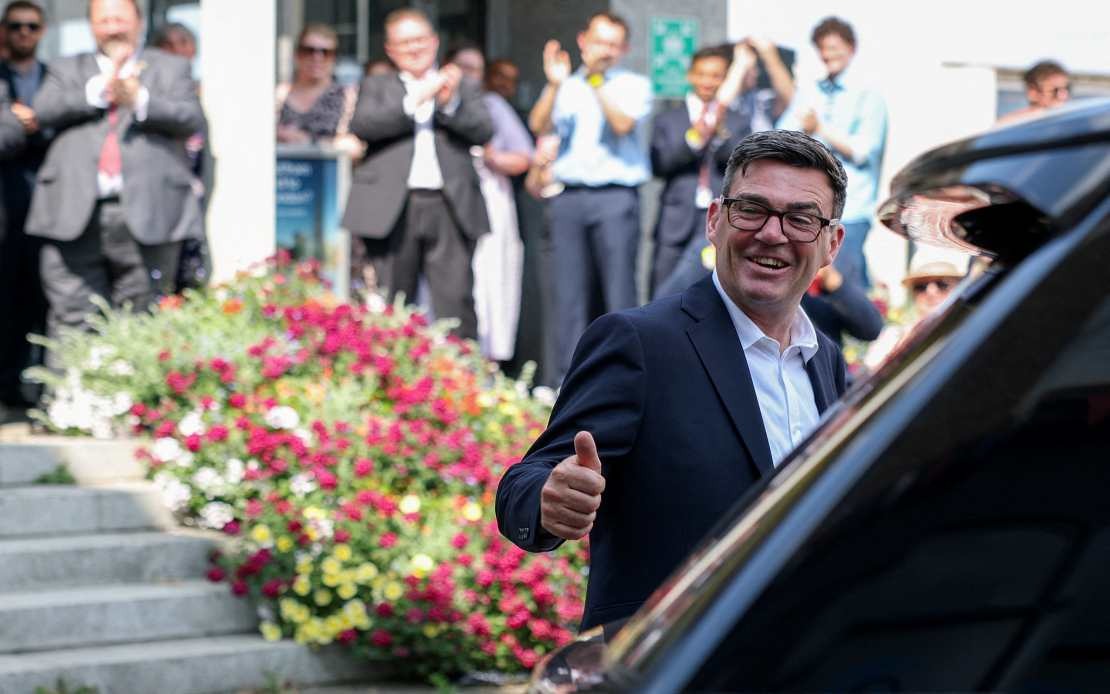
Singapore's Prime Minister Lawrence Wong extended formal congratulations to Andy Burnham following his appointment as the United Kingdom's new prime minister, signalling continuity and renewed momentum in the longstanding relationship between the two nations. The Labour leader was formally invited by King Charles III on Monday to form a government, marking a significant political transition in Britain after years of Conservative leadership. Wong's prompt response underscores Singapore's strategic interest in maintaining robust ties with London at a time of considerable geopolitical flux across Europe and the Indo-Pacific region.
In his congratulatory message, Wong expressed optimism about Burnham's tenure, wishing him success as he navigates the UK through a period marked by substantial economic uncertainty and shifting global power dynamics. The prime minister's tone reflected diplomatic formality tempered with genuine optimism about mutual endeavours, positioning Singapore as a reliable partner ready to engage with Britain's new political leadership without hesitation or reservation.
Wong highlighted the depth of Singapore-UK relations, characterising them as rooted in a Strategic Partnership that has matured over decades of engagement and mutual trust. This framework extends far beyond ceremonial diplomacy, encompassing tangible cooperation across multiple sectors that benefit both nations. The relationship has historically transcended partisan changes in either country, with institutional mechanisms and shared interests providing stability regardless of which political party holds power in Westminster.
Looking ahead, the Singapore leader identified several priority areas for intensified collaboration, notably innovation, science and technology, and defence capabilities. These sectors align with both nations' interests in maintaining technological competitiveness and security in an increasingly contested regional environment. Singapore's position as a leading financial and technology hub in Southeast Asia complements Britain's ambitions to strengthen its presence in Indo-Pacific markets and innovation networks, creating natural synergies for partnership.
Wong also underscored a broader principle guiding Singapore's foreign policy: that trusted partnerships yield superior outcomes even amid global turbulence and uncertainty. This framing serves multiple purposes domestically and internationally, reinforcing Singapore's commitment to multilateralism while subtly emphasising the value London places on engagement with regional stakeholders beyond traditional Western alliances. The message suggests that bilateral cooperation between Singapore and the UK can model effective partnership for other nations navigating an increasingly multipolar world.
A particularly significant element of Wong's statement focused on Britain's continued engagement across Southeast Asia more broadly. The UK holds formal status as an ASEAN Dialogue Partner, providing institutional channels for London to participate in regional affairs and discussions. Additionally, Britain remains a key member of the Five Power Defence Arrangements, a security framework involving Singapore, Malaysia, the United Kingdom, and Australia that has anchored regional stability for decades. Wong's emphasis on these mechanisms signals Singapore's appreciation for Britain's sustained commitment to the region beyond bilateral interests.
Wong also referenced the convergence of upcoming institutional responsibilities that could elevate cooperation between the two nations. Singapore is assuming the ASEAN Chairmanship, a rotating position that carries considerable responsibility for coordinating regional policy and representing Southeast Asian interests in international forums. Simultaneously, the UK is set to hold the G20 Presidency in 2027, positioning Britain as a convener for discussions among the world's largest economies. This temporal alignment creates what Wong characterised as a unique opportunity to strengthen multilateral cooperation on issues of shared concern.
The convergence of these roles opens pathways for innovative collaboration on global challenges ranging from economic inequality and climate change to digital governance and supply chain resilience. Both Singapore and the UK have articulated commitments to addressing these issues through multilateral platforms, and their respective leadership positions could amplify their influence in shaping international responses. The prospect of coordinated efforts through ASEAN and G20 channels suggests potential for substantive outcomes beyond traditional bilateral engagement.
For Malaysia and the broader Southeast Asian region, this diplomatic exchange carries implications worthy of closer attention. Britain's engagement with the region through ASEAN mechanisms and defence arrangements represents an important counterbalance to other major power dynamics, contributing to a more plural and competitive strategic environment. Singapore's proactive cultivation of ties with the new UK administration demonstrates how smaller nations leverage diplomatic channels to maintain relationships with established powers despite political transitions, a lesson relevant to how regional states might engage with other nations undergoing leadership changes.
The timing of Wong's message also reflects pragmatism about British domestic politics. Burnham's assumption of office after years of Conservative governance signals potential shifts in British foreign policy emphasis and priorities. Wong's early engagement is designed to establish collaborative momentum with the new administration while reaffirming the continuity of Singapore-UK relations. This approach allows Singapore to position itself favourably as Britain recalibrates its strategic posture in Asia-Pacific affairs.
Beyond the ceremonial aspects, Wong's statement reveals how Southeast Asian nations view their relationships with traditional Western powers. Rather than viewing the UK as a declining force or historical artefact, Singapore explicitly values Britain's ongoing presence and contributions to regional stability. This perspective contrasts with narratives of inevitable Western decline and suggests that nations like Singapore see value in maintaining pluralistic international arrangements that include diverse power centres.
Looking forward, the expansion of Singapore-UK cooperation under Burnham's leadership could encompass emerging domains such as fintech regulation, artificial intelligence governance, and green energy transitions, areas where both nations possess relevant expertise and interests. The strategic partnership framework provides flexibility for deepening engagement as new opportunities emerge, particularly in technology sectors where Singapore's prowess and Britain's research capabilities could yield mutually beneficial outcomes.

