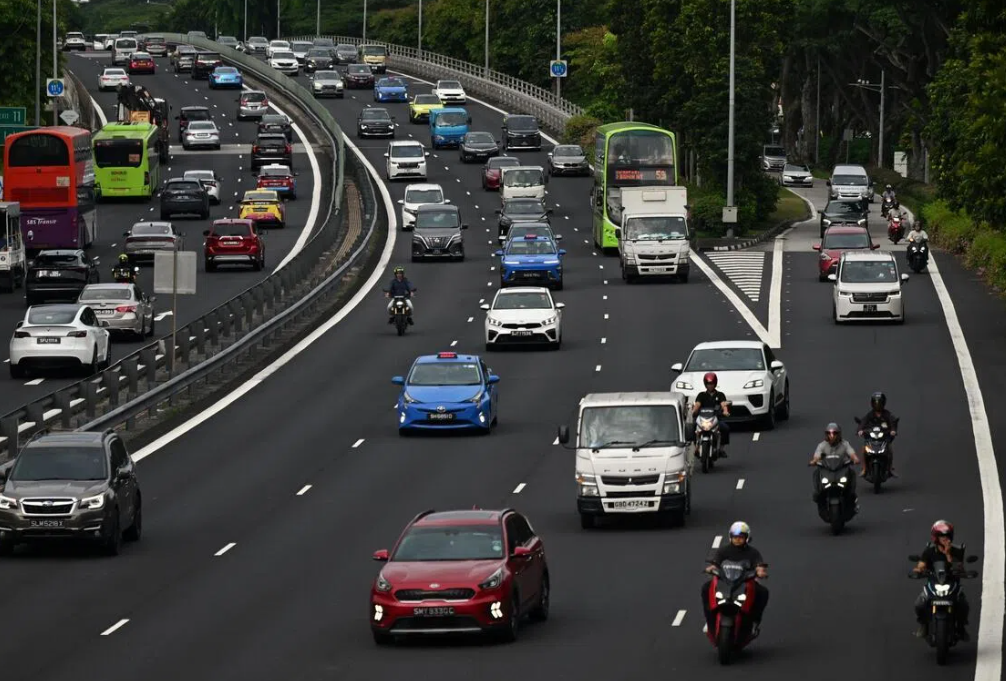
Singapore's four leading ride-hailing and taxi platforms have announced they will preserve temporary driver surcharges for another two months, extending a cost-sharing arrangement that reflects the challenging economic environment facing transport workers across the region. ComfortDelGro, Grab, Gojek and Tada confirmed on July 22 that the additional fees—which range from $0.50 to $1.20 per trip depending on the platform and fare amount—will remain in effect until September 30, providing temporary relief for drivers grappling with sustained fuel expenses.
The decision underscores the persistent pressure on transport operators throughout Southeast Asia, where fuel price volatility continues to squeeze margins for drivers and platform operators alike. The National Private Hire Vehicles Association, an NTUC-affiliated body representing private-hire drivers in Singapore's point-to-point transport sector, framed the extension as a response to ongoing consultations with platform operators regarding driver welfare and operational sustainability. This collaborative approach between industry bodies and transport platforms reflects a regional trend toward negotiated cost-sharing rather than unilateral decisions, demonstrating how labour representation structures in Singapore influence gig economy working conditions.
ComfortDelGro, which operates Singapore's largest taxi fleet, implemented its surcharge structure in March with a $0.50 levy on trips under $15 and an $0.80 surcharge for higher-value journeys. The additional fees apply across all booking channels, including app-based reservations, cross-border services to Malaysia, premium limousine options and hourly rental arrangements. Alongside the per-trip surcharge, ComfortDelGro retained a $0.01 increase in distance-based charges, meaning passengers pay approximately $0.27 per 400 metres travelled in standard Prius vehicles on journeys shorter than 10 kilometres—a compound effect that substantially increases total trip costs.
Grab, Gojek and Tada implemented their own driver fee structures beginning in April, establishing a $0.90 surcharge across most trip categories, though Tada introduced a higher $1.20 fee for longer journeys exceeding $18. These fees, the association emphasised, are transferred entirely to drivers without any deduction by platforms, distinguishing them from standard commission arrangements and reinforcing their explicitly supportive purpose. The original driver fee initiative began in 2022 as an emergency measure to help transport workers manage surging fuel prices, yet nearly two years later, the necessity for continued support demonstrates the structural challenges facing Singapore's transport sector.
Geopolitical developments have played a significant role in sustaining elevated fuel prices across the region. Following military strikes between the United States and Israel against Iran on February 28, concerns about potential disruptions to shipping through the Strait of Hormuz—a critical chokepoint for global energy supplies—pushed international oil prices higher. While the strait remained open, market anxiety over possible future disruptions has kept energy costs elevated, with consequences rippling through transport sectors across Southeast Asia. Singapore, heavily reliant on imported fuel, experiences particularly acute sensitivity to international petroleum market movements, making the city-state vulnerable to global geopolitical instability in ways that smaller regional economies might partially offset through alternative fuel sourcing.
Retail petrol prices in Singapore have climbed substantially since March, when 95-octane unleaded fuel cost between $2.91 and $2.92 per litre across major service stations. By late July, prices had surged to $3.36 or $3.37 per litre at the five dominant fuel retailers—Caltex, Shell, Esso, SPC and Sinopec—representing a roughly 15 percent increase over four months. This sustained elevation in fuel costs creates cascading inflationary pressures throughout the transport ecosystem, affecting not only taxi and ride-hailing drivers but also delivery services, logistics operators and public transportation costs, with indirect effects on consumer prices throughout the economy.
The pricing landscape reveals significant variation across Singapore's retail fuel market, with smaller operators like Cnergy and Smart Energy offering slightly lower rates of $2.54 and $2.62 per litre respectively. This variance suggests that while headline prices remain elevated, price competition persists within the market, though most drivers rely on convenient major-brand stations rather than seeking marginal savings through careful fuel purchasing strategies. For drivers working flexible gig economy hours, the time cost of locating cheaper fuel often exceeds the savings, effectively locking them into higher-priced suppliers and amplifying the genuine impact of fuel price increases on their net earnings.
The extension of driver fees to September 30 signals that platform operators and industry representatives anticipate sustained fuel price pressure throughout the remainder of the year. Rather than implementing a permanent increase in base fares—which would alter the fundamental pricing structure and potentially reduce customer demand—the temporary surcharge mechanism allows platforms to maintain apparent price stability while providing direct support to drivers. This approach proves particularly valuable in Singapore's competitive ride-hailing market, where customer acquisition and retention depend partly on perceived value, making visible fare increases strategically disadvantageous compared to less transparent surcharges.
For Malaysian readers, Singapore's experience offers instructive parallels regarding ride-hailing economics and labour dynamics in Southeast Asia. Malaysia's own ride-hailing and taxi sectors have grappled with similar pressures, and the NPHVA's structured engagement model contrasts with less formalised approaches in some Malaysian jurisdictions. The involvement of NTUC, Singapore's primary labour confederation, in negotiating driver welfare demonstrates how institutional labour representation can influence gig economy working conditions, a dynamic that shapes competitive dynamics across the region as companies operating in multiple Southeast Asian countries navigate varying regulatory and labour frameworks.
The NPHVA indicated it will maintain ongoing engagement with platform operators to advocate for additional measures supporting drivers' operational sustainability. This commitment to continued dialogue suggests that September 30 may not represent a permanent endpoint for cost-sharing arrangements, but rather a checkpoint for reassessing economic conditions and potentially extending support measures further. As fuel prices remain volatile and dependent on international geopolitical developments beyond Southeast Asia's direct control, transport workers and operators across the region face structural challenges that temporary surcharges can only partially address, pointing toward longer-term questions about transport sector viability and worker welfare in an era of sustained energy cost uncertainty.

