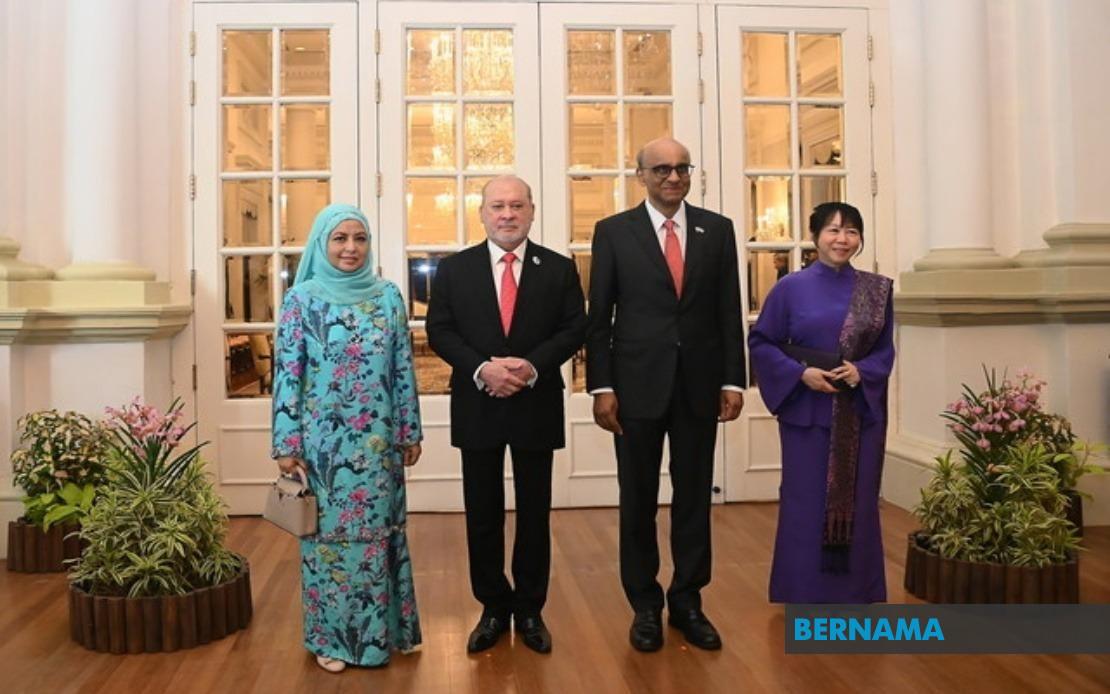
Singapore President Tharman Shanmugaratnam has framed the upcoming state visit to Malaysia as an opportunity to reinvigorate bilateral ties that extend far beyond economic calculations, describing a relationship undergirded by centuries of shared cultural evolution and six decades of accumulated diplomatic trust. Speaking in an exclusive interview ahead of his three-day visit beginning July 13, 2026, at the invitation of His Majesty Sultan Ibrahim, the president articulated a vision of Malaysia-Singapore partnership that prioritises dialogue and mutual understanding as essential ingredients for regional stability in an increasingly fractious world.
The bilateral relationship, according to Tharman, draws its strength from multiple interconnected dimensions. The peoples of both nations are bound by kinship networks and cultural traditions that have developed over centuries, while their economies remain tightly integrated through infrastructure like the Johor-Singapore Causeway, which handles the world's heaviest land border traffic. This multifaceted interdependence has created natural incentives for cooperation, yet Tharman's emphasis suggests that material interests alone cannot sustain the relationship through inevitable periods of disagreement. The successful joint UNESCO inscriptions of the kebaya garment, undertaken with Brunei, Indonesia and Thailand, exemplify how both nations consciously preserve and project shared heritage on the global stage. Ongoing efforts to secure UNESCO recognition for Chingay, the street procession that brings communities together, similarly demonstrate active commitment to sustaining multicultural traditions for younger generations.
What distinguishes the Malaysian-Singaporean partnership, in Tharman's assessment, is not the absence of disputes but the established capacity to address them without allowing disagreement to corrode the broader relationship. The president acknowledged that close neighbours naturally encounter differences over specific issues, yet successive governments on both sides have consistently chosen to resolve these through calm deliberation grounded in mutual respect and international law. This disciplined approach to managing sensitivity has accumulated what Tharman describes as a critical reserve of trust and goodwill—a resource that has become increasingly valuable as global geopolitical turbulence intensifies. The high degree of familiarity between leaders, officials and ordinary citizens provides essential institutional and social scaffolding for navigating disputes through dialogue rather than confrontation.
Tharman positioned the partnership explicitly against a backdrop of deteriorating global conditions. As the multilateral trading system fragments and great-power competition intensifies, he argued that Malaysia and Singapore must deepen regional economic integration and demonstrate that cooperative approaches generate shared prosperity. This framing carries implications beyond bilateral relations: by showcasing how neighbouring countries with shared interests can transcend narrow nationalism, both nations project a model of responsible regional behaviour that reinforces ASEAN's centrality in Southeast Asian affairs. The president highlighted economic dimensions including the Johor-Singapore Special Economic Zone as demonstrating how countries can combine respective strengths for mutual benefit, whilst the Rapid Transit System Link connecting the two territories promises daily convenience for hundreds of thousands of cross-border commuters.
Energy transition and climate resilience emerged as distinct cooperative frontiers in Tharman's analysis. As tropical nations facing complex climate challenges, Singapore and Malaysia share both vulnerability to environmental degradation and opportunity in renewable energy markets and carbon credit mechanisms. Tharman suggested that collaboration in these sectors could accelerate both countries' announced sustainability targets whilst creating new economic value. This emphasis reflects recognition that bilateral prosperity increasingly depends on capacity to address transnational challenges that individual national action cannot resolve.
The president drew attention to ASEAN's Digital Economy Framework Agreement, projected for signature at the 49th ASEAN Summit in Manila in November 2026, as exemplifying how regional cooperation can amplify economic potential. Studies indicate that high-quality implementation could double ASEAN's digital economy from a projected US$1 trillion to US$2 trillion by 2030, representing an exponential leap in prosperity that individual nations pursuing isolated strategies could not achieve. This framing underscores how Singapore and Malaysia, as founding ASEAN members, have vested interest in strengthening the bloc's institutional effectiveness and relevance.
Tharman articulated particular appreciation for Malaysia's 2025 ASEAN Chairmanship under Prime Minister Datuk Seri Anwar Ibrahim, which he assessed as successfully navigating complex geopolitical and geoeconomic headwinds. Malaysia's tenure achieved significant milestones, including welcoming Timor-Leste as ASEAN's 11th member state, advancing trade agreement upgrades, and substantially concluding digital economy framework negotiations. These accomplishments, Tharman suggested, demonstrated ASEAN's continued relevance and convening authority despite fragmenting global conditions. Both countries now bear responsibility for maintaining this momentum, particularly as Singapore assumes the ASEAN Chairmanship in 2027.
The president identified people-to-people engagement as requiring deliberate, proactive cultivation in contemporary circumstances. What came naturally to earlier generations must now be systematically encouraged through bilateral exchange programmes, joint internships, youth leadership forums and collaborative community projects. This recognition reflects anxiety about organic social connections eroding amidst competing national preoccupations and digital fragmentation. Sustained friendship networks across borders, Tharman suggested, constitute essential infrastructure for bilateral resilience and long-term stability.
Tharman's personal appreciation of Malaysian culture, cuisine and hospitality suffused his remarks, grounding abstract diplomatic principles in genuine affection and familiarity. His references to long-standing travel experiences with family members humanised the presidential relationship and suggested that bilateral ties benefit from leaders who possess organic cultural connections to their counterparts' societies. Such personal familiarity can facilitate difficult negotiations and provide psychological reserves during periods of tension.
The overarching framework advanced by Tharman—emphasising accumulated trust, managed disagreement, shared prosperity and people-to-people connection—suggests that bilateral relations function most effectively when conceived as permanent institutional arrangements rather than transactional negotiations. This philosophy carries particular resonance for Southeast Asian regional architecture, where ASEAN's success depends on precisely this balance between respecting sovereignty and pursuing integration. Malaysia and Singapore's capacity to model disciplined partnership management directly influences ASEAN's effectiveness in addressing climate change, digital economy integration, and great-power management in coming years.

