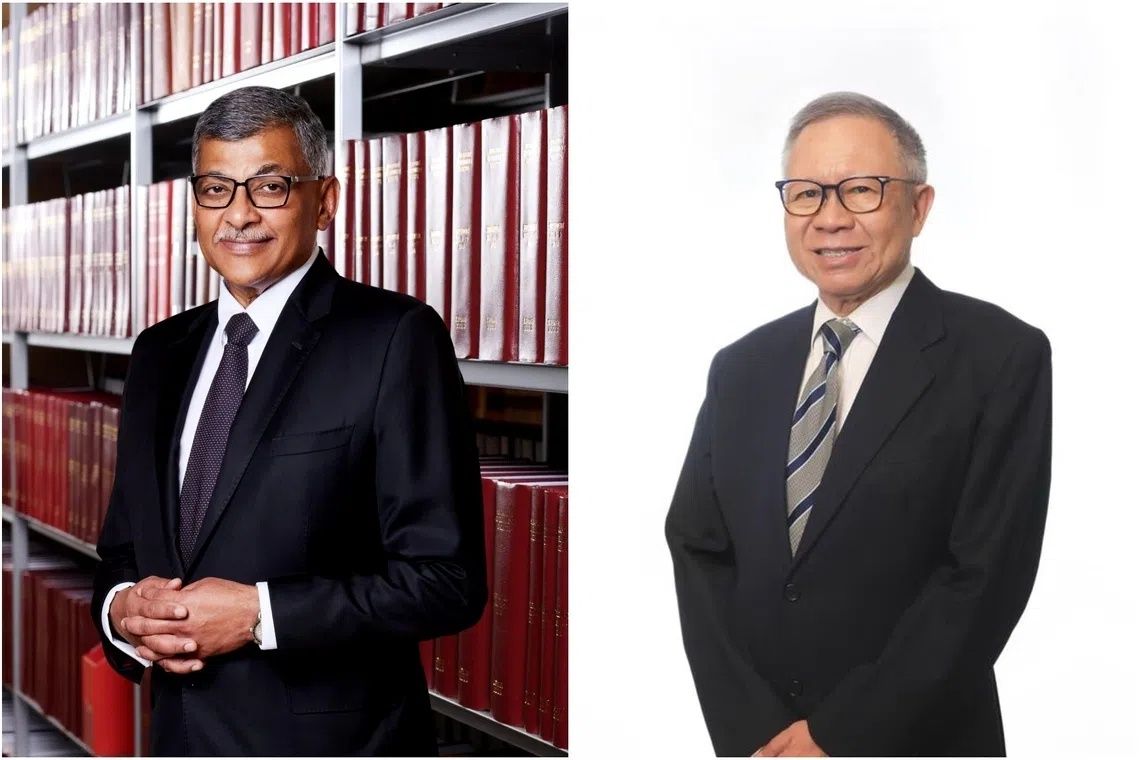
Singapore's Chief Justice Sundaresh Menon and Eddie Teo, the former chairman of the Council of Presidential Advisers, will receive the Order of Temasek (With Distinction) at the 2026 National Day Awards, the republic's most prestigious civilian award. Both men have devoted their careers to shaping Singapore's governance and legal institutions, with their recognition forming part of honours bestowed upon 7,491 individuals this year.
Menon, 62, has led the judiciary for 14 years since taking office in November 2012, and will step down from his position on February 26, 2027. During his tenure at the helm of Singapore's courts, he has fundamentally reshaped how justice is administered in the city-state, moving beyond traditional legal processes to embrace modern technology and contemporary approaches to dispute resolution. His era has witnessed the judiciary's transformation from a conventional system to one embracing digital infrastructure, institutional modernisation, and innovative judicial practices that have positioned Singapore as a legal hub within the region.
Among Menon's most significant achievements was establishing the Appellate Division of the High Court and creating the Singapore International Commercial Court, both of which have enhanced the country's capacity to handle complex commercial disputes and attract international cases. The creation of the Singapore Judicial College represented another landmark initiative, institutionalising judicial education and ensuring the judiciary maintains world-class standards as the bench evolves. Beyond structural innovations, Menon championed a therapeutic justice approach in the Family Justice Courts and Youth Courts, recognising that the legal system's role extends beyond punishment to rehabilitation and social healing, particularly for vulnerable populations like families and young offenders.
In his statement, Menon reflected on the award as a recognition of collective achievement rather than individual accomplishment. He emphasised that Singapore's commitment to the rule of law has been fundamental to the nation's governance since independence, creating the stability and institutional confidence upon which economic prosperity and social cohesion rest. His remarks underscore a broader reality for Southeast Asian readers: the judiciary's strength directly influences a nation's attractiveness to investors, its capacity to enforce contracts, and public trust in governance itself. Menon's recognition carries symbolic weight, too, coinciding with the bicentennial of Singapore's legal and judicial system, marking two centuries of legal development in a country that has leveraged law and institutions as core competitive advantages.
Teo's career span across nearly six decades of public service presents a different but equally consequential narrative. The 79-year-old began his government career in 1970 within the Ministry of Defence's Security and Intelligence Division, eventually leading that agency from 1979 to 1994 at the notably young age of 31. His progression through senior permanent secretary roles in defence and the Prime Minister's Office positioned him as a guardian of Singapore's strategic interests during periods of significant geopolitical transition. Teo's career represents an era of governance shaped directly by Singapore's founding leaders: he worked under Lee Kuan Yew and Goh Keng Swee, absorbing their philosophies about meritocracy, state capacity, and long-term institutional thinking.
Following his retirement from the Public Service Commission chairmanship in 2018, after a decade in that role, Teo served as chairman of the Council of Presidential Advisers until June 2026. His tenure in this advisory body coincided with one of Singapore's most challenging episodes: the Covid-19 pandemic. During this crisis, Teo and then-President Halimah Yacob deliberated on Singapore's request to withdraw approximately S$40 billion from the nation's past reserves, the largest drawdown in the country's history. This decision, made with presidential guidance and careful institutional consideration, enabled Singapore to deploy substantial economic stimulus without incurring heavy public debt—a feat that demonstrates how institutional processes and experienced advisory bodies shape crisis response. For Malaysian and Southeast Asian observers, Teo's role underscores the importance of reserve funds and institutional checks on emergency spending.
Teo's leadership of the Public Service Commission from 2008 to 2018 reflected his commitment to broadening the meritocratic principle beyond traditional government career paths. By recruiting commission members from academia, law, and social work, he modernised the body's composition and ensured that public service recruitment drew from diverse professional networks. This approach resonates across Southeast Asia, where governments increasingly recognise that talent acquisition from varied sectors strengthens institutional diversity and perspectives. Teo's explicit hope that his career demonstrates the value of public service—despite potentially lower financial rewards than private-sector equivalents—addresses a regional challenge many governments face: attracting top talent to government roles as private entrepreneurship and corporate careers become more lucrative.
Beyond these two flagship recipients, Singapore's honours system recognised Alan Chan, 73-year-old chairman of the Land Transport Authority, with the Distinguished Service Order for transforming rail reliability metrics from 393,000 mean kilometres between failures in 2017 to two million in 2026. This dramatic improvement reflects not merely technical achievement but also the operational discipline required to sustain public transport systems serving millions daily. His delivery of major projects including the Thomson-East Coast Line and establishment of the Singapore Rail Test Centre positions public infrastructure as a cornerstone of urban governance—relevant context for Malaysian cities developing their own transit networks.
Edmund Cheng, 73, former chairman of the Civil Aviation Authority of Singapore, also received the Distinguished Service Order, recognised for contributions spanning aviation sector development, rehabilitation of ex-offenders, and support for the arts. His multifaceted service illustrates how senior Singapore officials typically serve across multiple governance domains throughout their careers, bringing expertise and institutional knowledge across different sectors. This practice differs from more siloed administrative structures and suggests an organisational culture emphasising transferable leadership capability and institutional perspective.
The broader cohort of 7,491 individuals receiving National Day honours reflects Singapore's practice of recognising contributions across society, from grassroots community work to corporate leadership. For Malaysian and regional observers, Singapore's honours system demonstrates how systematic recognition of public service, combined with meritocratic advancement and institutional continuity, builds a culture where governance excellence becomes embedded in societal expectations. The recognition accorded to Menon and Teo—both at the apex of their respective domains—signals that long-term institutional leadership and modernisation remain values the state prioritises and celebrates.

