The disparity between Singapore's two major casinos has become starkly evident in recent years, with Marina Bay Sands pulling decisively ahead of its competitor Resorts World Sentosa in what was meant to be a balanced duopoly. The gap extends beyond simple revenue figures—it manifests in the caliber of rewards offered to elite players. When Resorts World Sentosa held its Lunar New Year lucky draw for high-spending gamblers earlier this year, the grand prize amounted to a bottle of Martell Cognac. Across Victoria Harbour at Marina Bay Sands, the equivalent promotion offered winners a new Mercedes-Benz CLA 200, illustrating a fundamental difference in the resources each operator dedicates to courting the most lucrative customer segment.
The imbalance in Singapore's casino sector, once envisioned as a carefully regulated duopoly serving the region's wealthy, has created mounting challenges for Resorts World Sentosa as its gaming license approaches renewal. In November 2024, Singapore's Gambling Regulatory Authority delivered a pointed message to Genting Singapore, the resort's operator, by describing its tourism performance as "unsatisfactory." Rather than renewing the license for the customary three years, regulators granted only a two-year extension taking effect in February 2025. This shorter term serves as regulatory pressure on the operator to demonstrate meaningful improvements before the next assessment in February 2027, when the Authority will decide whether to grant a full three-year renewal or impose additional constraints.
Singapore's position as a global gambling hub has strengthened considerably since the pandemic, driven by recovering tourist flows and an influx of wealthy players from neighboring countries and mainland China. However, the benefits have accrued almost exclusively to Marina Bay Sands. During the first half of 2026, Las Vegas Sands Corp.'s Marina Bay Sands generated casino revenues exceeding $2.1 billion, a figure more than triple that of Resorts World Sentosa. This performance gap reflects both the superior appeal of Marina Bay Sands' brand and physical amenities, and Resorts World Sentosa's struggle to retain market position despite operating in a growing market. The disparity becomes more pronounced when examining the high-roller segment, where individual customers can generate hundreds of millions in annual revenue through premium gambling activity.
A significant shift in gambling patterns has redirected wealth toward Singapore from other regional centers. Macau, traditionally the world's largest gaming market, has faced sustained pressure from Chinese government initiatives targeting casino junkets and money-exchange operations. These regulatory constraints have encouraged wealthy mainland Chinese players to seek alternatives, and Singapore's visa-free entry for mainland tourists, combined with perceptions of greater discretion regarding personal financial data, has made it an increasingly attractive destination. This migration of high-value customers should theoretically benefit both Singapore casinos equally, yet Marina Bay Sands has captured the overwhelming majority of these new clients.
The challenge facing Resorts World Sentosa extends beyond raw revenue competition. Industry analysts point to fundamental differences in customer experience and brand positioning between the two properties. Ben Lee, managing partner at IGamiX, a Macau-based gaming consultancy, characterizes Resorts World Sentosa as losing ground in the competition for VIP customers, suggesting the property has failed to deliver the "luxuriate experience" that Marina Bay Sands consistently provides. VIP players—the casino industry's most valuable demographic—contribute disproportionately to overall profitability despite representing a small fraction of total customers. When these high-spending gamblers concentrate at one property, the gap in financial performance widens dramatically.
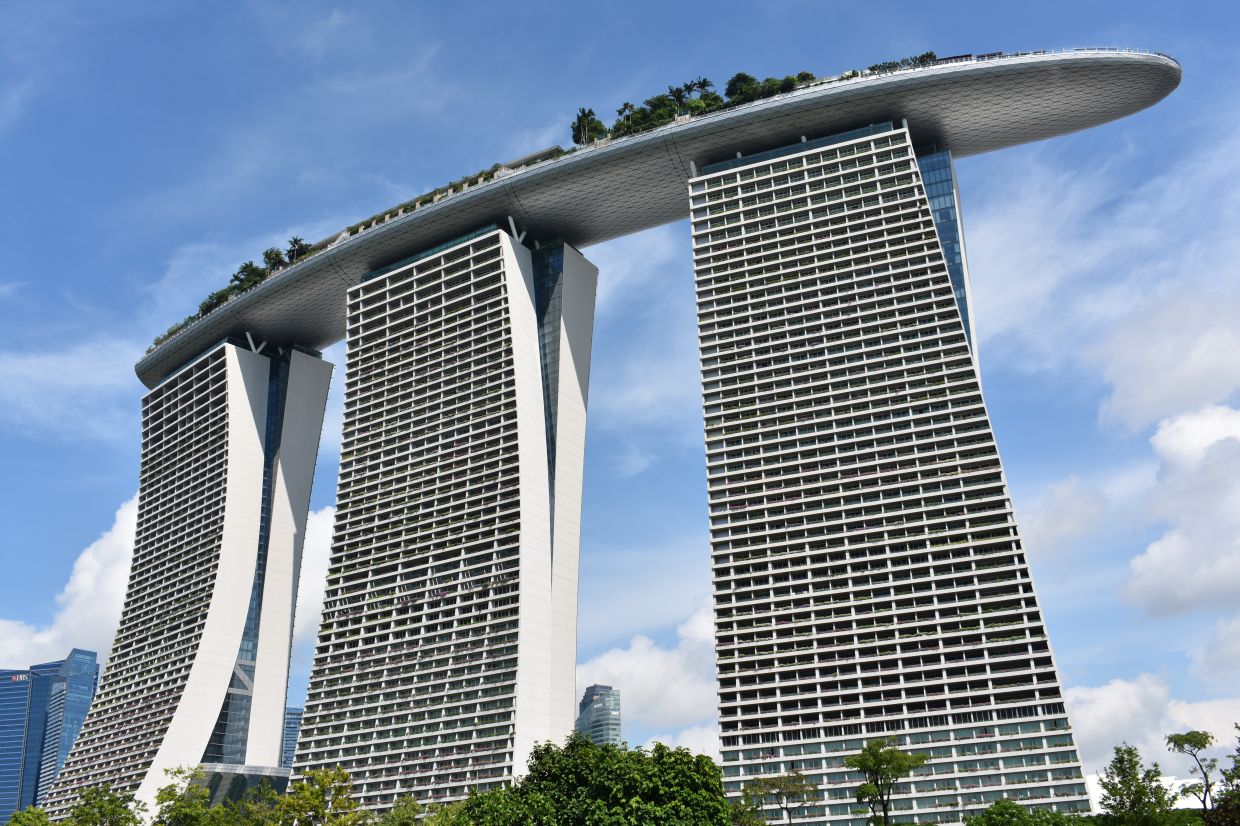
Marina Bay Sands' integrated resort experience provides substantial competitive advantages beyond gaming floors. The property features three 57-story hotel towers with distinctive rooftop architecture, an art museum, extensive dining and shopping options, and premium hospitality services. This ecosystem appeals to VIP customers who view casino visits as part of a broader luxury travel experience rather than purely gambling activities. The resort has also aggressively courted elite clients through its VIP club benefits, including butler-service suites, exclusive entertainment access, and personalized dining privileges. These offerings cater to the psychological and social dimensions of high-roller gambling that extend well beyond the gaming environment itself.
Resorts World Sentosa faces specific operational challenges that have frustrated its most valuable customers. Members of the property's VIP club have lodged complaints regarding outdated infrastructure, insufficient responsiveness to customer feedback, and inefficient administrative processes such as cash-and-chip exchanges. These friction points, while seemingly minor in isolation, accumulate to influence where the most demanding and discerning players choose to gamble. In contrast, Marina Bay Sands invests heavily in continuous enhancement of service quality and operational efficiency, creating a compounding advantage that becomes increasingly difficult for competitors to overcome.
The market share trends among VIP gamblers illustrate the shifting competitive landscape with concerning clarity for Resorts World Sentosa's management. During 2023, Sentosa maintained a relatively competitive share of VIP casino revenue, but this deteriorated sharply to approximately 20 percent in the first quarter of 2026 before improving modestly to 36 percent in recent months. The volatility in these figures reflects both the concentration of VIP revenue among a small number of high-value clients and the relatively easy movement of these customers between the two properties. When prestigious clients migrate from one casino to another, the impact on revenue is immediate and substantial. Marina Bay Sands' temporary weakness in the second quarter, attributed partly to VIP customers traveling to World Cup events, allowed Resorts World Sentosa to recapture some market share, demonstrating that opportunities for competitive repositioning remain available.
Genting Singapore, the Malaysian leisure and hospitality conglomerate that operates Resorts World Sentosa, has undertaken a comprehensive response to competitive pressures. The company announced in April that it maintains regular engagement with regulatory authorities and believes it is "well positioned for the next assessment cycle." More substantively, Resorts World Sentosa has invested heavily in property improvements and new attractions over the past 18 months, with a stated objective of positioning itself for sustainable growth through the next decade. These efforts include enhancements to hospitality and gaming offerings designed to elevate the customer experience and compete more effectively with Marina Bay Sands' premium positioning.
The long-term capital commitments made by both operators underscore the stakes involved in this competitive battle. Resorts World Sentosa is in the midst of a S$6.8 billion revitalization program scheduled for completion by 2030, featuring an all-suite luxury hotel, expanded oceanarium facilities, and addition of a Super Nintendo World theme park component to the existing Universal Studios Singapore. These investments recognize that competing successfully requires fundamental transformation rather than incremental adjustments. Marina Bay Sands is simultaneously undertaking an $8 billion expansion that will add a 55-story hotel tower and live entertainment arena, ensuring that even as Sentosa modernizes, its competitor will have enhanced its own appeal and capacity.
The regulatory environment in Singapore establishes clear expectations for both operators regarding tourism contribution, community benefit, and operational standards. By granting Resorts World Sentosa a two-year license rather than the standard three years, the Gambling Regulatory Authority sent a unmistakable signal that current performance falls short of expectations. The assessment framework considers the entire integrated resort's performance, not merely gaming revenues, meaning that enhancements to non-gaming attractions and hospitality services directly influence regulatory outcomes. This structure creates incentives for continuous improvement but also establishes quantifiable benchmarks against which future renewals will be evaluated.
The broader implications of this competitive dynamic extend throughout Southeast Asia's gambling and tourism sectors. Singapore's duopoly model was designed to balance competition with regulatory control, yet the market's evolution has produced an increasingly dominant player and a struggling competitor. Observers including Zheng Feng Chee, a consumer analyst at DBS Group Holdings, characterize the regulator's two-year license as a "soft threat" designed to motivate performance improvements. In practical terms, however, few gaming operators possess the financial capacity to acquire Resorts World Sentosa, limiting the realistic options available to Genting Singapore beyond sustained operational improvement and heavy capital investment. The outcome of the next regulatory assessment in February 2027 will determine whether these efforts prove sufficient to stabilize market position or whether Singapore's casino duopoly is evolving toward persistent competitive imbalance.

