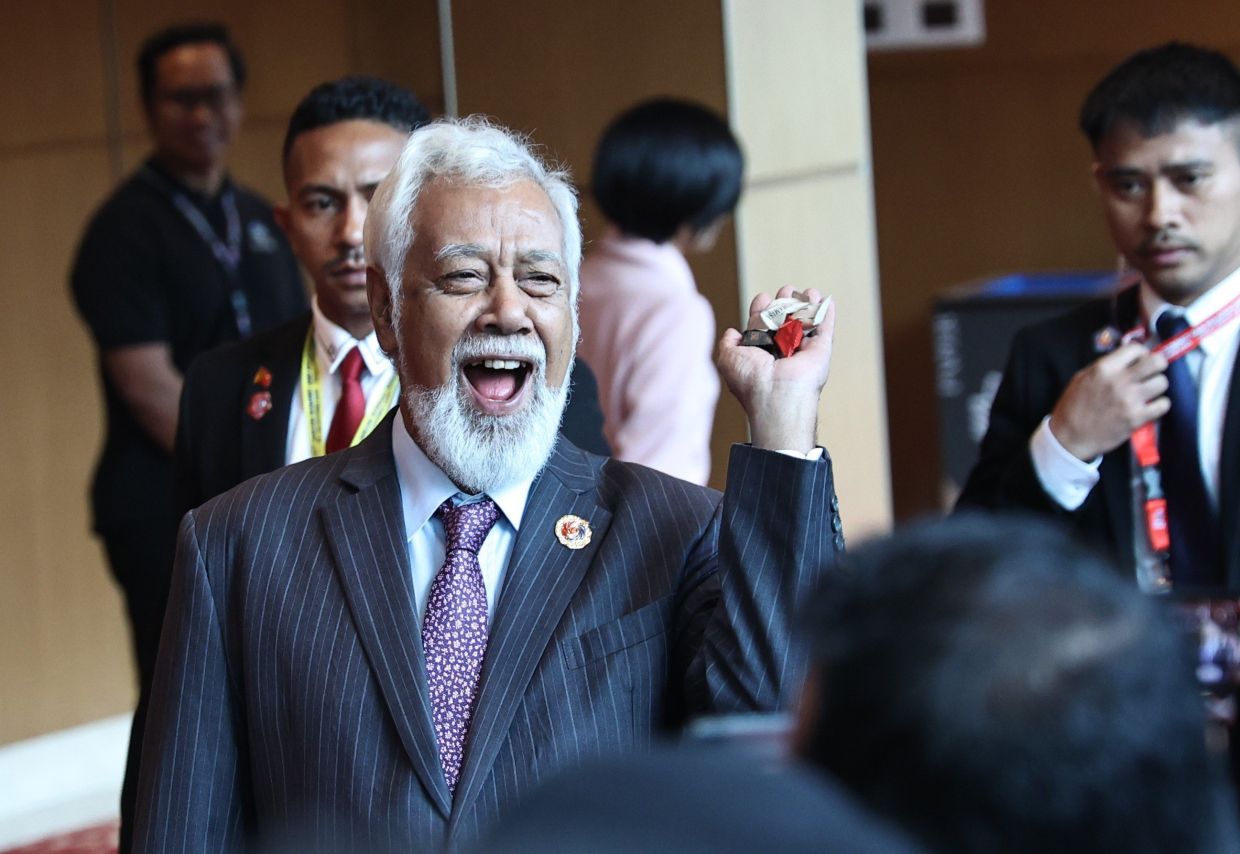
Singapore is recalibrating its approach to supporting Timor-Leste beyond the hurdles of Asean membership, emphasising that participation in the regional grouping carries responsibilities alongside benefits. Prime Minister Lawrence Wong made this strategic reorientation clear during his July 3 address in Dili, the first visit by a Singapore premier to the nation. The shift reflects a maturation in how Singapore views its role in anchoring Southeast Asia's newest member state within regional structures.
Wong's comments underscore a nuanced understanding of what full membership in Asean entails. Rather than treating Timor-Leste as a dependent gaining windfall advantages from bloc membership, Singapore is positioning itself as a mentor helping the country shoulder the burdens and harness the opportunities that come with being part of a 11-member association. This philosophical pivot matters considerably for how Southeast Asian nations approach development partnerships, particularly with countries navigating early-stage integration into multilateral frameworks.
The cornerstone of this upgraded engagement is Singapore's redesigned support package, announced jointly with Timor-Leste Prime Minister Xanana Gusmao. Rather than merely facilitating membership accession—which culminated in Timor-Leste's formal entry on October 26, 2025, after a 14-year journey beginning with its 2011 application—the new framework targets institutional readiness. Timor-Leste's aspiration to assume the Asean chairmanship in 2029 provides both urgency and clarity to this support structure, as the rotating leadership role demands sophisticated coordination capacity, diplomatic finesse, and organisational infrastructure.
Singapore's specific contributions reveal practical mentoring mechanisms. The city-state will orchestrate tailored workshops in Dili focused on the procedural and strategic dimensions of Asean chairmanship, preparing officials for the multifaceted demands of the role. Simultaneously, Singapore will facilitate secondment opportunities, allowing Timorese officials to embed within Singapore's own chairmanship teams when Singapore takes the helm in 2027. This apprenticeship model allows hands-on learning of best practices before Timor-Leste assumes centre stage just two years later.
Wong's emphasis on the magnitude of the chairmanship responsibility carries weight. Hosting the rotating leadership of a 650-million-strong regional bloc stretching across multiple time zones, encompassing diverse political systems and economic models, and managing consensus among members with sometimes competing interests represents a formidable undertaking. For a nation less than two decades independent and only recently integrated into Asean mechanisms, the challenge is exponentially steeper. Singapore's willingness to invest institutional knowledge in this transition reflects both strategic interest in a stable, capable neighbour and recognition that Timor-Leste's success benefits the entire bloc's credibility.
Beyond the chairmanship preparation, Singapore and Timor-Leste are formalising deeper bilateral engagement through a newly established consultation mechanism linking their foreign ministries. This institutionalisation mirrors Singapore's relationships with other Asean members, extending recognition to Timor-Leste's enhanced standing. Cooperation pathways are expanding into human resource development, education, and healthcare—sectors where Singapore's expertise and institutional frameworks can yield tangible spillover effects. These domains address fundamental governance and capacity challenges that constrain many emerging economies' development trajectories.
The economic dimension warrants particular attention for Malaysian observers, as regional growth dynamics increasingly hinge on successful integration of peripheral members. Wong signalled Singapore's interest in opening commercial pathways as Timor-Leste pursues economic diversification beyond its traditional oil and gas sectors. The nation's emergence as a tourism destination, infrastructure development needs, and maritime economy potential create openings for regional businesses. Wong explicitly encouraged business missions from Singapore entities, acknowledging that some Singaporean entrepreneurs have already commenced operations in Dili across varied sectors. This private-sector engagement, while remaining relatively nascent, represents a proving ground for how regional economies can vertically integrate through non-governmental channels.
Yet Wong's counsel to businesses entering Timor-Leste reflected realism about emerging market challenges. He stressed the necessity of long-term perspectives, cautioning against assumption that local markets will automatically embrace foreign commercial models. Success, he noted, requires identifying capable local partners, understanding cultural contexts, and managing expectations about returns timelines. While acknowledging that not all ventures succeed, Wong highlighted instances of thriving Singaporean businesses, suggesting viable opportunities exist for those approaching market entry strategically. This nuanced messaging is particularly relevant as other Southeast Asian economies—including Malaysia—evaluate their own expansion strategies into Timor-Leste's economy.
Wong's reflection on his visit conveyed palpable confidence in Timor-Leste's trajectory. He identified a sense of optimism pervading official circles in Dili, with officials displaying genuine enthusiasm about their nation's future as an Asean participant. This psychological dimension matters because institutional integration succeeds more readily when member states view membership as accelerating national development rather than imposing constraints. Timor-Leste's evident embrace of this perspective bodes well for constructive engagement across regional mechanisms and bilateral relationships.
The timing of Wong's visit acquired additional symbolic resonance when contextualised against Singapore's historical involvement in Timor-Leste's nation-building. Singapore contributed peacekeeping personnel during the turbulent 1999 transition period, establishing an early bond that preceded formal diplomatic ties by several years. The first-ever Singapore prime ministerial visit to Timor-Leste thus represented not ceremonial milestone-chasing but rather relationship maturation reflecting genuine partnership deepening. Wong characterised the visit as occurring at a natural inflection point, with Timor-Leste's transition from observer status to full member requiring recalibrated engagement frameworks.
Wong's encouragement for Singaporeans to visit Timor-Leste and engage respectfully with local cultures represented a broader message about how regional integration functions most effectively. Rather than positioning Singapore as a developmental fountainhead dispensing expertise downward, Wong advocated reciprocal learning where visiting Singaporeans appreciate Timorese perspectives and acknowledge the validity of indigenous knowledge systems. This positioning reflects contemporary understanding that sustainable development partnerships require genuine mutuality rather than hierarchical knowledge transfer.
For Malaysia and other Asean members, Timor-Leste's trajectory carries instructive implications. The nation's successful integration depends partly on calibrated support from established members like Singapore that neither patronises nor overwhelms the integration process. Singapore's approach—emphasising contribution rather than mere benefit-consumption—models how regional powers can foster peer relationships with newer members whilst acknowledging genuine capacity gaps. As Timor-Leste prepares for expanded regional responsibilities, the supportive ecosystem Singapore is constructing will significantly influence whether the integration strengthens or strains the bloc's cohesion.
The practical mechanisms Singapore is deploying—structured workshops, official attachments, institutionalised consultations, and business facilitation—translate strategic intent into operational capability. This technocratic approach to development partnership complements Asean's consensus-based diplomacy, providing frameworks that allow capability-building without imposing governance models or political conditions. The success of this model will reverberate across Southeast Asia as other members navigate their own institutional capacities and regional responsibilities. Timor-Leste's 2029 chairmanship will ultimately demonstrate whether pre-emptive mentoring produces confident, capable leadership or merely delays the reckoning with institutional deficiencies.

