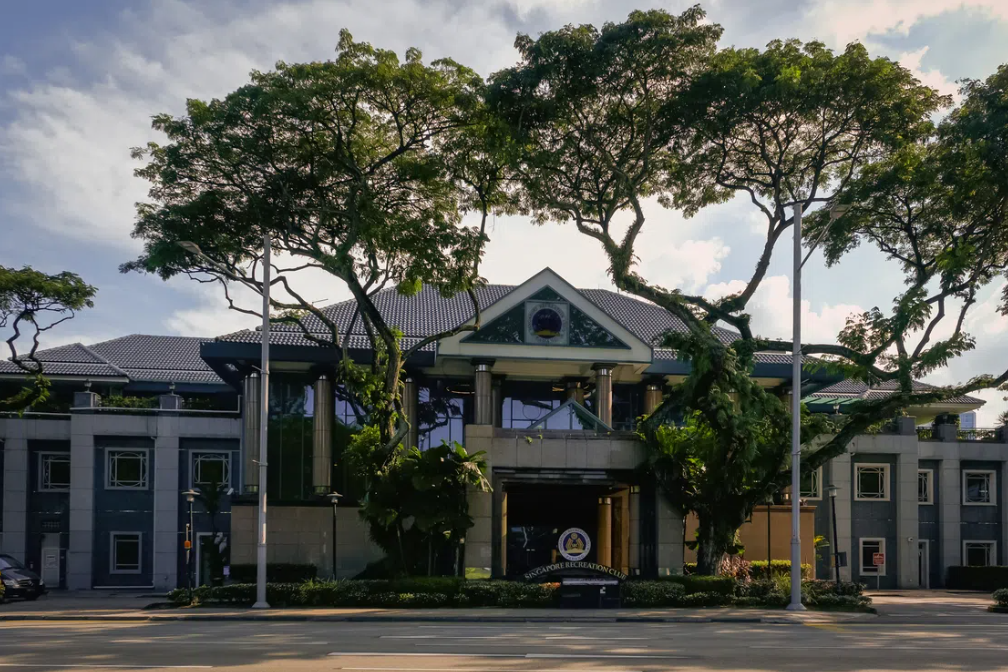
A Singapore High Court judge has cleared the way for a full trial in a contentious dispute over the Singapore Recreation Club's attempt to transform its historic billiards room into a contemporary co-working space. Senior Judge Chan Seng Onn determined on Aug 26 that the case raises several material issues worthy of judicial examination, overturning a previous decision to dismiss the lawsuit entirely. The ruling represents a significant setback for the club's management and a potential victory for two dissenting members who questioned the legitimacy of the October 2025 vote that approved the project.
The central question at trial will be whether the manner in which members voted complied with the club's Constitution and whether the voting structure itself unfairly prejudiced those opposed to the proposed changes. Sean Kerwin Mathews and Mu Yee Shyong, both affiliated with the club's billiards section, initiated legal action in November 2025 challenging the resolution passed during an extraordinary general meeting. They argue that the transformation plan lacked the constitutionally mandated support level, claiming that a simple majority vote was insufficient when the rules required approval from the majority of members physically present at the meeting.
The numbers at stake reveal the tightness of the outcome. Of the 559 members who attended the October 18, 2025 meeting, 280 would have constituted a majority under the club's Constitution. Yet only 151 members voted in favour of the second resolution to convert the billiards room to a co-working space, while 125 voted against. The remaining 238 votes—183 spoilt and 55 blank—create the mathematical crux of the dispute. The claimants contend that these 55 blank votes, combined with the 125 opposing votes, total 180, clearly falling short of the 280-member threshold required if blank votes are treated as rejections rather than abstentions.
Judge Chan's decision reveals a deeper concern about how the management committee structured the voting process itself. The club presented members with two separate voting slips designed to address three possible resolutions: proceeding with the billiards room relocation at a cost of $4.9 million, converting it into a co-working space, or integrating it within the broader co-working space development. The complications arose because members voting yes on the first option were instructed that the second voting slip would not apply to them—effectively eliminating any ability to vote against all three proposals simultaneously. This structural constraint proved controversial because it prevented members from comprehensively rejecting the entire package of options presented.
The genesis of this conflict traces back to an earlier decision by club members in March 2024 when they approved a $16.6 million transformation plan with a budget that allocated S$1.5 million for potential land betterment charges. These charges, levied on property value increases, would normally accompany relocation of the billiards facility from level 2 to basement 2. When the actual land betterment charges ballooned to $4.9 million—more than triple the budgeted amount—the management committee faced financial pressure and deemed the relocation economically untenable. This unforeseen cost explosion prompted the October 2025 meeting to explore alternative uses for the space.
In his written grounds, Judge Chan identified what he characterised as a fundamental voting fairness problem. While blank or spoilt votes typically do not count as active support or opposition in most circumstances, Chan argued this case presented exceptional circumstances warranting different treatment. The judge noted that members were presented with conflicting instructions that simultaneously limited their voting options while constraining their ability to express a coherent no-vote position across both resolutions. By structuring the voting mechanism so that ticking yes on the first option rendered the second voting slip inapplicable, the management committee arguably curtailed members' democratic entitlement to comprehensively reject the proposed changes.
The club's legal representatives, led by Walter Alexander, had argued during the earlier striking-out application that allowing the lawsuit to proceed served no legitimate purpose and would merely create operational paralysis. They contended that invalidating the resolution would leave the club unable to progress with any of its planned improvements, creating administrative gridlock. Judge Chan rejected this reasoning, holding that the dispute absolutely serves a valid purpose since the claimants seek nothing more than a fair, properly conducted vote on the substantive merits. The judge emphasised that fresh voting could be conducted if the original resolution were invalidated, offering a straightforward path forward rather than permanent stalemate.
This dispute carries implications extending beyond the Singapore Recreation Club itself. For Malaysian and Southeast Asian club and association administrators, the case illustrates how careful drafting of voting procedures and constitutional provisions becomes essential when member approval is constitutionally mandated for significant decisions. Courts in the region have increasingly scrutinised whether procedural fairness accompanied substantive voting processes, particularly when management committees face conflicting interests between operational necessity and member democratic rights. The distinction between abstention and rejection, central to this case, appears deceptively simple but proves complex when voting mechanisms fail to distinguish clearly between these categories.
The SRC, established as a private members' club with approximately 7,000 members, occupies significant cultural and social space in Singapore's recreational landscape. The billiards room transformation represents more than a property conversion—it signals shifting priorities within the membership regarding how shared club facilities should serve evolving work and social patterns. The younger demographic favours flexible office spaces supporting entrepreneurship and remote work, while traditional members value the billiards room's historical significance and established community function. This intergenerational tension manifests in the voting dispute, reflecting broader questions about how heritage institutions navigate modernisation while respecting minority member interests.
The court's decision to permit the trial suggests that fundamental questions about the voting process remain genuinely contested and not amenable to summary dismissal. Judge Chan's careful examination of whether blank votes constitute implicit rejections reveals the legal system's recognition that voting mechanics cannot be treated as merely technical matters when members' constitutional rights to democratic participation are implicated. The trial will likely examine constitutional construction, parliamentary procedure principles, and whether the management committee adequately explained voting options to ordinary members who may lack legal sophistication.
As both sides prepare for full trial, the broader club membership remains in limbo regarding the co-working space project. The management committee's attempt to inject modern commercial functionality into traditional club infrastructure has collided with procedural concerns that courts regard as central to legitimate governance. For Southeast Asian institutions facing similar pressures to modernise, the Singapore Recreation Club case underscores that how decisions get made matters as much as what decisions ultimately succeed. The trial outcome will clarify whether voting procedures themselves warrant constitutional protection when member approval rights are explicitly codified in club constitutions.

