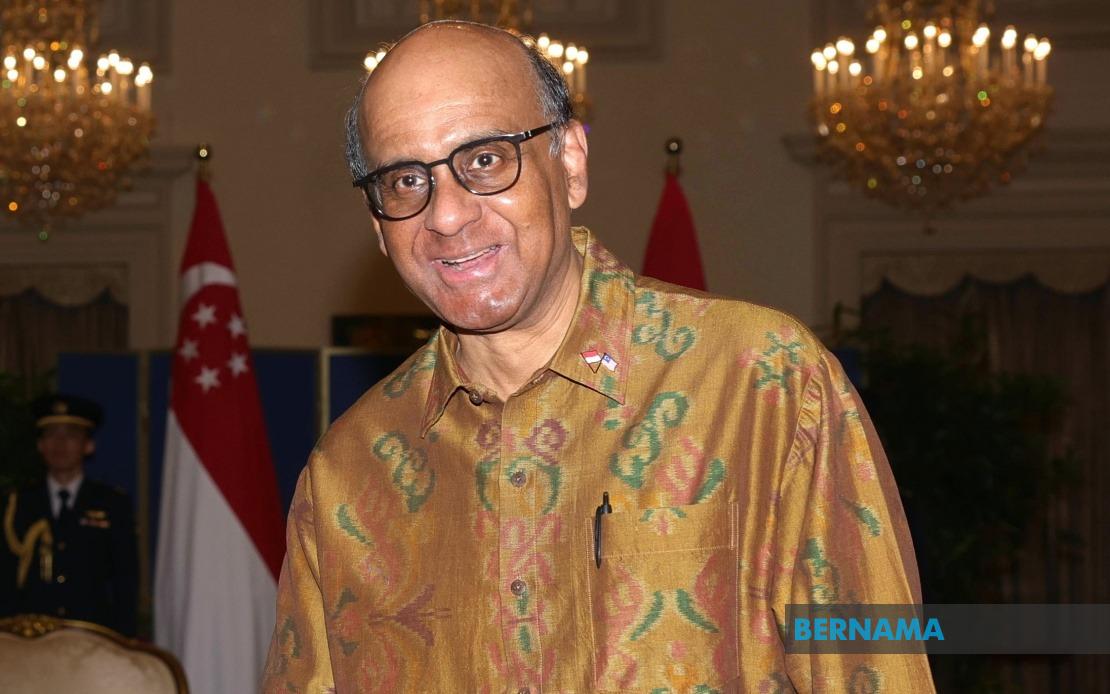
Singapore President Tharman Shanmugaratnam is set to arrive in Malaysia for a three-day state visit beginning July 13, marking his first official journey to the country in this capacity since becoming the city-state's ninth president in September 2023. The visit, which concludes on July 15, comes at the personal invitation of His Majesty Sultan Ibrahim, King of Malaysia, and represents a significant diplomatic milestone in bilateral relations between the two neighbouring nations.
The timing of the visit carries particular diplomatic weight, as it represents a formal reciprocation of His Majesty's own state visit to Singapore on May 6 and 7, 2024. Such exchanges between heads of state underscore the ceremonial and substantive importance both countries place on their relationship, serving as platforms for reaffirming shared commitments and exploring collaborative opportunities. The Malaysian Foreign Ministry characterised the engagement as reflective of "the strong and enduring partnership between the two countries, reflecting deepening cooperation across key areas of mutual interest."
President Tharman will travel with his spouse, Jane Ittogi Shanmugaratnam, alongside several Singapore ministers and senior government officials, a delegation composition typical of high-level state visits designed to facilitate cross-governmental dialogue and knowledge exchange. Throughout his stay, the President will participate in a State Welcoming Ceremony and be received in formal audience by His Majesty at Istana Negara, the principal royal residence. The visit agenda culminates in a State Banquet, one of the most significant ceremonial events in diplomatic protocol, where both leaders can address gathered dignitaries and media on matters of strategic importance.
Beyond ceremonial engagements, Prime Minister Datuk Seri Anwar Ibrahim is scheduled to extend a courtesy call to the visiting President, providing an opportunity for substantive discussions between Singapore's head of state and Malaysia's head of government. Such interactions often address pressing bilateral issues, regional security matters, and economic initiatives that benefit both nations and the wider Southeast Asian community.
The economic dimension of Malaysia-Singapore relations warrants particular attention given the intensity of commercial activity between the two countries. Singapore functions as Malaysia's second-largest trading partner globally and constitutes Malaysia's premier trading partner among all ASEAN member states, a position reflecting decades of integrated supply chains, financial flows, and investment linkages. The bilateral trade relationship has demonstrated resilience and growth, with total bilateral trade reaching RM402.35 billion, equivalent to approximately US$93.97 billion, in 2025, representing a modest annual expansion of 1.5 percent compared with the previous year.
More impressively, the first five months of 2026 revealed accelerating momentum in commercial exchanges, with bilateral trade climbing by 14.5 percent to RM189.90 billion (US$47.87 billion) relative to the corresponding January-to-May period in 2025, when trade stood at RM165.93 billion (US$37.65 billion). This surge suggests strengthening demand across sectors and potentially reflects successful implementation of trade facilitation measures negotiated between the two administrations. For Malaysian exporters and investors, Singapore remains a crucial market and regional hub for accessing wider Asia-Pacific opportunities, while Singaporean enterprises maintain substantial interests in Malaysian resources, manufacturing, and services.
The state visit arrives amid broader regional dynamics in Southeast Asia, where Malaysia and Singapore's relationship serves as a bellwether for ASEAN cohesion and stability. Both nations are deeply embedded in regional institutions and frameworks, from ASEAN itself to bilateral arrangements addressing transboundary concerns including maritime security, environmental management, and trade facilitation. President Tharman's visit provides an occasion to reinforce these mechanisms and demonstrate commitment to collaborative approaches to regional challenges.
Geographically, the relationship carries particular significance given the two nations' shared maritime borders and intricate territorial arrangements that require constant diplomatic attention. The causeway connecting Johor and Singapore, through which hundreds of thousands of people transit daily, exemplifies the integration and interdependence characterising modern bilateral ties. Economic prosperity on both sides of this border crossing depends substantially on smooth governance, predictable policies, and mutual respect for sovereignty—themes that invariably emerge during high-level state interactions.
For Malaysian readers and policymakers, the visit reinforces the country's central position within Southeast Asian politics and commerce. As ASEAN's largest economy, Malaysia's capacity to maintain productive relationships with all regional partners, including Singapore despite occasional friction points, contributes to the organisation's effectiveness and relevance. President Tharman's journey thus transcends mere ceremonial significance, representing instead a reaffirmation of bilateral commitment at a moment when regional cooperation faces numerous complexities including geopolitical tensions, economic shifts, and technological transformation.
The state visit also provides both governments an opportunity to chart trajectories for deeper integration in emerging sectors such as digital economy initiatives, green technology, and advanced manufacturing. Such forward-looking discussions, typically initiated during high-level visits, frequently translate into practical cooperation frameworks that benefit businesses, researchers, and citizens in both nations. The presence of accompanying ministers suggests such conversations will occupy substantive portions of the visit schedule.
From a diplomatic perspective, the visit represents normal-course bilateral engagement between two stable, developed Southeast Asian economies with complementary strengths and occasional competing interests. The ability to conduct such exchanges routinely, with full ceremonial honours and earnest policy engagement, reflects maturity in the relationship and commitment to managing differences through institutional channels rather than public confrontation.

