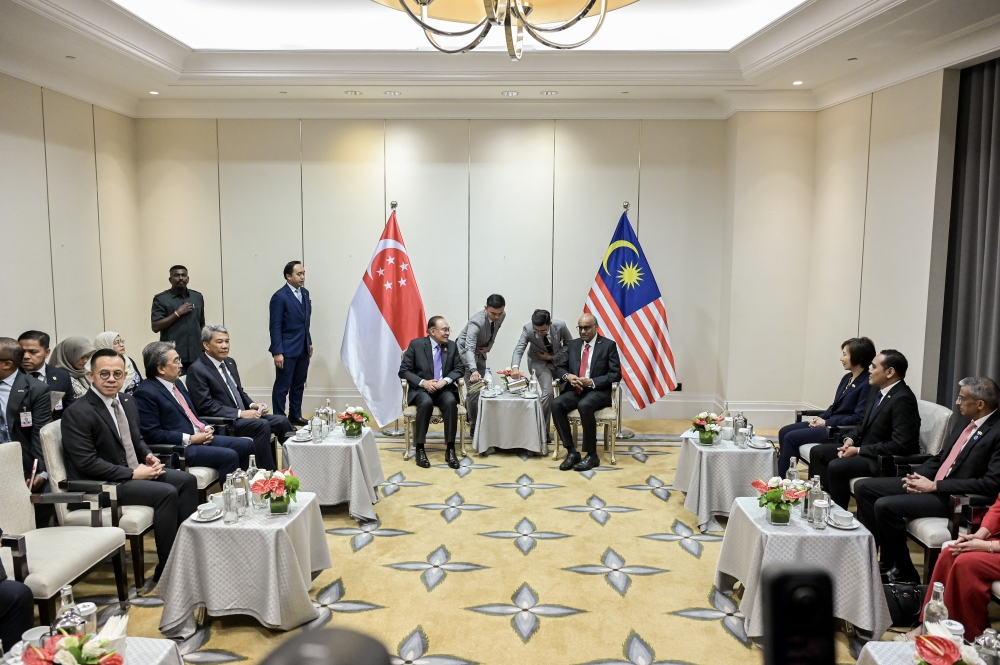
Prime Minister Datuk Seri Anwar Ibrahim received Singapore President Tharman Shanmugaratnam at the Prime Minister's office in Kuala Lumpur on Monday for what officials characterised as a productive working meeting that extended beyond customary diplomatic formalities. The 40-minute engagement reflected the depth of engagement expected between two of Southeast Asia's most economically significant nations, with both leaders using the encounter to signal their commitment to strengthening Malaysia-Singapore relations at the highest level.
The timing of President Tharman's state visit carries particular significance within Malaysia's broader regional diplomacy agenda. As Singapore's first state visit to Malaysia under his presidency, the occasion provides an important opportunity to reset and reinvigorate bilateral mechanisms that have occasionally faced friction over longstanding issues including maritime boundaries, water agreements, and environmental concerns. For PM Anwar's administration, which has prioritised regional engagement and strategic partnerships, the visit underscores Malaysia's intention to position itself as a stabilising force in Southeast Asian geopolitics.
While detailed readouts of the discussion were not immediately disclosed, such high-level bilateral meetings typically cover the full spectrum of Malaysia-Singapore cooperation spanning trade, investment, transportation, and cross-border mobility. The two nations maintain one of Southeast Asia's most integrated economic relationships, with bilateral trade running into billions of ringgit annually and Singaporean investment constituting a substantial portion of Malaysia's foreign direct investment inflows. Both countries share responsibility for managing the Strait of Malacca, one of the world's most critical shipping lanes, making maritime security and cooperation essential elements of their dialogue.
The meeting also occurs within the context of evolving regional security dynamics in Southeast Asia, where both Malaysia and Singapore have vested interests in maintaining stability and promoting rules-based governance. Issues such as transnational crime, terrorism financing, cybersecurity threats, and supply chain resilience have become increasingly prominent in bilateral agendas across Southeast Asia. For two nations that have built their prosperity through stable governance and regional peace, coordinated approaches to emerging threats represent a natural area of collaboration.
Education and cultural exchanges remain another important dimension of Malaysia-Singapore relations, with thousands of Malaysian students pursuing higher education in Singapore annually, while Singaporean institutions maintain significant research and commercial presence in Malaysia. The sustainability of these people-to-people connections and institutional links depends partly on maintaining positive political relations at the leadership level, making presidential and prime ministerial meetings crucial for signalling openness to continued engagement and cooperation.
For Malaysian readers and policymakers, President Tharman's visit carries implications beyond immediate bilateral matters. Singapore's economic policies, technological advancement, and governance approaches often serve as reference points within Malaysia's own development discussions. The city-state's success in positioning itself as a global financial hub and technology centre while maintaining strategic neutrality offers lessons relevant to Malaysia's own economic transformation efforts. Bilateral cooperation on innovation and digital economy initiatives could provide mutual benefits as both nations navigate the rapidly evolving global economic landscape.
The state visit also occurs against the backdrop of ASEAN's collective efforts to address regional challenges ranging from climate change to pandemic preparedness. As two significant ASEAN members, Malaysia and Singapore bear responsibility for contributing to the bloc's strategic coherence and effectiveness. Coordination between Kuala Lumpur and Singapore on ASEAN matters—whether relating to the ASEAN Regional Forum, the East Asia Summit, or other multilateral mechanisms—directly influences the region's capacity to manage great power competition and maintain its strategic autonomy.
Water remains a historically sensitive issue between the two nations, with Malaysia supplying water to Singapore through long-standing agreements that periodically come under scrutiny and renegotiation pressure. Such infrastructural and resource-sharing arrangements require sustained political goodwill to function effectively, making senior-level diplomatic engagement essential for maintaining stability in these critical dependencies. Similarly, maritime boundary demarcation issues continue to require careful management to prevent misunderstandings that could escalate tensions unnecessarily.
The presidential visit also provides an opportunity to discuss transboundary environmental concerns, including air quality management, coastal conservation, and responses to climate change impacts affecting both nations. Singapore's low-lying geography makes it particularly vulnerable to sea-level rise and extreme weather events, while Malaysia's position as a significant carbon sink through its forest ecosystems gives both nations complementary interests in environmental stewardship and climate action.
Beyond formal bilateral matters, the visit demonstrates Malaysia's diplomatic openness and PM Anwar's personal commitment to cultivating strong working relationships with key neighbouring leaders. In regional diplomacy, the tone set at the highest level often filters down through institutional channels, determining whether bilateral mechanisms function smoothly or become bogged down in procedural disputes. By prioritising substantive engagement with President Tharman, PM Anwar signals Malaysia's intention to maintain positive relations with Singapore while advancing a constructive regional agenda.
The meeting's conclusion likely resulted in agreement to maintain existing bilateral dialogue mechanisms while potentially identifying new areas for cooperation. Regular exchange of visits at this level helps prevent misunderstandings from escalating and ensures that both nations' leadership maintains alignment on matters of mutual concern. For Malaysia's broader strategic position in Southeast Asia, maintaining robust ties with Singapore remains fundamental to regional stability and Malaysia's own economic prosperity.

