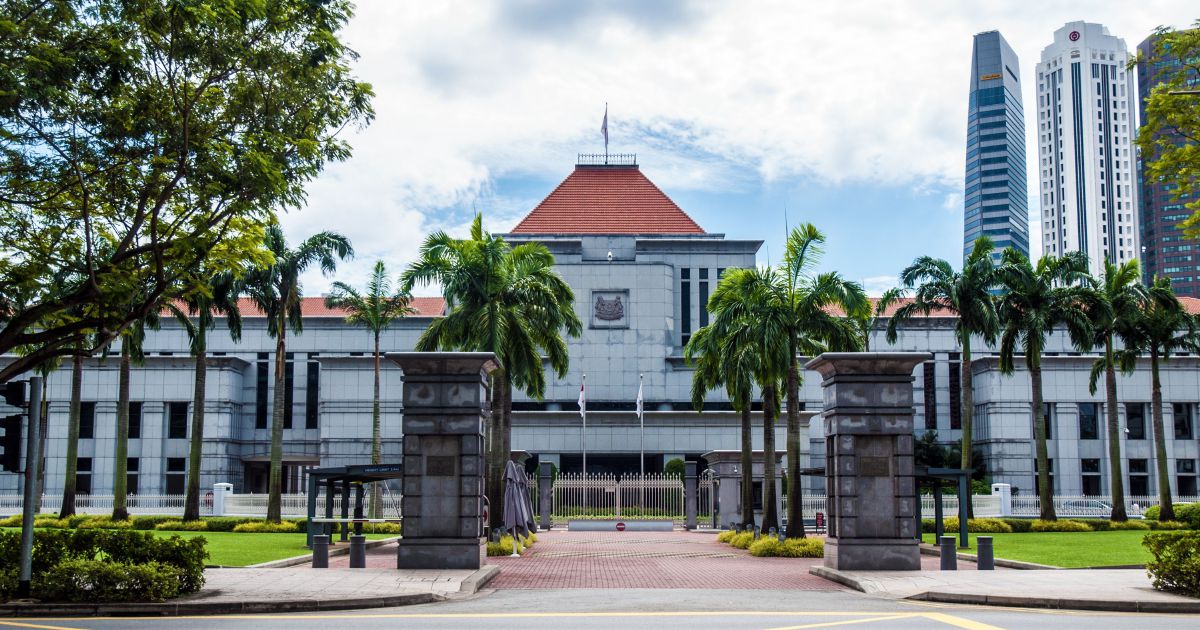
Singapore police have moved swiftly to apprehend a 40-year-old man suspected of orchestrating a pair of bomb threats aimed at sensitive government installations, including Parliament House and the Home Team Science and Technology Agency. The arrest underscores the city-state's continued commitment to investigating threats against critical national infrastructure and key government sites.
The investigation into the anonymous threats represents the kind of security incident that Singapore takes with utmost seriousness, given the nation's strategic importance as a financial hub and its role as a regional transportation nexus. Parliament House stands as the epicenter of legislative activity and symbolic authority in the republic, while HTX operates as a research and innovation body focused on enhancing capabilities for the Home Team, which encompasses the police force and internal security apparatus.
Anonymous bomb threats directed at government facilities carry particular weight in Singapore's security framework. The republic has maintained a stringent approach to public safety since independence, and authorities treat such communications as credible until proven otherwise. This necessitates immediate lockdowns, evacuations, and thorough searches of affected premises, disrupting normal operations and requiring substantial deployment of law enforcement and emergency response resources.
The nature of the threats—transmitted without identification—suggests an attempt to evade immediate detection and accountability. Such tactics often reflect either personal grievances against the state apparatus or attempts to create public alarm and undermine confidence in governmental institutions. Singapore's law enforcement community has developed considerable expertise in tracing the origins of anonymous communications through digital forensics and traditional investigative methods.
The arrest's timing arrives amid broader discussions across Southeast Asia regarding evolving security threats in an increasingly digital world. Countries throughout the region have grappled with rising instances of online harassment, false alarms, and coordinated disinformation campaigns. Singapore's experience provides a relevant case study for how comparable democracies manage threats to institutional stability while preserving civil liberties.
From a practical standpoint, bomb threats impose tangible costs on government operations and public confidence. Each credible-seeming alert necessitates evacuation protocols, canine unit deployments, and forensic inspection teams. For lawmakers and civil servants working within Parliament House, such disruptions interrupt legislative schedules and committee proceedings. For HTX personnel, they interrupt research initiatives aimed at strengthening internal security agencies.
The investigation's success in identifying a suspect demonstrates the technical capabilities embedded within Singapore's security infrastructure. Modern law enforcement increasingly relies upon telecommunications data, internet service provider logs, surveillance camera footage, and behavioral analysis to pinpoint individuals responsible for anonymous threats. The transition from anonymous intimidation to identified suspect represents a crucial evidentiary threshold in criminal prosecution.
Regional observers note that Singapore's rapid response reflects institutional strengths that smaller, well-resourced city-states can marshal effectively. Unlike larger nations sprawling across vast territories, Singapore concentrates significant analytical and investigative capacity toward discrete geographical areas and defined populations. This enables faster threat assessment and suspect identification, though it simultaneously raises questions about surveillance scope that civil liberties advocates monitor closely.
The legal ramifications facing the detainee remain to be established through formal charges and court proceedings. Singapore's penal code provides substantial penalties for making bomb threats, reflecting the serious consequences such communications carry for public order and institutional functioning. Penalties typically increase where threats target critical infrastructure or government buildings, signalling legislative intent to deter such behavior through substantial criminal liability.
For Malaysian readers, this incident resonates with broader Southeast Asian security considerations. Both Singapore and Malaysia maintain robust law enforcement frameworks addressing terrorism, public disorder, and threats against government facilities. The region has experienced occasional bomb threats and hoax incidents across multiple jurisdictions, prompting ongoing refinement of response protocols and inter-agency cooperation mechanisms.
The arrest also illuminates how metropolitan governance in densely populated areas demands constant vigilance against diverse security threats. Singapore's approach—combining advanced surveillance infrastructure, coordinated emergency response systems, and thorough investigative protocols—offers comparative lessons for other regional financial centers and capital cities navigating similar challenges.
Moving forward, the case underscores how individual actions targeting institutional legitimacy face increasingly sophisticated detection and response mechanisms. For potential offenders, the progression from anonymous threat to identified suspect to criminal prosecution represents a cautionary sequence that reinforces deterrence functions inherent within modern security states.

