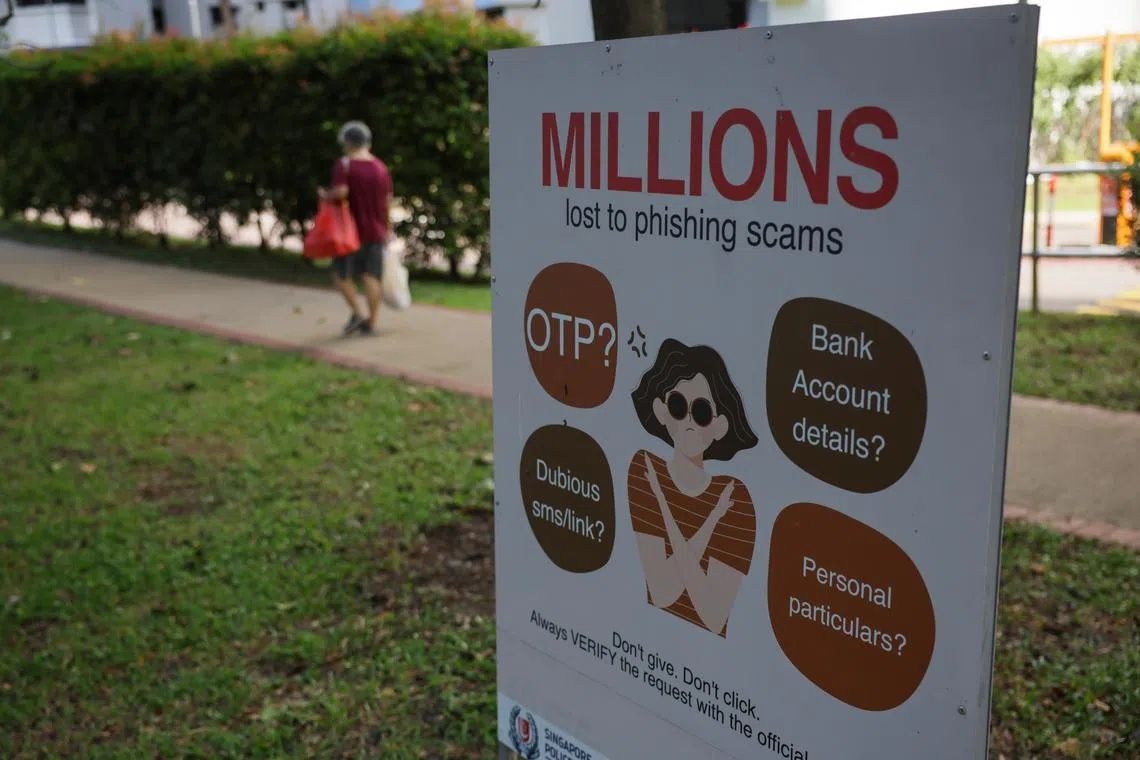
Singapore's police force has cast a wide investigative net, bringing 230 individuals under scrutiny for their alleged participation in an elaborate scam operation that has defrauded victims of approximately S$9 million. The scale of the operation, which ran from mid-June through the first day of July, underscores the continuing sophistication and reach of organised fraud networks operating across Southeast Asia's digital landscape. Among those being probed is a 16-year-old, highlighting how cybercrime syndicates have increasingly expanded recruitment beyond traditional age groups, exploiting young people's technological fluency and relative inexperience with law enforcement.
The suspects range in age from 16 to 77 years old, comprising 159 men and 71 women who are believed to have orchestrated or facilitated more than 713 separate fraudulent transactions. Their alleged involvement spans multiple criminal roles—some are suspected of being the architects of scams, while others are thought to have acted as money mules, the intermediaries who launder stolen proceeds through the financial system. This division of labour reflects the professionalism now embedded within scam operations, where tasks are compartmentalised to insulate upper-level organisers from direct culpability. The Commercial Affairs Department and officers from all seven police land divisions collaborated on the coordinated sweep, demonstrating the resource commitment required to dismantle these networks.
The fraudulent schemes identified during the operation reveal the diversity of tactics employed by modern cybercriminals. Electronic commerce scams remain prevalent, exploiting the region's booming online shopping ecosystem and consumer trust in digital transactions. Friend impersonation scams weaponise social engineering and relationship exploitation, convincing targets that trusted contacts require urgent financial assistance. Job recruitment frauds prey on employment seekers desperate for income, whilst government official impersonation scams leverage the authority of state institutions to coerce compliance. Investment schemes dangle prospects of unusually high returns to lure money from aspirational savers, and rental frauds manipulate housing-market pressures to extract deposits for non-existent properties. This portfolio of techniques demonstrates how scammers continuously adapt to exploit different vulnerabilities within society.
The legal consequences facing the accused are severe, reflecting Singapore's zero-tolerance approach to organised fraud. Those convicted of cheating face up to a decade in prison and fines, while money laundering convictions carry identical maximum imprisonment terms alongside penalties reaching S$500,000. Individuals operating payment services without appropriate licensing face fines of up to S$125,000 and three-year prison sentences. Most significantly, scammers and syndicate recruiters face mandatory caning sentences ranging from six to 24 strokes if found guilty, a punishment reflecting the Singaporean legal system's approach to deterrence. Money mules face lesser but still substantial penalties, including potential caning of up to 12 strokes and post-conviction restrictions on banking services and mobile subscriptions designed to prevent their future use in criminal networks.
These prosecutorial measures must be understood within the context of Southeast Asia's broader struggle with cybercrime. Malaysia, Thailand, the Philippines, and Indonesia have all reported escalating fraud operations, often coordinated across borders with money flowing through multiple jurisdictions. Singapore's robust enforcement reflects its position as a financial hub where stolen proceeds frequently transit before dispersal. The involvement of young people in these networks poses particular concern for regional law enforcement, as it suggests these criminal organisations are successfully recruiting new cohorts before developing legitimate economic prospects. Educational campaigns and youth engagement programmes have yet to adequately counter the appeal of quick income from illicit activity.
Recent statistical releases from Singapore's police force provide evidence that enforcement efforts are yielding measurable results, though the underlying threat remains substantial. During 2025, reported scam cases declined to 37,308 from over 50,000 the previous year, whilst total losses fell from S$1.1 billion to S$913.1 million. These improvements suggest that awareness campaigns, victim education, and operational intensity are collectively moving the needle on prevention and detection. However, the persistence of nearly 37,000 cases demonstrates that scamming remains endemic within the digital economy. Electronic commerce scams dominated the fraud landscape in 2025 with 6,703 reported cases and S$16.7 million in losses, reflecting the vulnerability of online retail transactions to exploitation.
For Malaysian readers and broader Southeast Asian audiences, the implications of this enforcement action extend beyond Singapore's borders. Many victims of scams in the region reside in neighbouring countries, with proceeds flowing across international payment channels and informal money transfer systems. The involvement of money mules suggests networks coordinating across multiple nations, with financial hubs like Singapore serving as processing points for stolen money originating throughout the region. Malaysian authorities have similarly grappled with syndicated scam operations, and cooperation mechanisms with Singapore remain critical to disrupting cross-border criminal logistics. The case also highlights how digital financial services, whilst economically beneficial, create infrastructure vulnerable to organised crime unless carefully regulated.
The message embedded within Singapore's enforcement action is unambiguous: participation in scam operations carries demonstrable legal jeopardy. By prosecuting not only the architects but also the facilitators and money mules, authorities aim to eliminate the human infrastructure upon which these schemes depend. The post-conviction restrictions on financial and telecommunications services represent innovative approaches to preventing recidivism, acknowledging that imprisonment alone may prove insufficient to deter those already embedded within criminal networks. Yet the continuing scale of detected frauds suggests that deterrence, however credible, cannot entirely eliminate the supply of individuals willing to participate in organised theft.
Singapore's authorities have established multiple reporting channels and information systems to encourage public participation in disrupting scams. The ScamShield helpline and associated website provide educational resources and direct reporting mechanisms, whilst a separate police hotline operates for intelligence submissions. The commitment to confidentiality in reporting reflects recognition that witnesses and victims often face intimidation or shame that inhibits disclosure. An i-witness online portal extends these reporting capacities for individuals preferring digital submission. These infrastructure investments represent acknowledgment that law enforcement alone cannot address cybercrime without community cooperation and early warning systems that flag emerging schemes before they metastasise.
The persistent threat of scamming across Southeast Asia demands sustained regional cooperation, technological investment in fraud detection, and public awareness campaigns that particularly target vulnerable populations including young people, recent migrants, and those with limited financial literacy. Singapore's operation demonstrates that coordinated enforcement yields arrests and dismantles active networks, yet the declining but still-substantial crime statistics suggest that addressing root causes—economic insecurity, limited legitimate opportunity, and the relative ease of technological participation—remains essential to long-term prevention. For Malaysia and other regional economies increasingly digitised and integrated into global financial systems, the lesson is sobering: sophisticated crime networks will continue evolving their methods, necessitating constant adaptation of enforcement and prevention strategies.

