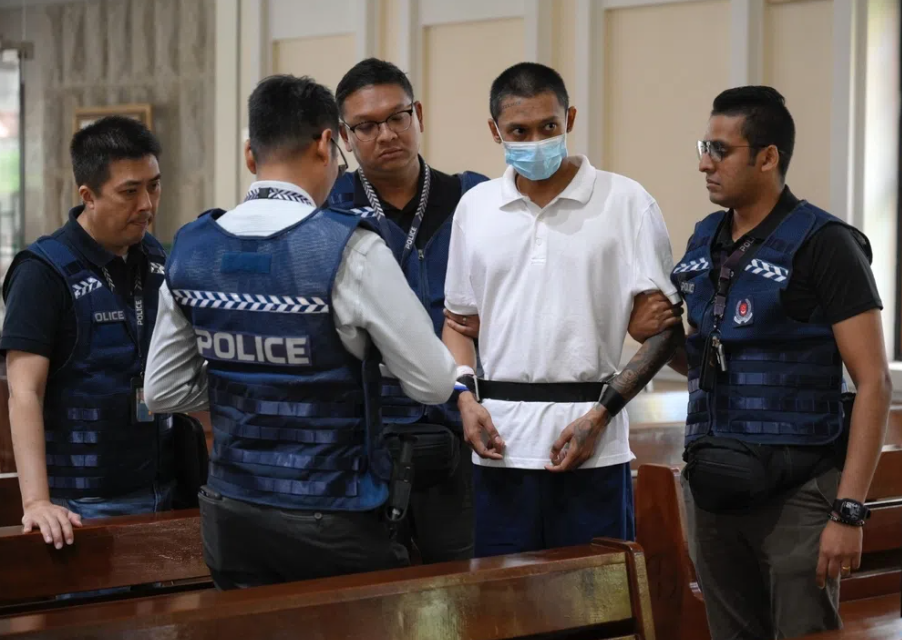
A 38-year-old Singapore man has received a sentence of four years and three months' imprisonment along with nine strokes of the cane after pleading guilty to attacking a Catholic priest during a crowded children's mass at St Joseph's Church. Basnayake Keith Spencer's conviction marks a significant moment in Singapore's legal system, highlighting escalating concerns about violent crime in places of worship and the protection of religious spaces across Southeast Asia.
The assault occurred on the evening of November 9, 2024, when approximately 900 parishioners had gathered at the church for mass. Basnayake arrived at the venue alone at around 5.30pm and initially seated himself in a pew in the middle of the hall. Prior to the incident, he consumed pills to maintain focus and later took additional medication to calm himself after becoming aware that the service was specifically for children. His actions that evening would fundamentally alter the lives of those present and provoke serious questions about security measures in religious institutions across the region.
The stabbing occurred at approximately 6.15pm during the communion portion of the service, a moment of profound spiritual significance for Catholic worshippers. Reverend Christopher Lee, then 57 years old, stood with a fellow priest to administer communion to parishioners. Basnayake, who had initially positioned himself in a queue for the other priest, suddenly repositioned himself to join Father Lee's line. When his turn arrived, he produced a 23-centimetre foldable knife with a 10-centimetre blade and thrust it directly into the priest's mouth with what prosecutors described as a sudden and wholly unprovoked movement.
The violence of the attack was compounded by the location of the wound and the timing during a sacred ritual. Father Lee sustained an 8-centimetre laceration on his tongue, a 3-centimetre cut on his upper left lip, and a 4-centimetre wound at the corner of his mouth. The priest immediately began bleeding profusely from the injury to the lower portion of his mouth. His immediate response demonstrated remarkable presence of mind: he quickly grabbed the rear pocket of Basnayake's jeans to prevent further attacks on other congregation members, potentially averting a more catastrophic situation that could have resulted in multiple casualties among the assembled worshippers.
Congregation members, including an off-duty police officer present at the service, rapidly intervened to restrain Basnayake and prevent him from inflicting additional harm. Police were summoned immediately and Basnayake was apprehended at the scene. Father Lee was transported to hospital where medical professionals treated his injuries, which required extensive care including speech therapy in the months following the attack. He was discharged six days later on November 15, 2024, after receiving 40 days of hospitalisation leave, though the long-term psychological and physical impacts of the incident extended well beyond his initial recovery period.
Investigations revealed that Basnayake possessed multiple weapons when arrested, indicating a pattern of carrying dangerous implements. Police found a 14.5-centimetre penknife, a flip knife, and a fishing gaff—a pole with a sharp hook—among his possessions. These discoveries suggested premeditation regarding weapon acquisition, even if the specific intent to attack at the church remained unclear. The accumulation of weapons raised concerns among prosecutors regarding his dangerousness and likelihood of reoffending, ultimately contributing to his continued detention in custody.
Barring from bail came in December 2024 when prosecutors successfully argued that Basnayake represented an exceptionally high risk to public safety. He remained in remand for more than a year and nine months awaiting sentencing, spending the entire period in custody pending judicial determination of his culpability. His prior criminal history weighed significantly against him in this assessment. In 2019, Basnayake had been convicted of voluntarily causing hurt with a dangerous weapon and sentenced to one year's imprisonment after stabbing his former girlfriend in the buttocks with a kitchen knife while under the influence of methamphetamine, establishing a troubling pattern of weapon-related violence.
During sentencing proceedings, the prosecution recommended a jail term between four years and three months and four years and eleven months, with nine strokes of the cane. Prosecutors acknowledged that Basnayake was intoxicated and in a drug-induced psychotic state at the moment of the attack, yet argued he retained sufficient awareness and consciousness of his actions to bear full responsibility. The prosecution emphasised the aggravating factors: the wholly unprovoked nature of the assault, the severe physical injuries inflicted upon a defenceless victim, the execution of the crime during a sacred religious ceremony in a crowded place of worship, and the genuine risk of mass panic and additional injuries that the attack created.
Barrister Ashwin Ganapathy of the Public Defender's Office, representing Basnayake, sought leniency by requesting a jail term of less than four years combined with nine cane strokes. He characterised his client as deeply remorseful, ashamed of his actions, and deserving of a proportionate sentence reflecting his culpability. Despite these arguments, District Judge Shaiffudin Saruwan rejected the defence submission and imposed the higher end of the recommended range, emphasising the gravity of the offences and their contextual circumstances.
Judge Shaiffudin underscored that the attack was entirely unprovoked and had caused severe physical harm to a completely defenceless individual. The judge further noted that the defendant had chosen to strike the priest at the precise moment when he was performing a sacred religious ritual, an action that created substantial potential for mass panic among the large congregation and additional injuries to other parishioners. The timing and location of the assault were particularly aggravating factors that increased its seriousness beyond a typical weapon assault.
The case carries significant implications for Southeast Asia regarding security in religious spaces and the treatment of mentally unstable individuals with violent histories. The incident at St Joseph's Church demonstrates how places of worship, traditionally considered sanctuaries of safety and peace, can become vulnerable to sudden violence. For Malaysian readers, the case raises pertinent questions about how religious institutions manage crowd safety, background screening of parishioners with concerning behavioural patterns, and cooperation between security personnel and law enforcement during critical moments.
Under Singapore law, the offence of voluntarily causing grievous hurt with a dangerous weapon carries potential sentences ranging up to life imprisonment or up to 15 years' jail, with additional provisions for fines and caning. The sentence imposed on Basnayake represents a firm but measured response, acknowledging both the severity of the attack and the mitigating circumstance of drug intoxication, while still conveying the court's determination to protect public safety and punish violent crime in religious settings. The case serves as a cautionary reminder across the region about the ongoing challenges of managing individuals with histories of weapon-related violence and substance abuse within community settings.

