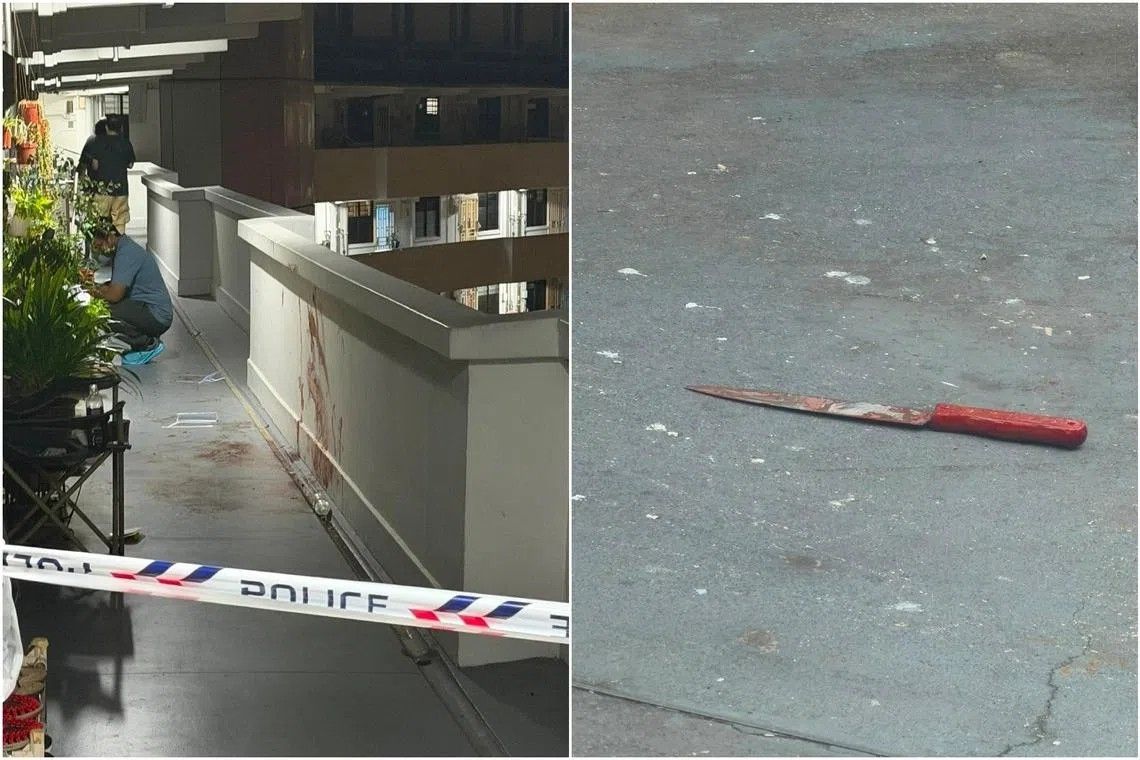
A murder charge has been filed against Ng Swee Seng, 59, following the death of his neighbour Thiyagarajan Karunakaran, also 59, at Block 55 Lengkok Bahru in Singapore's Redhill area. The alleged killing occurred on July 20, with court proceedings initiated through a video appearance by the accused on July 22 in district court. The case highlights the potential for escalation when neighbourhood tensions boil over into physical violence within multi-unit residential complexes.
Authorities responded to multiple emergency calls arriving shortly before 5pm on July 20. Officers who arrived at the scene discovered the victim lying unresponsive in the lift lobby on the 16th floor of the block. Responders immediately transported Thiyagarajan to the National University Hospital, where medical staff attempted to stabilise his condition. However, his injuries proved fatal, and he succumbed to them during hospitalisation.
Visitings to the scene by news personnel the following day revealed the severity of the physical altercation. Visible evidence of the incident remained across the 16th-floor corridor, including bloodstains and a distinct bloodied footprint marking the passage. Such physical evidence typically plays a crucial role in violent crime investigations, helping authorities reconstruct the sequence of events and establishing the location where the attack took place. The presence of blood trails extending through the corridor suggests the incident may have involved movement and struggle between the parties.
According to accounts from residents in the building, both men occupied separate units on the same residential level, living several doors apart from one another. This proximity raises questions about the nature of their relationship prior to the fatal encounter. Neighbours in such arrangements often interact regularly through shared spaces, lift access, and common facilities, creating either familiarity or friction depending on individual circumstances. The fact that the victim was found in the lift lobby rather than outside either man's unit suggests the confrontation may have begun elsewhere or escalated as they moved through shared building spaces.
Cases of lethal neighbourhood disputes in Singapore's dense urban residential environment carry particular significance for understanding community safety and interpersonal conflict resolution. High-rise housing complexes concentrate populations where disputes over noise, maintenance, parking, or other grievances can fester without adequate intervention. The incident at Lengkok Bahru exemplifies how unmanaged tensions between residents sharing common facilities can ultimately result in tragic outcomes.
The charges against Ng Swee Seng represent the most serious criminal allegation available under Singapore law. Murder convictions typically result in mandatory capital punishment in the jurisdiction, making the gravity of the case evident. The investigation and subsequent legal proceedings will focus on establishing the circumstances that prompted the violence, the relationship between the accused and victim, and whether any precipitating events or disputes contributed to the fatal encounter.
For residents within Block 55 and similar housing developments across Singapore, such incidents raise awareness about the importance of early intervention in neighbour conflicts. Community management offices, block leaders, and resident committees typically serve as first-point channels for addressing disputes before they escalate. The tragic outcome in this case may prompt reflection within the building and wider housing estates about mechanisms for managing interpersonal tensions in shared residential spaces.
The proximity of both men in age, combined with their residential arrangement on the same floor, may have created patterns of regular interaction that either contributed to friction or failed to prevent it from accumulating. Understanding the catalyst for the dispute—whether it involved noise complaints, boundary encroachments, or other typical neighbourhood grievances—remains significant for the investigative process and eventual court proceedings.
As Singapore continues to grapple with population density and intensive residential clustering, cases like this underscore the critical need for conflict-resolution services, community mediation, and proactive management within housing blocks. While violent outcomes remain statistically rare, their occurrence within tight-knit residential communities reverberates among inhabitants who must continue coexisting in shared spaces. The case of Ng Swee Seng and Thiyagarajan Karunakaran serves as a sobering reminder of how quickly dispute escalation can result in irreversible tragedy within the confines of urban residential life.

