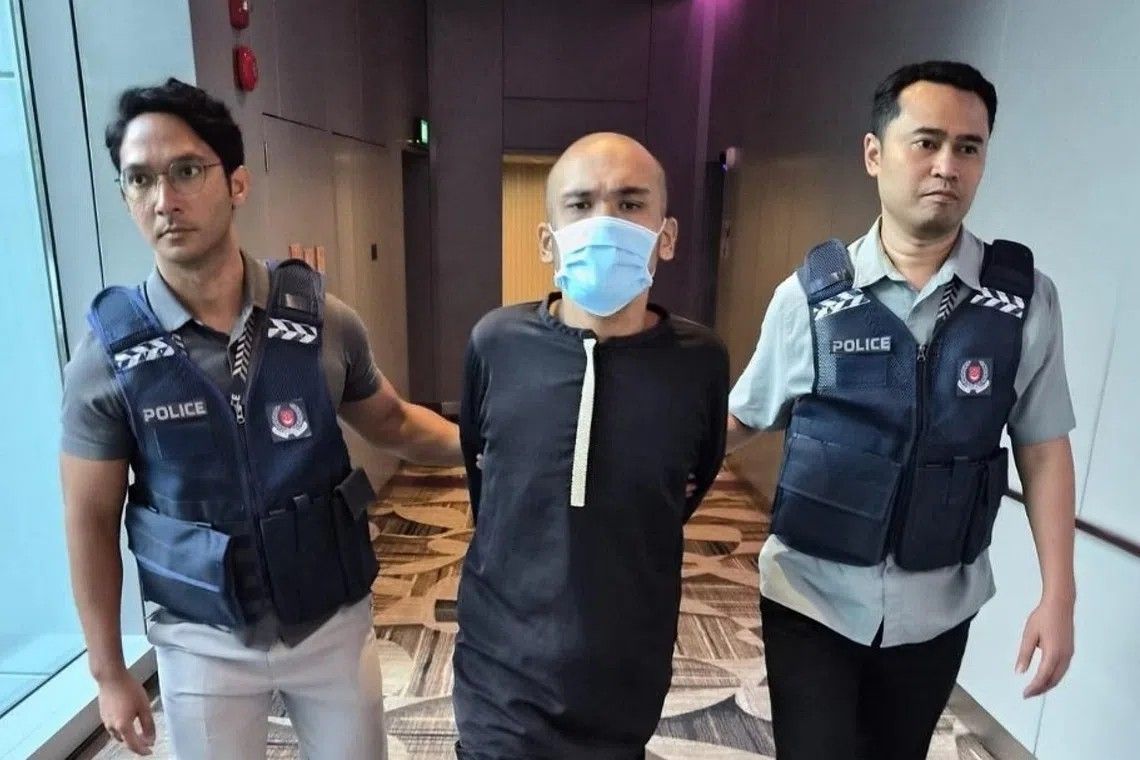
A 27-year-old Singaporean man appeared in court on August 7 facing charges related to offensive content he allegedly posted online targeting the Muslim community, marking a significant legal case involving religious harmony in the island nation. Elvin John Baptist was charged under the Maintenance of Religious Harmony Act, a cornerstone legislation that Singapore uses to protect religious minorities and maintain inter-faith peace. The action underscores how seriously Southeast Asian governments treat breaches of religious tolerance, particularly in diverse, multicultural societies where social cohesion depends on mutual respect across faith lines.
According to court documents, Baptist allegedly uploaded two videos on TikTok on March 1 that contained offensive words in Malay intended to demean Islam and potentially incite communal unrest. The videos gained traction on social media, prompting community members to file reports with the Singapore Police Force. However, investigators discovered that Baptist had already departed Singapore by the time authorities began their inquiry on March 1, the same day the videos were published, creating immediate operational challenges for law enforcement.
The involvement of Malaysian authorities illustrates how cross-border cooperation has become essential in managing digital crimes in Southeast Asia. Baptist fled to Malaysia, but with assistance from the Royal Malaysia Police, he was located and deported on August 6. He was arrested immediately upon arrival back in Singapore on the same day, demonstrating efficient bilateral coordination between the two neighbouring countries in addressing religious harmony violations. This smooth handover reflects the strong working relationship between Singapore and Malaysia on law enforcement matters, despite occasional political tensions between the nations.
The Maintenance of Religious Harmony Act, under which Baptist was charged, represents one of Asia's most robust legal frameworks protecting religious minorities. Enacted in 1992, the legislation empowers authorities to take action against individuals or groups whose conduct deliberately insults religious beliefs or threatens public peace. The law has been invoked in numerous high-profile cases over the decades and remains central to Singapore's strategy of ensuring that freedom of expression is balanced with respect for others' deeply held beliefs. For regional observers, the legislation serves as a model for how democracies can protect religious minorities without completely restricting speech.
Baptist's case carries particular significance given the rise of social media as a platform for inflammatory content across Southeast Asia. Unlike traditional media, which undergoes editorial oversight, platforms like TikTok enable individuals to broadcast unfiltered messages instantaneously to vast audiences. The rapid dissemination of such content presents unprecedented challenges for law enforcement and community leaders seeking to prevent religious tensions from escalating. Malaysian and Singaporean authorities have grown increasingly concerned about coordinated campaigns of religious provocation that exploit digital platforms to sow discord.
The investigation has expanded beyond the original charges. Police are also investigating Baptist's involvement in a separate incident in which a video circulating on social media allegedly depicts an individual desecrating the Quran on a public bus in Singapore. This additional video investigation suggests a pattern of behaviour rather than isolated incidents, and authorities are examining whether Baptist may be connected to multiple incidents targeting Islam. The scope of the investigation reflects law enforcement's determination to identify all individuals involved in religious provocations and establish whether they are part of a coordinated effort.
The Quran incident represents one of the most sensitive forms of religious desecration in Islam. Any disrespect shown to the Quran is considered deeply offensive by Muslims and can rapidly inflame communal tensions in multi-religious societies. Singapore has experienced sporadic tensions between religious communities, and authorities treat allegations of Quran desecration with the utmost urgency. The fact that this occurred on public transport, a space shared by diverse commuters, heightens concerns about the potential for escalation and public disorder.
For Malaysian readers, this case underscores the interconnectedness of religious harmony issues across the region. Malaysia, like Singapore, is a multicultural nation where religious tensions have occasionally erupted into violence. The cooperation between Malaysian and Singaporean police in managing Baptist's deportation demonstrates how both countries recognise that digital crimes and religious provocations do not respect national borders. Malaysian authorities' swift action in locating and deporting Baptist reflects the seriousness with which Kuala Lumpur treats individuals accused of religious offences, even those targeting other faiths.
The timing of Baptist's arrest comes amid broader regional concerns about rising online hate speech and religious extremism. Southeast Asian governments have grappled with the challenge of regulating social media content while maintaining democratic freedoms. Singapore's approach—using established legal frameworks and cross-border cooperation—contrasts with other regional models. The Baptist case illustrates how individual prosecutions can serve as deterrents, signalling to social media users that posts insulting religious communities carry legal consequences, however distant they may be from consequences in Western democracies.
The investigation's expansion into the separate Quran desecration video suggests that authorities suspect a pattern of deliberate religious provocations rather than impulsive behaviour. If Baptist is linked to multiple incidents, it could indicate pre-meditated attempts to undermine religious harmony for ideological reasons. Such findings would elevate the seriousness of charges and potentially lead to enhanced penalties. For the broader Muslim community in Singapore and Malaysia, the prosecution represents affirmation that legal systems take religious desecration seriously and will pursue perpetrators across borders if necessary.
As the case progresses through Singapore's courts, it will establish important legal precedents regarding the boundaries of acceptable speech on social media. The Maintenance of Religious Harmony Act was drafted in the pre-digital era, and courts must now interpret how its provisions apply to viral videos and rapid-fire social media content. Legal experts across Southeast Asia will monitor the outcome closely, as it may inform how other regional governments approach similar cases involving digital religious provocations. The verdict could influence legislative discussions about strengthening protections for religious minorities in the age of social media.
For ordinary Singaporeans and Malaysians, the Baptist case serves as a reminder that religious respect remains non-negotiable in diverse Southeast Asian societies. While both nations pride themselves on supporting freedom of expression, that freedom exists within bounds that protect communal harmony and prevent incitement. The swift apprehension and prosecution of Baptist, with Malaysian assistance, demonstrates that authorities will pursue individuals who cross these lines, regardless of whether they flee the jurisdiction. In an increasingly polarised digital landscape, such enforcement actions are critical to preserving the delicate balance upon which multicultural Southeast Asian nations depend.

