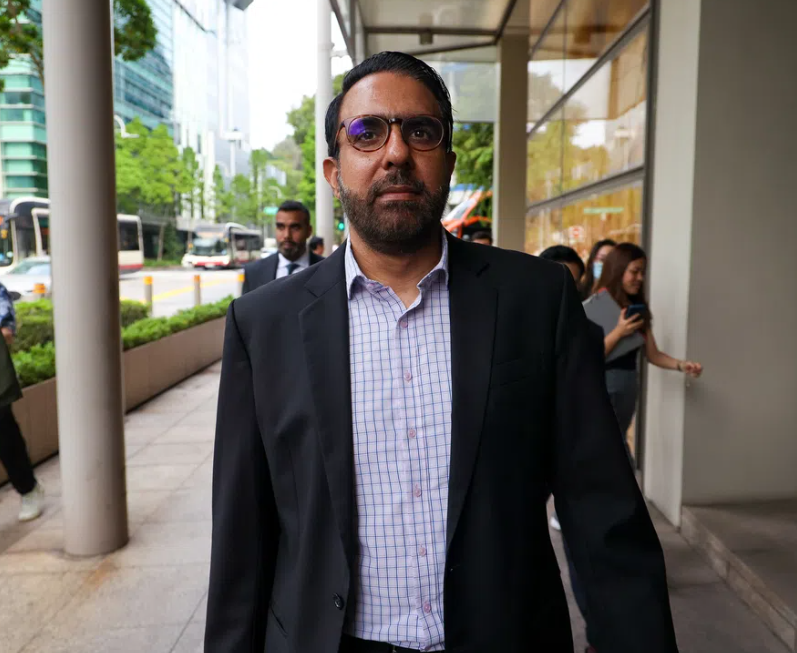
Singapore's Law Society will pursue the most severe penalty available when the disciplinary case against Workers' Party leader Pritam Singh comes before the courts on August 13. The application seeks to have Singh struck from the rolls entirely, effectively ending his ability to practise law in the city-state. Although Singh currently operates as a non-practising lawyer while serving as Member of Parliament for Aljunied GRC, the outcome of these proceedings carries significant symbolic and professional implications.
Singh's legal troubles trace back to his handling of a statement concerning former party colleague Raeesah Khan. In 2021, Khan made an assertion in Parliament regarding an alleged sexual assault case, claiming that police mishandled the matter. That parliamentary statement proved to be false. Singh, then party chair, subsequently provided misleading testimony to the Committee of Privileges when questioned about his knowledge and actions regarding Khan's fabricated account. In February 2025, he was convicted on two counts of lying under oath during those privilege committee proceedings.
The conviction carried immediate consequences. Singh was ordered to pay a $14,000 fine, a substantial financial penalty reflecting the seriousness with which the courts treated his dishonesty. His appeal against the conviction, pursued through the High Court in December 2025, resulted in failure, effectively closing off that avenue for relief. The dismissal of his appeal consolidated the conviction and set the stage for the present disciplinary action now proceeding through the legal profession's regulatory machinery.
The Law Society's mandatory role in initiating these disciplinary proceedings stems directly from Singapore's statutory framework governing the legal profession. When the Attorney-General's Chambers notified the Law Society that Singh had been convicted of offences involving fraud or dishonesty, the regulatory body became legally obligated to commence action. This requirement removes discretion from the equation: the Law Society must proceed when an attorney has been convicted on such grounds. A spokesperson confirmed on March 13 that the society was simply fulfilling its statutory duty under the Legal Profession Act.
The disciplinary case will be heard by the Court of Three Judges, the apex body for legal profession regulation in Singapore. This tribunal comprises Chief Justice Sundaresh Menon, Justice Kannan Ramesh, and Justice See Kee Oon. The court wields considerable power over the profession, possessing authority to suspend lawyers for up to five years, impose financial penalties reaching $100,000, or, most drastically, strike practitioners entirely from the rolls. The composition of this court signals the gravity with which the legal system treats Singh's case.
Under Singapore's Legal Profession Act, the available sanctions for disciplinary misconduct are tiered, theoretically offering courts flexibility in fashioning appropriate remedies. However, judicial precedent has substantially constrained that flexibility when dishonesty forms the foundation of the misconduct. Singapore's courts have established that striking-off represents the presumptive sanction whenever an attorney's conduct involves dishonesty, absent truly exceptional circumstances that would justify departing from this default position. This doctrine was reaffirmed as recently as July 2026, when a lawyer convicted of lying to police regarding a drink-driving matter was struck off after the court determined no exceptional factors warranted leniency.
The pattern of recent cases suggests Singh faces a considerable hurdle in arguing for any outcome short of removal from the rolls. His conviction involved deliberately misleading Parliament's privileges committee, the body tasked with investigating breaches of parliamentary privilege and maintaining the integrity of Parliament itself. Dishonesty directed at such a foundational institution carries particular weight in judicial assessment. The nature of the lie—concerning knowledge of a false parliamentary statement—implicates both personal integrity and duties to the institution of Parliament, factors that courts typically view with considerable seriousness when evaluating sanctions.
This disciplinary proceeding unfolds against the backdrop of Singh's party disciplinary matters as well. In April 2025, following his criminal conviction, the Workers' Party's central executive committee issued him a formal letter of reprimand. A party disciplinary panel had determined that Singh had violated two provisions of the party's Constitution through his conduct. This internal party sanction, while distinct from the legal profession's action, reflects how his dishonesty has generated consequences across multiple institutional frameworks through which he operates.
For Malaysian observers monitoring Singapore's governance and legal developments, Singh's case illustrates how severely Singapore's system treats breaches of parliamentary honesty and professional integrity. The convergence of criminal conviction, professional sanction, and party discipline represents a comprehensive institutional response to dishonesty in public and professional settings. The mandatory nature of the Law Society's action, combined with the presumptive striking-off doctrine, demonstrates how Singapore's regulatory framework creates limited room for discretionary leniency when dishonesty is established.
The August 13 hearing will determine whether Singh becomes another addition to Singapore's relatively small roster of struck-off lawyers, joining the ranks of those deemed unfit to practise. The court's decision will carry implications beyond his individual fate, reinforcing or potentially modifying the judicial approach to sanctions in profession misconduct cases involving dishonesty. Given the established jurisprudence, the outcome appears largely predetermined, though the court's reasons and any potential discussion of exceptional circumstances may provide instructive guidance for the legal profession's future development.

