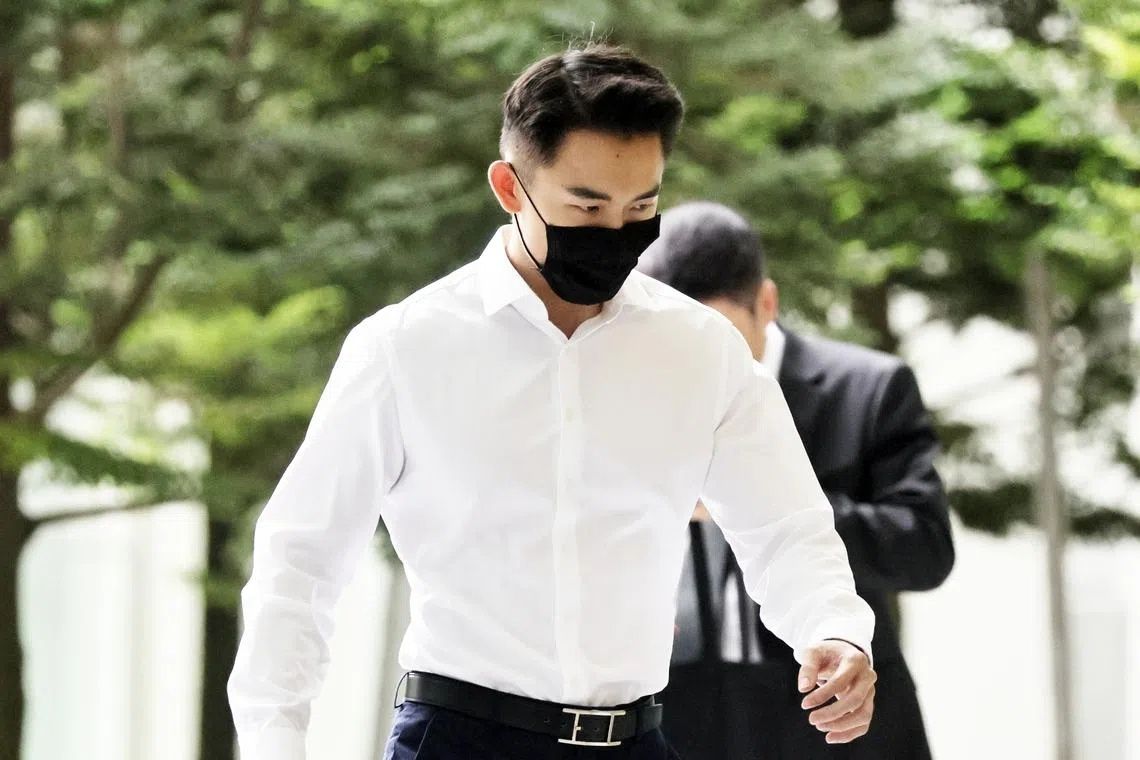
A medical practitioner in Singapore has been convicted of drug consumption after a high-profile police operation at a luxury hotel villa resulted in the arrests of 49 men. Rayson Lee Rui Sheng, aged 36, was among those detained during the early morning raid at Sofitel Singapore Sentosa in August 2023, and has now faced the consequences of his involvement in the incident. The conviction represents a significant development in a case that has drawn attention to the risks associated with party culture and drug distribution in Singapore's hospitality sector.
Lee and his acquaintance Tan Li Ming, 29, were each found guilty on Tuesday of one count of drug consumption. Both men attended a villa party on the morning of August 9, 2023, where authorities subsequently discovered controlled substances including ecstasy and ketamine, along with associated paraphernalia. The convictions followed analysis of their biological samples by the Health Sciences Authority, which revealed traces of MDMA in their urine and evidence of both ecstasy and ketamine consumption in their hair.
The case turned on a critical question of credibility and intent. Both defendants maintained throughout the trial that their drinks had been deliberately contaminated without their knowledge or consent. They argued that strangers at the party had spiked their beverages, preventing them from bearing responsibility for the substances found in their systems. However, District Judge A Sangeetha rejected these assertions, finding fundamental inconsistencies in their accounts. Notably, the judge observed that despite their claims of having their drinks adulterated, both men continued to consume additional alcoholic beverages at the party, behaviour which undermined the sincerity of their defence.
The forensic evidence presented a damaging picture for the defendants. Hair sample analysis demonstrated that both Lee and Tan had prior exposure to the substances, indicating habitual rather than accidental consumption. This finding proved instrumental in the judge's assessment, as it suggested a pattern of drug use rather than isolated victimisation. The court determined that neither man could credibly claim to be unfamiliar with drug use, making their protestations of innocence increasingly implausible in light of the chemical evidence.
Lee's version of events positioned him as a passive participant in an innocent social gathering. He stated that he had arrived at the villa around 8am on August 9 after spending the evening at an acquaintance's birthday celebration and subsequently visiting a nightclub in Clarke Quay, where he met Tan. Upon arriving at the villa, Lee claimed he encountered additional guests he did not recognise and consumed three drinks offered to him by strangers. He asserted that he observed no pills, drug paraphernalia, or actual drug consumption during his time at the venue.
Tan's account provided slightly more detail regarding suspicious activity but ultimately lacked the specificity required to support his defence. He claimed to have witnessed a group of four or five unidentified men at a pantry area drawing liquid from a bottle using a syringe and injecting the mixture into plastic cups. After consuming from one of these cups, Tan said he noticed white residue at the bottom. When he questioned an unidentified person about the contents, he was allegedly told it was "G-water" intended to produce intoxication, a claim Tan maintained he did not fully comprehend at the time.
The prosecution mounted a systematic dismantling of these defences, arguing that the defendants had constructed implausible narratives filled with convenient gaps and unverifiable claims. Deputy public prosecutors Jocelyn Teo and Dhiraj G Chainani emphasised that neither man could identify specific individuals responsible for allegedly spiking their drinks, despite both claiming to have been victimised by unknown party guests. The prosecutors highlighted the obvious logical flaw: victims of such conduct should logically be able to provide at least some identifying details about their alleged perpetrators. Instead, Lee and Tan presented what the DPPs characterised as "hypothetical scenarios and unexplored possibilities," including vague references to unidentified foreign nationals.
Additionally, the defendants raised technical objections regarding police procedure, asserting that authorities had failed to seize certain plastic silver cups that might have contained drug residue. The prosecution countered that even if such cups had been seized and tested positive for drugs, this would merely confirm that the beverages contained controlled substances rather than establishing that consumption was unknowing. The logical inconsistency of this defence argument—that evidence of drug-laced drinks would somehow exonerate them—further weakened their credibility with the court.
The broader context of this case extends beyond individual culpability to encompass concerns about drug distribution networks operating within Singapore's hospitality venues. The scale of the initial operation, involving 49 arrests and the discovery of multiple controlled substances, suggests that the Central Narcotics Bureau and Singapore Police Force identified a significant drug use event. This finding has implications for how authorities approach enforcement in upmarket hotels and entertainment districts, where such activities may otherwise operate with limited scrutiny.
The conviction carries particular significance for healthcare professionals in Singapore. Medical practitioners occupy positions of trust within society and face heightened professional and legal obligations. Lee's conviction under Singapore's Misuse of Drugs Act establishes that medical credentials and professional standing provide no protection from drug consumption laws. The case will likely be considered by Singapore's medical regulatory authorities, with potential professional consequences extending beyond criminal sanctions.
For regional observers, the case illustrates Singapore's uncompromising approach to drug enforcement and the formidable evidentiary standards required to challenge forensic findings. While defendants in other jurisdictions might succeed in arguing reasonable doubt regarding biological test results, Singapore's courts have consistently upheld rigorous scientific evidence, particularly when corroborated by multiple testing methodologies. The reliance on both urine and hair analysis provided robust confirmation of drug consumption that the defendants could not credibly dispute.
The sentencing phase remains pending, but the convictions effectively close the defence's available options. Both men now face mandatory minimum penalties under Singapore law, with the specific sentences to be determined by the presiding judge. The case serves as a cautionary narrative about the intersection of social activity, substance use, and criminal liability, demonstrating that claims of innocent victimisation carry substantial evidentiary burdens when confronted with scientific evidence of drug consumption in one's biological systems.

