Singapore has taken action against two individuals radicalised by the ongoing Israeli-Palestinian conflict, with the Internal Security Department (ISD) issuing orders against a 19-year-old student and a 30-year-old customer service officer this week. The cases underscore how regional geopolitical tensions continue to fuel security concerns across Southeast Asia, with young people particularly vulnerable to online extremist narratives that blend multiple conflicting ideologies.
Cyrus Dzulqarnain Al-Shahriar, the younger detainee, exemplifies a troubling pattern in contemporary radicalisation: exposure to disparate extremist worldviews converging into what authorities term "composite violent extremism" or a "salad bar" of ideologies. Beginning in 2022, Cyrus immersed himself in online Islamic study groups, but was progressively exposed to anti-Western and anti-LGBTQ messaging. The October 2023 Hamas attacks against Israel appeared to accelerate his descent into more dangerous territory, as he consumed pro-Hamas narratives and came to view civilian casualties as justified acts of religious warfare. This escalation mirrors patterns observed elsewhere in the region where significant geopolitical events trigger waves of online radicalisation among digitally native youth.
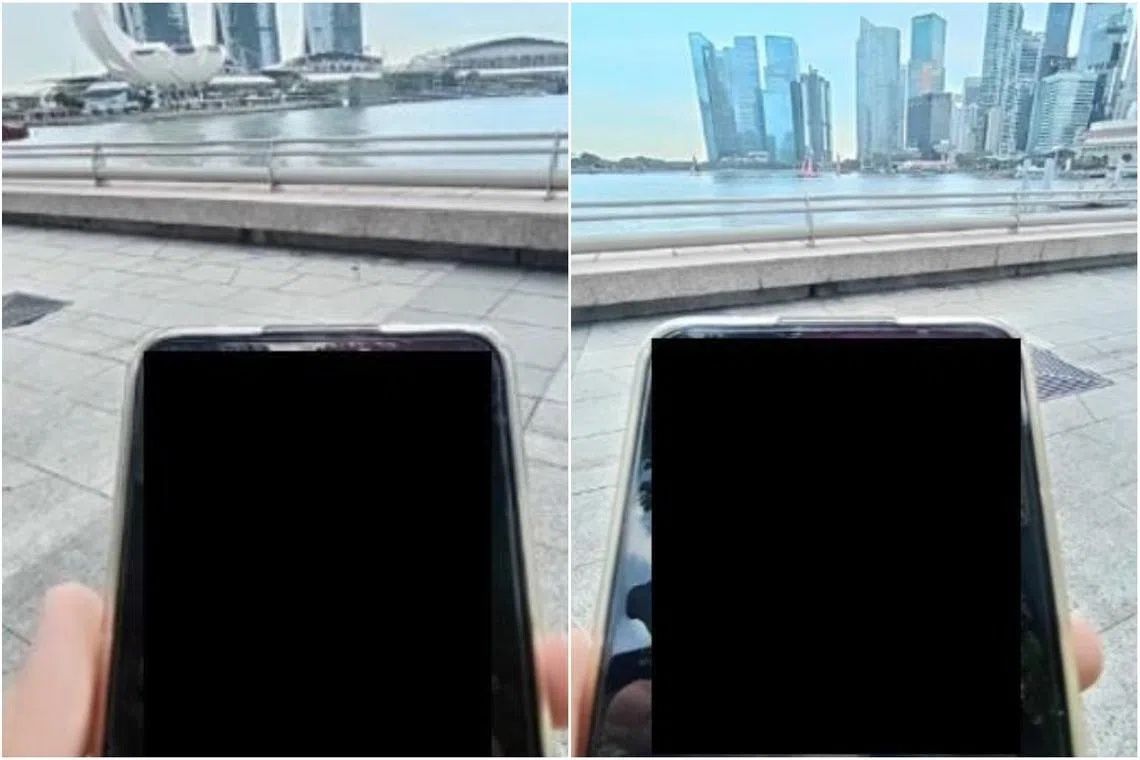
The student's pathway to extremism demonstrates how ideology can metastasize across seemingly unrelated domains. After encountering violent accelerationist ideology—which posits that chaos and violence can fundamentally reshape global order—Cyrus joined a private extremist chat group early 2025. Within this echo chamber, he began glorifying historical terrorist attacks including Al-Qaeda's September 11 operations and the 2002 Bali Bombings, events that directly impacted Southeast Asia and remain vivid in regional consciousness. His willingness to photograph extremist publications against Singapore's iconic Marina Bay Sands backdrop and share them publicly on social media revealed not merely passive consumption of extremist content but active participation in group identity construction.
Particularlly concerning is how Cyrus's worldview fractured into additional extremist dimensions. The ISD's account indicates he became intrigued by incel ideology after encountering posts about school shooter Elliot Rodger, whose 2014 rampage near the University of California, Santa Barbara resulted in six deaths and fourteen injuries. Cyrus identified with the incel subculture—individuals, predominantly male, who blame society and women for their romantic and sexual failures—and subsequently posted threatening messages about harming women using dehumanising terminology. He allegedly fantasised about committing violence against LGBTQ individuals and couples in his school environment.
The parallel case of Tarmizi Mohd Taha, 30, reveals how radicalisation manifests differently across age cohorts yet shares common triggers. Tarmizi, a customer service officer, reportedly admitted willingness to execute attacks on Singapore upon Hamas instruction. His previous experience as a logistics assistant during mandatory national service in the Singapore Police Force appeared to inform his perceived utility to the militant group, and he viewed potential martyrdom through violence as a pathway to spiritual achievement. That an individual with security force background could develop such sympathies underscores that radicalisation penetrates across demographic categories and prior institutional exposure.
While the ISD characterised both cases as unrelated, their temporal proximity and common genesis in the Gaza conflict warrant attention. These individuals represent the seventh and eighth Singaporeans processed under the ISA specifically following the October 2023 escalation. This clustering suggests that major geopolitical events in the Middle East generate cascading security effects across Southeast Asia, where Muslim-majority populations and significant diaspora communities process such developments through various ideological frameworks. The phenomenon carries implications for Malaysia, Indonesia, and Brunei, where similar vulnerabilities to online radicalisation exist among youth populations.
The ISD's designation of Cyrus as only the second individual radicalised by composite violent extremism to face ISA action indicates authorities are still calibrating understanding of this hybrid threat model. Composite violent extremism differs from traditional single-ideology radicalisation because adherents selectively synthesise incompatible belief systems into personalised worldviews justifying violence. Cyrus simultaneously held pro-Hamas jihadist views, violent accelerationist ideology, and incel-motivated misogyny—seemingly contradictory frameworks that nonetheless coalesced into a coherent personal narrative of grievance and violent righteousness. This ideological eclecticism may actually complicate deradicalisation efforts, as rehabilitation programmes typically target coherent belief systems rather than fragmented, individually constructed ideological patchworks.
The role of social media and online communities in both cases demands scrutiny from a regional perspective. Cyrus's radicalisation pathway unfolded primarily through Facebook groups, private chat applications, and incel forums—platforms accessible across Southeast Asia with minimal friction. The online spaces facilitating his ideological evolution remain operational and continue recruiting vulnerable youth. Member-initiated reporting mechanisms appear to have functioned in Cyrus's case, with public members alerting ISD to his anti-Semitic posts, yet this reactive approach leaves countless other at-risk individuals undetected. For Malaysia and other regional states, the case illustrates how national security depends partly on cooperative intelligence-sharing regarding transnational online extremist networks.
The ISD noted that Cyrus did not progress beyond ideation regarding violent action and had not disseminated his extremist views to family or schoolmates. This contained radicalisation nonetheless warranted intervention, reflecting a preventive security posture rather than a prosecutorial one. The department indicated that rehabilitation programming will address his radical beliefs, representing Singapore's investment in deradicalisation rather than purely incapacitation. The efficacy of such programmes remains contested globally, particularly for individuals whose ideological foundations are as fragmented as Cyrus's appear to be.
For Malaysian observers, these cases carry strategic implications. Singapore's relatively smaller population means each ISA case receives intensive scrutiny and contributes meaningfully to trend analysis. The prominence of Gaza-linked radicalisation among recent detainees suggests that the Israeli-Palestinian conflict will continue generating security challenges across the region for the foreseeable future. Malaysia's larger Muslim population and more complex religious landscape mean comparable vulnerabilities may exist at significantly greater scale, even if not subject to identical enforcement responses.
The ISD's concluding observation that composite violent extremism reflects "growing diversity" in violent ideologies among youth warrants serious consideration by security establishments across Southeast Asia. The old model of radicalisation—typically involving recruitment into hierarchical organisations with clear doctrinal lines—appears increasingly superseded by DIY ideological construction enabled by algorithmic content curation and niche online communities. Young people can now assemble bespoke violent worldviews without formal recruitment, making early detection and intervention substantially more difficult. Singapore's proactive approach using restriction and detention orders coupled with rehabilitation represents one attempt to manage this challenge, but the underlying technological and ideological forces generating such radicalisation remain largely unaddressed.

