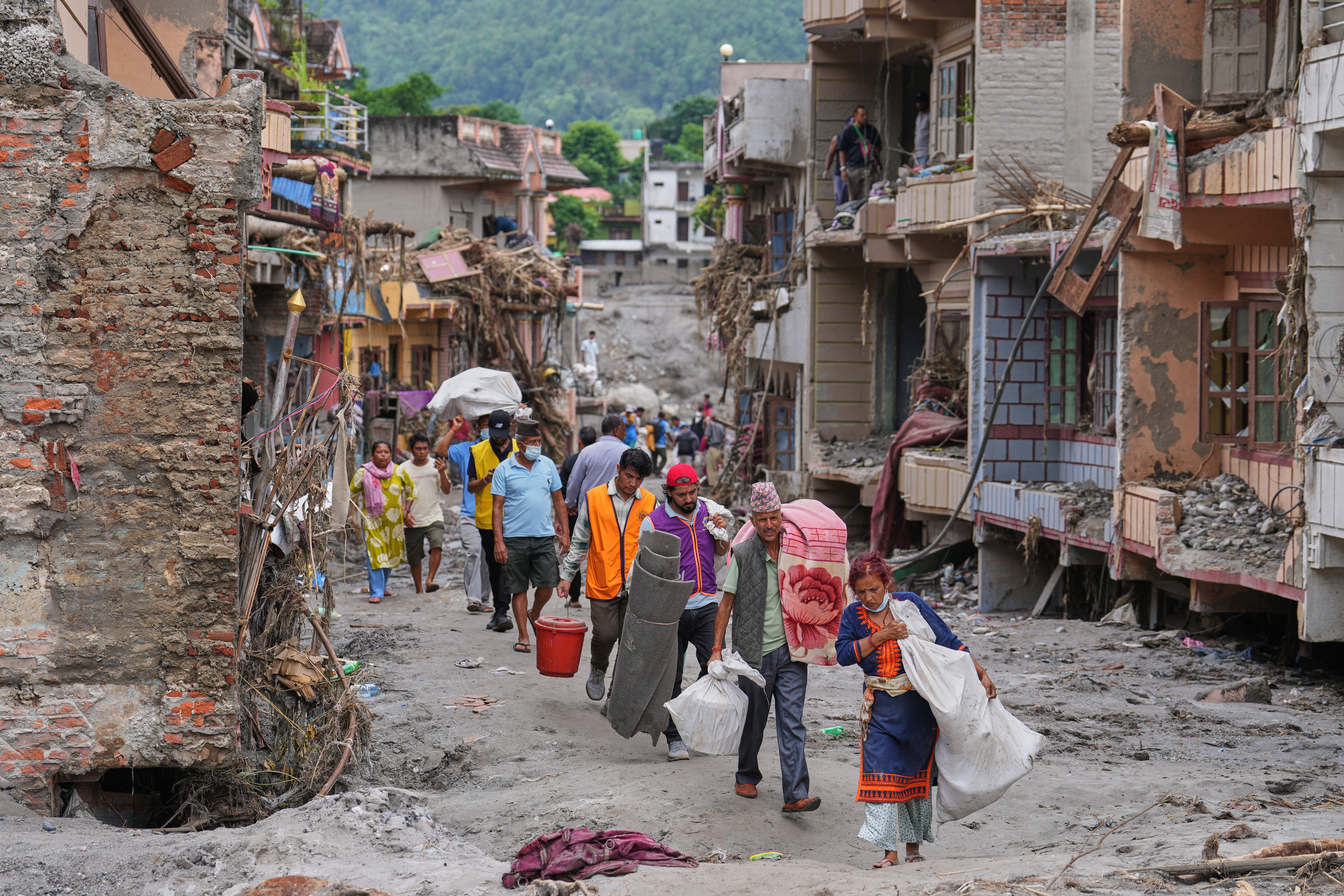
Singapore has committed to sending a multi-faceted humanitarian response to Nepal in the aftermath of devastating flash floods and mudslides that struck areas along the Nepal-China border, the city-state's Foreign Ministry announced on Saturday. The assistance package includes specialized personnel from the Singapore Police Force trained in Disaster Victim Identification, civilian supplies, and equipment contributions from the Singapore Armed Forces. Foreign Minister Dr Vivian Balakrishnan communicated Singapore's support during a telephone conversation with Nepalese Foreign Minister Shisir Khanal on Monday, cementing the regional commitment to disaster relief at the diplomatic level.
The deployment of Singapore's DVI specialists represents a particularly valuable contribution given the scale and complexity of the disaster. Disaster Victim Identification requires highly specialized forensic and administrative expertise to manage mass casualty situations, document deceased victims, and assist grieving families in the identification process. Such capabilities are not uniformly available across all nations, making Singapore's offer of trained personnel especially significant in supporting Nepal's overwhelmed emergency response infrastructure. The fact that Nepalese authorities specifically requested these specialists underscores the magnitude of the humanitarian challenge confronting the country.
Singapore's Crisis Response Team has maintained a continuous presence in Nepal since August 27, six days before the official aid announcement, providing consular support to affected Singaporean nationals and gathering real-time intelligence on ground conditions. This early deployment demonstrates the regional coordination mechanisms that operate among Southeast Asian nations during major disasters and highlights Singapore's proactive approach to protecting its citizens abroad. The presence of trained personnel on the ground also facilitates more effective coordination of incoming humanitarian assistance and ensures alignment with Nepal's specific relief requirements.
Beyond personnel deployment, Singapore's financial contributions underscore the breadth of the humanitarian commitment. The government provided US$100,000 (RM403,000) directly to the Singapore Red Cross public fundraising initiative on Friday, complementing broader relief efforts. The Singapore Red Cross has collectively mobilized approximately S$1 million (RM3.16 million) through its public appeal, demonstrating the generosity of Singapore's civilian population and the organizational capacity of local humanitarian institutions. This dual approach of government funding and community mobilization reflects how effective disaster relief operates across multiple channels within cohesive societies.
The scale of the Nepal disaster presents a stark reminder of the vulnerability of mountainous regions to flash flood and mudslide events, particularly during monsoon seasons when precipitation intensifies dramatically. Initial reports indicate that the death toll has reached at least 919 people, with nearly 4,800 individuals still unaccounted for, including 853 foreign nationals. The presence of significant numbers of foreign missing persons complicates the response, as international coordination becomes essential for repatriation, identification, and consular notification processes. For Malaysia and other Southeast Asian nations, such disasters underscore the interconnectedness of regional populations and the importance of bilateral diplomatic channels during crises.
Nepal's geographical position straddling the Nepal-China border adds complexity to the relief operation, as affected regions may be relatively remote and difficult to access through conventional transportation infrastructure. Flash floods in mountainous terrain can destroy bridges, roads, and communication networks, isolating communities and complicating supply delivery. Singapore's provision of military logistics capability becomes particularly valuable in such contexts, as SAF equipment often includes transport and engineering resources suitable for emergency operations in challenging terrain. The combination of specialized personnel, civilian supplies, and military assets creates a comprehensive response suited to Nepal's actual field conditions.
For Malaysia and other Southeast Asian states, Singapore's rapid humanitarian mobilization offers a model for regional cooperation frameworks. The Association of Southeast Asian Nations does not maintain institutionalized disaster relief mechanisms equivalent to those in other regions, leaving member states to respond individually or through bilateral channels. Singapore's swift activation of its Foreign Ministry, military, and police resources, coupled with diplomatic engagement at the ministerial level, demonstrates how smaller but well-organized nations can exercise meaningful influence during humanitarian crises. The precedent suggests opportunities for Malaysia to develop similar rapid-response capabilities that could benefit both domestic emergency management and regional solidarity.
The involvement of multiple Singapore government agencies in coordinating the relief response reflects sophisticated institutional architecture for managing international humanitarian crises. The Foreign Ministry provided the diplomatic framework, the SPF contributed specialized technical expertise, the SAF supplied logistics capacity, and the Singapore Red Cross mobilized civilian resources. This compartmentalized yet coordinated approach allows each institution to contribute according to its core competencies while maintaining unified strategic direction. Malaysian planners and policymakers might examine whether similar institutional coordination mechanisms exist within Malaysia's emergency management structure and whether enhancements would improve national and regional crisis response capabilities.
The disaster also illustrates the vulnerability of least-developed and lower-middle-income countries to climate-related hazards and the resulting dependency on international assistance. Nepal's limited capacity to manage large-scale disasters independently makes external support essential not merely for relief but for establishing baseline humanitarian standards. Singapore's willingness to deploy specialized personnel rather than merely sending financial contributions acknowledges that cash transfers alone prove insufficient when technical expertise and operational capacity are constraining factors. This principle carries implications for Malaysia's development partnership strategy and how the country calibrates its own humanitarian assistance to achieve maximum impact in recipient nations.
Looking forward, the Nepal disaster reinforces the importance of pre-disaster preparedness and regional cooperation frameworks that activate smoothly when emergencies occur. Singapore's immediate deployment of its Crisis Response Team, initiated several days before the formal aid announcement, demonstrates the value of early warning systems and standing readiness protocols. For Malaysian authorities managing the December to March northeast monsoon season and the May to September southwest monsoon, Nepal's experience provides instructive lessons regarding flash flood vulnerabilities in regions with steep topography and limited drainage infrastructure. Investment in regional disaster management coordination during non-crisis periods could substantially improve response efficiency when the inevitable next major emergency strikes.

