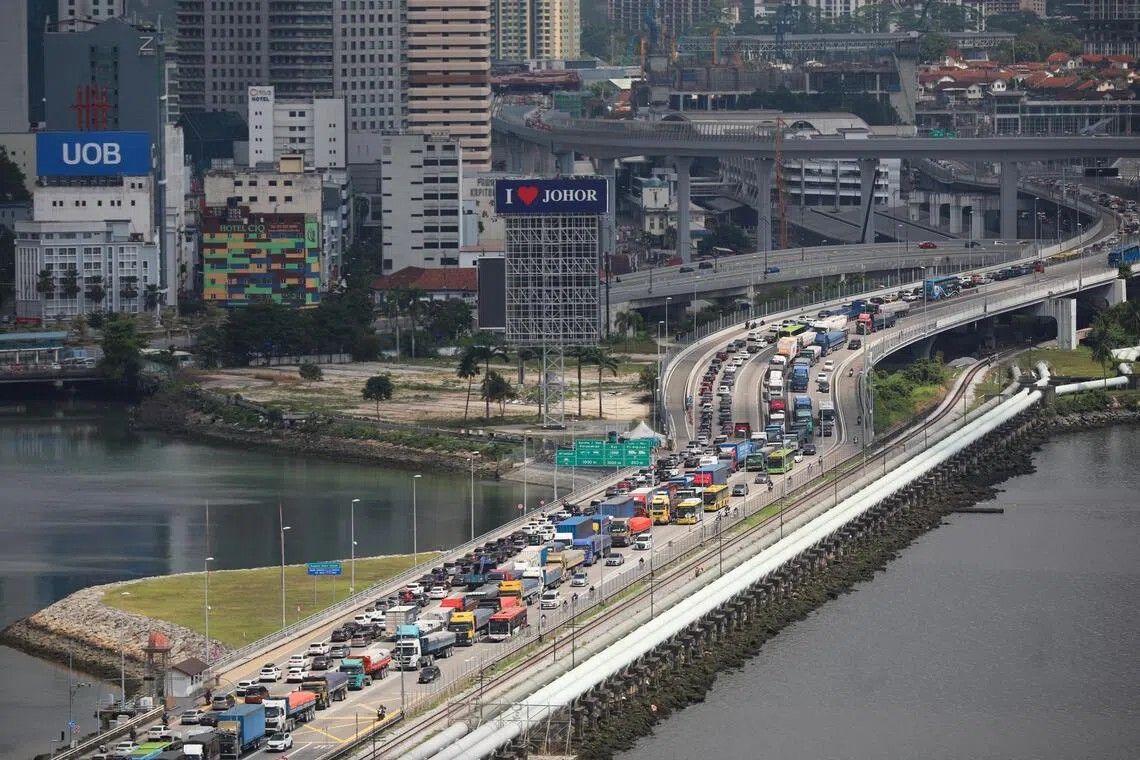
Motorists crossing between Singapore and Malaysia should brace for substantial congestion at the Woodlands and Tuas checkpoints during the forthcoming National Day long weekend spanning August 7 to 10. The Immigration and Checkpoints Authority (ICA) has issued guidance suggesting that travellers adopt strategic planning approaches, with particular emphasis on shifting journeys away from traditional peak periods to either early morning or late evening slots when traffic flows more freely.
The advisory comes following sustained pressure on both land borders during successive holiday periods. Between late May and end-June, encompassing celebrations for Hari Raya Haji, Vesak Day, and the school break, more than 18 million individuals transited the two checkpoints. A single day in mid-June saw the system process over 598,000 travellers, eclipsing the previous record of 589,000 set in December 2025. During peak operating hours, vehicle-borne travellers faced immigration processing delays stretching to three hours, substantially exacerbated by traffic backups originating from the Malaysian side.
For Malaysian readers particularly, the significance extends beyond mere inconvenience statistics. The Woodlands and Tuas crossings represent critical arteries for cross-border commerce, tourism, and daily commuting patterns that bind the two nations. Congestion at these points reverberates through Malaysian highway networks, affecting returnees from weekend shopping expeditions in Singapore, business travellers, and regional supply chains dependent on smooth passage.
ICA has simultaneously intensified its operational posture across all checkpoint facilities since late February, instituting enhanced security protocols in response to the evolving global security landscape. Recent developments in Middle Eastern geopolitics have prompted elevated vigilance measures that, while necessary from a security standpoint, contribute additional processing time during immigration clearance phases. Travellers should anticipate that security thoroughness, combined with volume pressures, creates compounding delays.
To mitigate congestion, ICA actively promotes digital solutions accessible to cross-border users. The MyICA mobile application generates QR codes enabling expedited immigration processing, bypassing certain conventional queue segments. For motorcycle riders and pillion passengers, facial recognition technology under the New Clearance Concept has yielded demonstrable efficiency improvements. Comparative analysis shows this innovation has elevated clearance capacity by over 35 percent during departure surges, translating into an additional 7,600 travellers hourly against pre-pandemic 2019 baselines. Adoption of these technological pathways represents perhaps the most concrete step individual travellers can undertake to minimise personal waiting periods.
The broader context reveals systemic strain points within bilateral border infrastructure. While Singapore has modernised clearance mechanisms, volume growth consistently challenges capacity. Malaysian authorities operating from their side of the international boundary face analogous pressures. The 52 traffic-related violations and dangerous driving incidents recorded during the May-June period illustrate how congestion-induced frustration precipitates behavioural deterioration. Queue-cutting, lane discipline breaches, and aggressive manoeuvres endanger other travellers whilst paradoxically extending overall clearance times by disrupting traffic flow coherence.
Enforcement responses underscore the seriousness with which authorities approach checkpoint conduct. Violators face progressive consequences including referral to Traffic Police for formal investigation and prosecution, mandatory repositioning to the rear of queues, and in severe cases, temporary or permanent bans on Singapore entry. Such sanctions represent meaningful deterrents for repeat offenders and those contemplating risky shortcuts.
For regional business interests, the checkpoint congestion during holiday periods raises strategic questions about cross-border logistics optimisation. Corporations managing just-in-time supply chains increasingly factor in buffer time allowances for land-border transits, effectively adding hidden costs to Malaysian-Singapore commerce. The concentration of travel during defined holiday windows suggests potential benefits from demand flattening through flexible holiday scheduling policies or staggered school holiday calendars, though such systemic adjustments require bilateral coordination.
ICA's recommendation that travellers monitor real-time traffic conditions before departure reflects technological integration into border management. Digital dashboards and smartphone applications providing live congestion updates enable informed decision-making. Combined with strategic timing choices, such information accessibility transforms border-crossing from a somewhat passive endurance test into an actively managed logistics problem.
Looking toward the National Day weekend, the convergence of holiday leisure travel with intensified security postures and elevated volume expectations creates a complex operational environment. Compliance with officer directives, observance of lane discipline, and restraint from aggressive manoeuvres collectively determine whether the checkpoint system functions at acceptable efficiency levels or descends into gridlock. Individual traveller behaviour, aggregated across thousands of daily transits, ultimately determines congestion severity as much as infrastructure capacity or technological systems.
Malaysians planning weekend excursions to Singapore or returnees from shopping trips should treat these advisory warnings seriously. The cost of ignoring recommended practices extends beyond personal inconvenience—widespread non-compliance cascades into systemic dysfunction affecting business commuters, courier services, and regional freight movement. Conversely, adoption of suggested practices including early morning travel, digital clearance methods, and advance journey planning offers tangible returns in time savings and stress reduction during what otherwise risks becoming a frustrating border-crossing experience.

