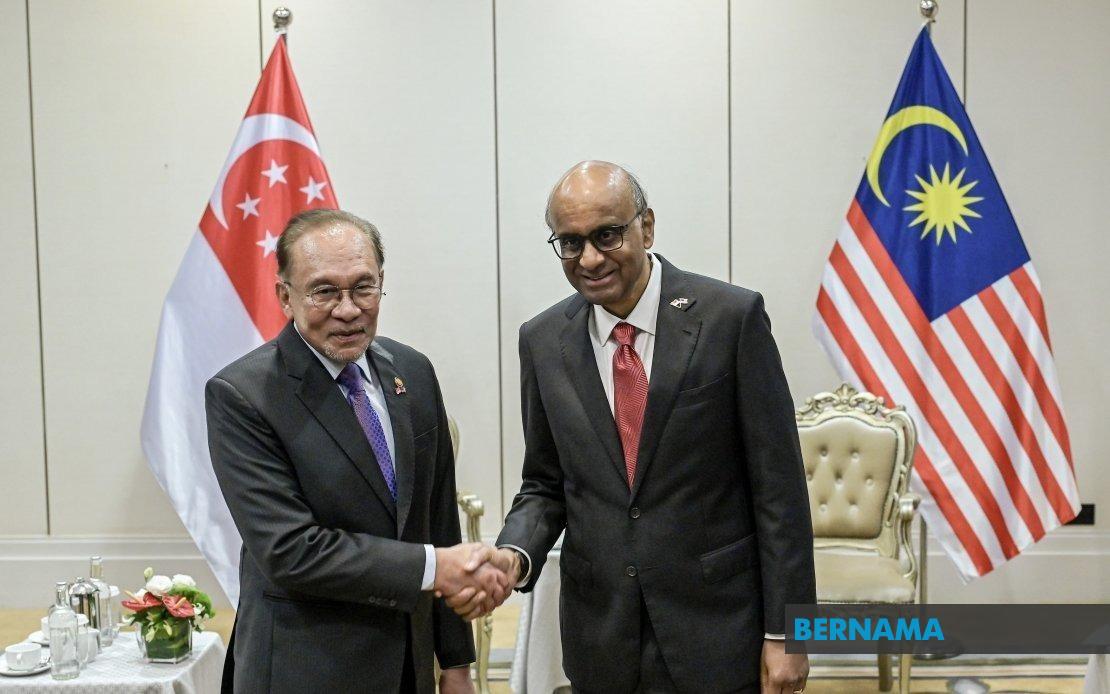
Singapore and Malaysia have moved to deepen their bilateral partnership across multiple strategic sectors, with both nations identifying food security and energy as priority areas for enhanced collaboration. The commitment emerged during a series of high-level engagements centred on President Tharman Shanmugaratnam's first state visit to Malaysia, which runs from July 12 to 15. The dual focus on these foundational sectors reflects growing recognition in both capitals that regional stability and prosperity depend on securing reliable supplies of critical resources.
During a courtesy call on Monday, Prime Minister Datuk Seri Anwar Ibrahim and President Tharman used the occasion to reaffirm the centrality of cooperation between the two neighbouring nations. Singapore's Foreign Ministry emphasized that the two leaders underscored the importance of working together to address shared challenges, particularly in sectors where one nation's vulnerabilities can become a broader regional concern. For Malaysia and Singapore, both heavily dependent on integrated supply chains and cross-border resource flows, such alignment carries practical weight beyond ceremonial exchange.
The ceremonial dimensions of Tharman's visit underscored the significance both governments attach to the relationship. Upon arrival, the president and his wife Jane Ittogi Shanmugaratnam received a full state welcome at Istana Negara, where they were received by His Majesty Sultan Ibrahim, King of Malaysia, and Her Majesty Raja Zarith Sofiah, Queen of Malaysia. The formal protocol extended beyond the federal capital: on Tuesday, Tharman held separate engagements with the Sultan of Selangor, Sultan Sharafuddin Idris Shah, and met with Selangor Menteri Besar Datuk Seri Amirudin Shari, signalling that the visit's scope encompasses Malaysia's state-level administrations as well.
Beyond the immediate resource-sharing agenda, both leaders took the opportunity to discuss the deteriorating geopolitical landscape, particularly developments unfolding in West Asia. The Singapore Foreign Ministry noted that both Tharman and Anwar stressed the necessity of upholding international law in the face of mounting regional tensions. This sentiment carries particular resonance for Southeast Asian nations that depend on predictable global order and maritime freedoms to sustain their economies. The leaders specifically highlighted the United Nations Convention on the Law of the Sea (UNCLOS) as the foundation for regional stability, a pointed reference given longstanding maritime disputes and the imperative of maintaining open sea lanes through Southeast Asian waters.
Freedom of navigation emerged as a shared concern, reflecting both countries' interests in preserving unimpeded commercial passage through critical chokepoints. For Singapore, a global shipping hub, and Malaysia, a nation with significant maritime trade interests, ensuring that vessels can transit disputed waters without disruption remains essential to economic resilience. The explicit reaffirmation of UNCLOS principles suggests that despite bilateral differences that occasionally arise, both governments see alignment on international maritime governance as essential to regional peace.
Beyond security considerations, the two sides identified several emerging areas for practical collaboration. Technical and vocational education represents one avenue, addressing workforce development needs as both economies increasingly pivot toward higher-value manufacturing and services. Climate adaptation and flood mitigation also featured prominently in discussions with Selangor, reflecting the growing urgency both nations attach to environmental challenges. Rising sea levels and intensifying monsoon patterns pose genuine threats to both countries' low-lying areas, and pooling expertise and resources could yield mutual dividends.
The startup ecosystem emerged as another frontier for cooperation, signalling both governments' recognition that innovation-driven growth will shape their economic trajectories in coming years. Singapore has long cultivated a reputation as a regional technology and entrepreneurship hub, while Malaysia increasingly seeks to develop its own innovation capacity. Facilitating knowledge transfer, investment flows, and talent mobility between the two startup communities could accelerate growth in both markets and deepen economic interdependence.
President Tharman's explicit welcome of expanded exchanges between Singapore and Selangor indicates that the partnership agenda extends beyond federal-level relations. This devolved approach reflects a pragmatic understanding that state governments control significant development budgets and sectoral policies. Strengthening direct links between Selangor and Singapore could unlock new opportunities in urban planning, green technology, and financial services, areas where Singapore's experience and capital could complement Selangor's growth trajectory.
The broader significance of this diplomatic engagement lies in its reassertion of partnership during a period of global uncertainty. As great-power competition intensifies and regional geopolitical tensions mount, smaller nations like Malaysia and Singapore benefit from demonstrating solidarity and expanding the architecture of cooperation. The joint emphasis on international law and UNCLOS, delivered at a moment when maritime disputes persist across Asia, sends a signal to the broader region that established frameworks remain relevant and binding. For Malaysian readers, the visit underscores their nation's role as a crucial partner for one of Asia's most influential city-states, reinforcing Malaysia's voice in regional affairs while advancing concrete interests in energy, food, and economic innovation.

