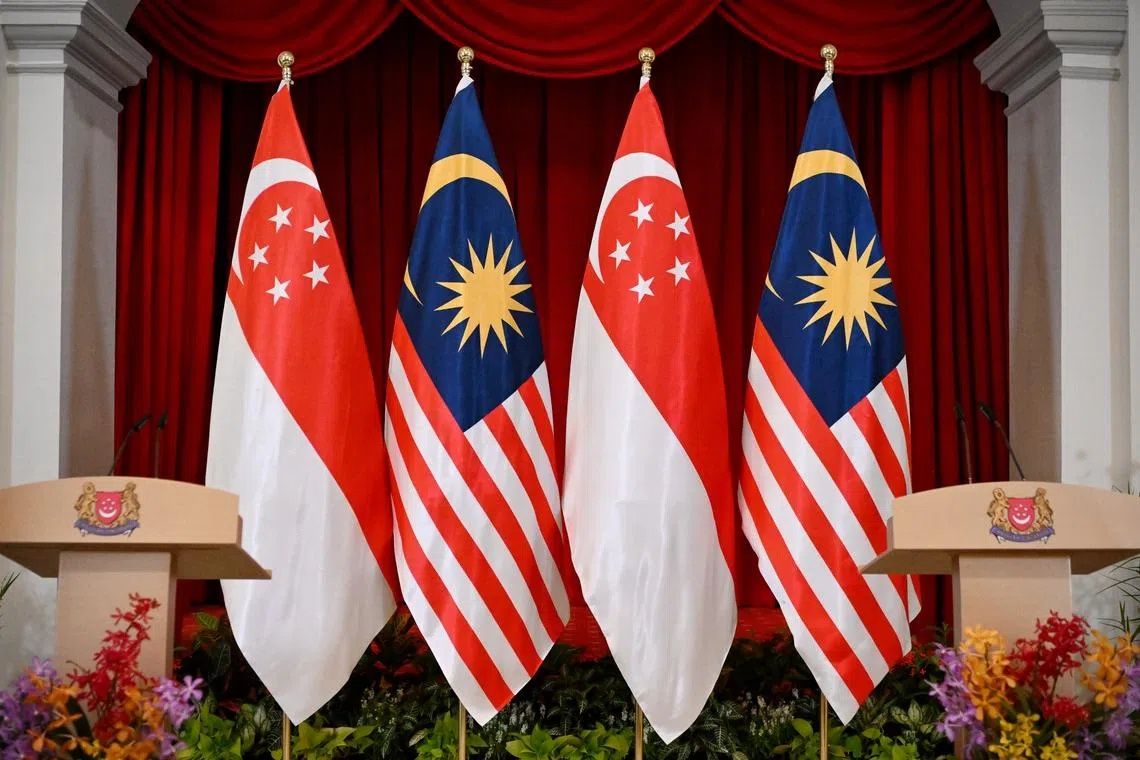
President Tharman Shanmugaratnam of Singapore has reaffirmed his country's commitment to deepening its partnership with Malaysia, emphasising that occasional disagreements over specific matters should never undermine the broader relationship that has flourished over six decades. Speaking ahead of his four-day state visit to Malaysia at the invitation of King Sultan Ibrahim Sultan Iskandar, the President outlined a vision of bilateral cooperation rooted not in transactional interests but in mutual respect and genuine understanding of each nation's aspirations.
The relationship between these two neighbouring economies has matured through a deliberate approach to managing sensitive and complex issues, rather than allowing them to fester beneath the surface. President Tharman acknowledged that Singapore and Malaysia have navigated numerous thorny bilateral matters over the years, an unsurprising reality for close neighbours sharing a complex historical past. Yet both governments have consistently resisted the temptation to remain trapped by historical grievances, instead choosing to address disputes through calm dialogue grounded in international law and reciprocal respect for sovereignty.
Central to this success is the reservoir of trust that has accumulated among leaders, officials, and ordinary citizens across both sides of the border. This foundation of familiarity and confidence creates essential space for managing disagreements without allowing them to spiral into broader conflict. President Tharman pointed out that regional stability does not depend on the absence of disputes—an unrealistic expectation in any neighbourhood—but rather on the maturity and discipline to resolve them responsibly. The Singapore-Malaysia model, he suggested, demonstrates principles of dialogue and restraint that are increasingly vital for Asean and the wider Indo-Pacific region amid rising geopolitical tensions.
The presidential visit itself carries symbolic weight, continuing a tradition that was reaffirmed when Sultan Ibrahim made his first overseas state visit since ascending to the throne in January 2024 to Singapore in May that year. These high-level exchanges reinforce the importance of maintaining diplomatic channels and building understanding across multiple levels of government and society. Such engagements signal to both populations and international observers that the two nations view their relationship as sufficiently important to warrant regular, substantive interaction at the highest levels.
President Tharman stressed that maintaining this partnership requires proactive effort, particularly among younger generations who may lack the natural familiarity that characterised earlier decades. Bilateral exchange programmes, youth leadership forums, and community projects are not mere ceremonial gestures but essential infrastructure for sustaining cross-border friendships and understanding. The deepening and widening of personal and professional connections across the border represents a long-term investment in resilience against future misunderstandings or crises.
Looking outward, President Tharman identified multiple domains where Singapore and Malaysia can expand cooperation to mutual advantage. In an era of fracturing global trade systems and intensifying great power competition, both nations stand to benefit significantly from closer regional integration and supply chain coordination. Joint development initiatives such as the Johor-Singapore Special Economic Zone and the RTS Link exemplify how combining respective strengths can yield win-win outcomes that enhance prosperity for both peoples.
Energy and climate cooperation emerges as a particularly promising avenue. Both countries face pressing imperatives to transition toward renewable energy and build carbon resilience, challenges that demand regional solutions and cross-border partnerships. By coordinating renewable energy projects and carbon credit mechanisms, Singapore and Malaysia can reduce their individual vulnerabilities while contributing to broader regional sustainability goals. Such cooperation demonstrates how traditional bilateral partnership can evolve into sophisticated collaboration addressing contemporary global challenges.
President Tharman also emphasised the crucial role both nations must play in preserving Asean's centrality in regional affairs. Malaysia's successful assumption of the Asean chair in 2025 yielded significant achievements, notably the admission of Timor-Leste as the grouping's 11th member, a milestone reflecting Asean's continued capacity to expand and adapt. Singapore and Malaysia, as established Asean members, bear responsibility for ensuring the bloc remains a coherent and trustworthy partner capable of advancing regional peace and stability. This commitment becomes even more significant as Singapore prepares to assume the Asean chair in 2027, requiring groundwork and consensus-building in the intervening period.
The President invoked a Malay proverb, "jiran sepakat membawa berkat"—neighbours in agreement bring blessings—to encapsulate the philosophical foundation underlying the Singapore-Malaysia relationship. This aphorism captures an essential truth: two adjacent nations that choose cooperation over confrontation inevitably generate prosperity and security that transcends what either could achieve in isolation. The phrase's use by Singapore's President underscores the cross-cultural resonance of the partnership and the willingness of both sides to draw on shared regional values and wisdom.
President Tharman's framing of the relationship as fundamentally built on affection rather than mere strategic calculation represents a notable emphasis in contemporary diplomatic discourse, where realpolitik considerations often dominate. His assertion that "we are each better for working together, respecting, and having affection for each other" suggests a vision of statecraft in which emotional bonds and genuine regard complement rational interest calculations. This humanistic dimension may prove especially important in an international environment increasingly characterised by suspicion, zero-sum competition, and the weaponisation of trade and technology.
The visit and accompanying statements arrive at a moment when regional stability faces mounting pressures from global supply chain disruptions, climate instability, and power rivalries that threaten to pull Southeast Asian nations in conflicting directions. In this context, the Singapore-Malaysia relationship serves as both a practical model and a symbolic anchor, demonstrating that mature, mutually respectful engagement between neighbours remains possible and preferable to drift or confrontation. President Tharman's emphasis on regular engagement across all societal levels—leaders, politicians, officials, businesses, and communities—reflects understanding that sustainable partnerships require constant renewal and reinforcement at multiple points within both societies.
The 60-year trajectory of the Singapore-Malaysia relationship has not been frictionless, yet its fundamental resilience derives from institutional mechanisms, personal relationships, and shared commitment to dialogue that both sides have deliberately cultivated. As both nations confront an increasingly complex regional environment and mounting global challenges, this accumulated trust and demonstrated capacity for mature conflict management represent valuable assets. President Tharman's recent statements appear designed to reinforce these foundations while signalling willingness to expand cooperation into new domains, from economic integration to energy transition to regional institution-building, ensuring the partnership remains dynamic and relevant to contemporary needs.

