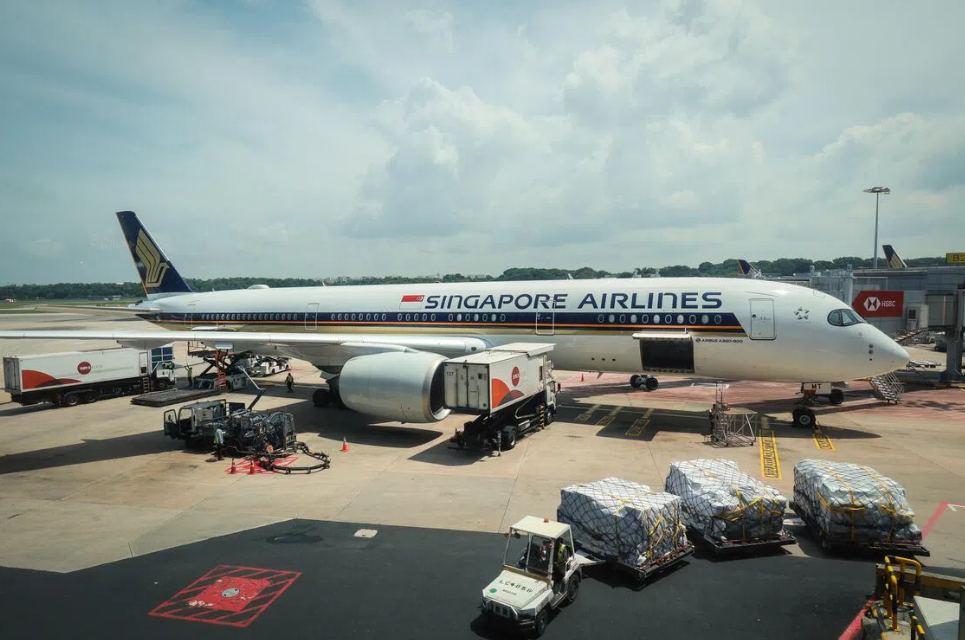
Singapore Airlines' premium service connecting the city-state to New York encountered an unexpected disruption when Flight SQ22 turned back to Changi Airport in the early morning hours of August 13 following a mechanical fault shortly after departure. The aircraft, having departed at approximately 11.35pm the previous evening, had managed to climb to operational altitude before the crew identified the problem and made the decision to return to base. The development interrupted what was intended to be one of the world's most demanding commercial aviation routes, spanning roughly 16,700 kilometres across multiple continents and requiring more than 18 hours of continuous flight time.
The airline's official statement provided limited technical details about the nature of the malfunction, citing only that the Airbus A350-900 had experienced an unspecified technical issue necessitating the return. This ultra-long-range aircraft represents the pinnacle of modern aviation engineering, designed specifically for extended routes that push the boundaries of commercial flight operations. The A350-900 configuration allows SIA to operate this gruelling trans-Pacific corridor without intermediate stops, a capability that demands exceptional aircraft reliability and crew endurance management. The decision to divert, while operationally conservative, underscores the airline's commitment to ensuring that any identified concerns are addressed before resuming such an extended journey.
The logistics of managing the situation involved directing the aircraft to a remote maintenance bay at Changi rather than a standard terminal gate, a decision that reflected the complexity of the technical work required. The 133 passengers and 17 crew members were subsequently transported via coach to the main terminal, where they waited while engineering teams diagnosed and rectified the problem. This intermediate holding period, though undoubtedly frustrating for the affected travellers, allowed the airline to maintain operational control over a situation that could have resulted in significant cascading delays across the SIA network and its customer connections worldwide.
A critical operational constraint that influenced the airline's response involved regulatory limits on crew flight duty periods. International aviation regulations impose strict maximum working hours for flight crews to ensure fatigue does not compromise safety during these marathon-distance flights. Because the original crew members had already spent considerable time on the aircraft before the return, permitting them to continue on the replacement flight would have violated these protective regulations. Accordingly, SIA had to introduce a fresh crew for the rerouted service, further complicating the logistics but ensuring compliance with international safety standards that apply uniformly across the industry.
The replacement aircraft lifted off from Changi at 5.41am on August 13, roughly six hours after the initial departure. Despite this substantial delay in the departure schedule, the substitute flight ultimately reached Newark Liberty International Airport on schedule for local conditions, touching down at 12.15pm Eastern Time the same day. This outcome reflected both the aircraft's capacity to make up time during the extended flight and the generally favourable wind patterns that typically assist westbound trans-Pacific operations. The successful completion of the journey by the replacement service demonstrated that while the initial technical issue necessitated a turnback, the underlying flight schedule remained achievable once the mechanical concern had been addressed.
Passenger experience during the disruption appears to have generally met airline standards for service recovery, according to available feedback. The airline distributed meal vouchers to those waiting in the terminal, a gesture that reflected SIA's acknowledgment of the inconvenience imposed. The carrier subsequently facilitated rebookings for affected customers whose original New York arrival had been delayed, ensuring that connecting flights and onward travel arrangements could be accommodated with minimal disruption. This proactive approach to managing downstream consequences distinguished the operational response from a purely mechanical standpoint.
However, passenger sentiment regarding transparency revealed a gap in the airline's communication strategy. A Reddit post from one traveller, while praising SIA's overall handling of the situation, highlighted frustration with the absence of specific information about the technical malfunction and the reasons why luggage remained inaccessible during the extended ground time. This feedback illustrates a broader tension in modern aviation between operational caution and passenger expectations for detailed information. Airlines often face competing pressures: revealing too little leaves customers anxious and sceptical, whilst speculating too freely about technical matters can create panic or invite unwanted social media speculation about aircraft safety.
The SQ22 route represents a benchmark achievement in commercial aviation, exemplifying the capabilities of contemporary wide-body aircraft and the sophisticated operational frameworks that enable them to function reliably. The service operates amongst the longest non-stop commercial flights globally, competing with routes such as Singapore to Los Angeles and Dubai to San Francisco. Any disruption to such flagship routes carries implications beyond the immediate 150 passengers affected; it reflects on an airline's reputation for dependability at the premium end of the market, where customers often pay significantly for reliability and schedule adherence. The SIA incident, whilst successfully managed in terms of safety and eventual customer relocation, nonetheless underscores the mechanical and logistical complexity inherent in maintaining such extended operations.
From a Southeast Asian perspective, this event demonstrates the operational sophistication required to maintain Singapore's position as a regional aviation hub. Changi Airport's infrastructure, including its remote parking facilities and maintenance capabilities, proved adequate to handle the emergency scenario without generating cascading failures that might have compromised other airport operations. The seamless coordination between airline operations, airport services, and regulatory oversight reflects decades of operational excellence that underpins the broader aviation ecosystem throughout the region. Such incidents, when managed professionally, ultimately reinforce confidence in the safety systems that protect millions of passengers annually across Asia-Pacific routes.
Singapore Airlines' response ultimately prioritised the safety principle that governs all aviation decision-making: no schedule pressure overrides mechanical integrity or crew fatigue management. The inconvenience imposed on passengers, whilst genuine, remained secondary to ensuring that the aircraft and crew were in optimal condition for an 18-hour transoceanic flight. The airline's apology and service recovery measures reflected this hierarchy whilst attempting to mitigate customer frustration. Looking forward, the incident may prompt consideration of enhanced passenger communication protocols during technical diversions, balancing transparency with appropriate caution regarding sensitive operational details.

