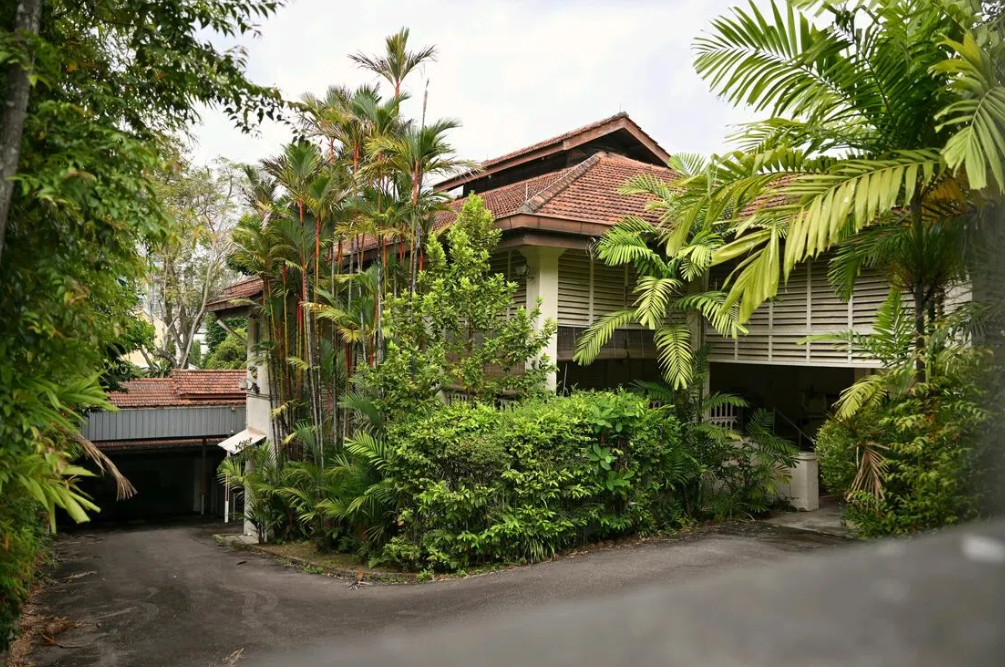
Singapore has formally completed the acquisition of 38 Oxley Road, the historic pre-war bungalow where founding Prime Minister Lee Kuan Yew's family once resided and where crucial discussions among the city-state's early leaders took place. The Government took possession of the property on July 31, with the Singapore Land Authority and National Heritage Board confirming the transaction through an official statement. The acquisition amount was not disclosed by either agency.
The two-year journey to acquire the property began when the Government announced its intention to gazette the site as a national monument in November 2025, with formal gazettal occurring on December 12 that year. Following a compulsory acquisition order gazetted in January 2026, the Government has now secured full ownership of the property, removing it permanently from private hands. The acquisition marks a significant milestone in Singapore's effort to preserve buildings and spaces of historical importance, ensuring they can be protected and adapted for public benefit rather than remaining subject to private ownership decisions.
The National Heritage Board will now undertake detailed assessments of the property to determine the most appropriate way to transform it into a public space while honouring the complex wishes of its former occupants. In the meantime, necessary maintenance and conservation work will be carried out to prevent deterioration of the structure, which remains closed to the public during this planning phase. Heritage experts will need to carefully balance the building's architectural significance with its historical importance to Singapore's political development, a task that requires sensitive research into the site's role during the nation's founding period.
The acquisition has concluded a bitter family dispute that dominated headlines and raised constitutional questions about property rights, filial respect, and state power. Lee Hsien Yang, the former owner and younger son of Lee Kuan Yew, had long opposed the preservation and acquisition of the property, claiming it contradicted his father's explicit wish to have the house demolished after his death. In a statement issued immediately after the acquisition, Lee Hsien Yang described the Government's action as "a repudiation" of his father's values and a disregard for the late leader's longstanding intentions regarding the family home.
The dispute intensified because Lee Hsien Yang and his sister, the late Lee Wei Ling, had alleged that Senior Minister Lee Hsien Loong, their older brother, sought to preserve the building for political purposes rather than out of genuine concern for heritage conservation. This family conflict spilled into the public domain through parliamentary statements and media commentary, creating an unusual situation where Singapore's leadership appeared divided over how to treat one of the nation's most symbolically important private properties. The controversy touched upon deeper questions about state authority, property ownership, and how Singapore should navigate situations where government interests in preservation clash with family wishes.
Senior Minister Lee Hsien Loong, through parliamentary statements, denied the accusations and raised concerns about the circumstances surrounding the preparation of their father's final will, suggesting potential irregularities in how Lee Kuan Yew's final wishes were documented and communicated. This unprecedented public disagreement between senior members of Singapore's political establishment highlighted the exceptional nature of the dispute and underscored how deeply personal and political considerations became entangled in debates about the property's fate.
The Government has consistently framed the acquisition as an effort to safeguard a site of genuine national heritage value. Culture, Community and Youth Minister David Neo has indicated that the property will eventually be developed into a public heritage space, potentially in the form of a heritage park that Singaporeans can visit and learn from. This vision represents a significant shift from the property's status as a private family residence to its role as a community asset that can educate future generations about Singapore's founding era and the leaders who shaped the nation's early trajectory.
Once the site is converted to public access, it will join Singapore's growing portfolio of heritage sites that serve as living museums and educational resources. The transformation of 38 Oxley Road into a public space reflects a broader regional trend in Southeast Asia, where governments increasingly recognise the value of preserving architectural heritage and turning significant historical sites into accessible cultural resources. For Malaysian heritage enthusiasts and policymakers, Singapore's approach to the acquisition and planned preservation of 38 Oxley Road offers lessons in how to balance public interest in historical preservation against private ownership rights and family wishes.
The property itself represents architectural and historical significance beyond its association with Lee Kuan Yew. The pre-war bungalow embodies a particular era in Singapore's urban development and showcases building styles that have largely disappeared from the island's landscape due to rapid modernisation. Preserving the structure allows future generations to understand how Singapore's leaders lived and worked during the formative decades of nationhood, providing tangible connections to the city-state's political and social history.
The National Heritage Board's pending detailed study will determine how best to present the property to the public while ensuring its structural integrity. Planners will need to decide which areas should be restored to period authenticity, which aspects should be explained through interpretive signage or digital media, and how the site can accommodate visitor flows without compromising the building's conservation. These decisions will require balancing educational value against preservation imperatives and visitor management considerations.
The acquisition also establishes important precedent for how Singapore's Government will handle future disputes between heritage preservation and private property rights. While compulsory acquisition powers exist in Singapore's legal framework, their exercise in this case—involving the home of a beloved founding figure—signals the state's willingness to invoke such powers when it determines that national heritage interests outweigh private ownership claims. This approach differs from some other democracies where heritage preservation typically requires private owner consent or negotiated voluntary transfers.
As Southeast Asian nations grapple with rapid urbanisation and heritage loss, Singapore's decision to acquire and preserve 38 Oxley Road demonstrates a commitment to maintaining tangible links to the region's recent political history. The site will eventually serve as a resource for researchers, students, and citizens seeking to understand how Singapore's founding generation navigated the transition from colonial rule to independent statehood, making it a valuable addition to the region's cultural and educational infrastructure.

