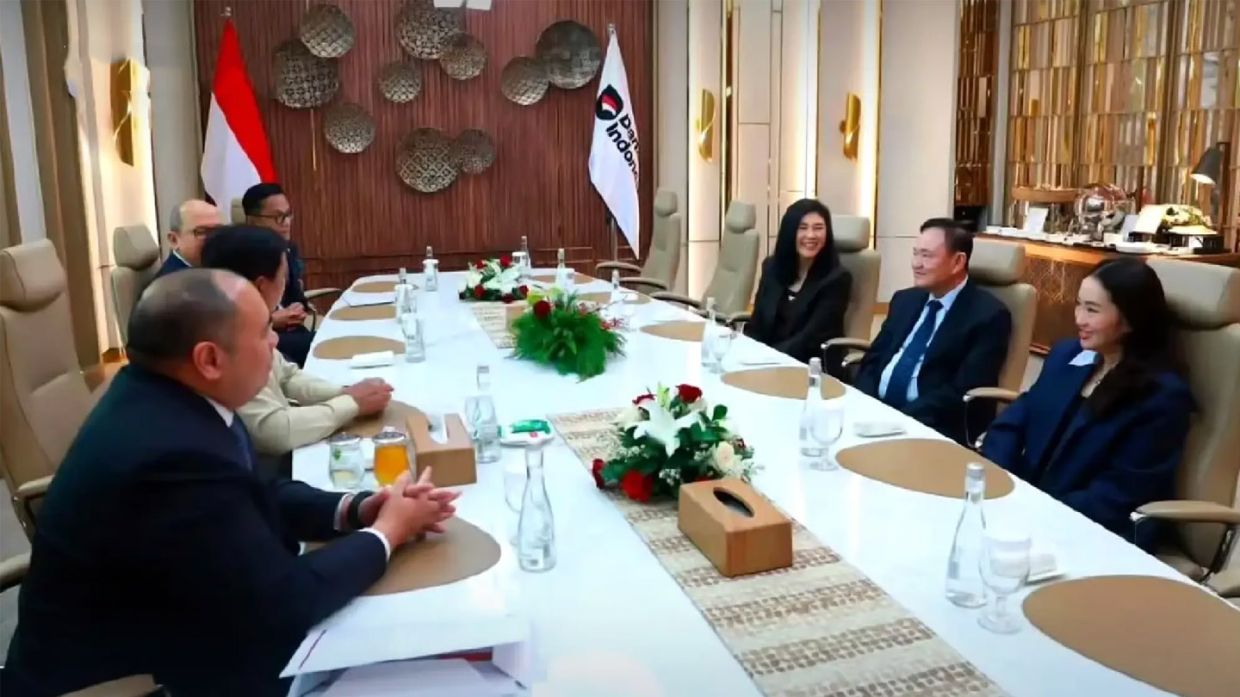
Three members of Thailand's influential Shinawatra family convened with Indonesian President Prabowo Subianto in Jakarta this week for high-level discussions centred on investment prospects and regional economic development. The gathering brought together Thaksin Shinawatra, his younger sister Yingluck Shinawatra, and his daughter Paetongtarn Shinawatra—each of whom has served as Thai prime minister at different points over the past two decades—for substantive talks at the Danantara building on Thursday, July 9. The meeting underscores the continued political and business relevance of the Shinawatra clan within Southeast Asian circles despite the turbulent domestic history that has defined each family member's time in Thai politics.
Thaksin led Thailand from 2001 until his ouster in a 2006 military coup, establishing himself as a transformative yet controversial figure in modern Thai governance. His younger sister Yingluck subsequently assumed the premiership from 2011 to 2014 before likewise facing political upheaval, while Paetongtarn, representing a generational shift, took office as prime minister in 2024 and served until 2025. The breadth of their collective experience in national leadership has afforded the family considerable diplomatic reach across the region, a dimension that appears to have informed Prabowo's receptiveness to the discussions.
The venue for the primary meeting—Danantara, Indonesia's state-owned investment management institution—signals the substantive nature of the engagement. Danantara operates as a custodian and developer of Indonesia's strategic national assets, tasked with optimising and nurturing critical economic holdings in service of the country's broader transformation agenda. The agency functions as a nexus between government policy and market-driven returns, making it a natural platform for discussions about cross-border capital flows and long-term economic cooperation. Indonesian Cabinet Secretary Teddy Indra Wijaya confirmed the meeting's occurrence through the Cabinet Secretariat's official channels, with photographs documenting the gathering alongside senior Danantara leadership.
Thaksin's role within Danantara's institutional ecosystem provided a direct conduit for the discussions. He holds a position on the agency's advisory board, giving him both standing and familiarity within Indonesia's highest circles of economic governance. Rather than a peripheral ceremonial appointment, this advisory capacity appears to translate into substantive input on investment direction and strategic planning. During Thursday's engagement, Thaksin shared his perspectives and recommendations directly with Prabowo and Danantara's executive team, leveraging both his historical experience in driving Thai economic policy and his current institutional position.
Danantara's senior leadership roster participating in the talks included formidable figures in Indonesian business and finance. Rosan Roeslani, the agency's group chief executive officer, represented the institution's operational apex, while chief operating officer Dony Oskaria and chief investment officer Pandu Sjahrir brought technical expertise in execution and capital deployment respectively. This composition of participants suggests that the conversations transcended ceremonial pleasantries and ventured into concrete territory regarding asset management frameworks, investment methodologies, and potential collaboration models.
The substance of the discussions revolved around three principal pillars: identifying viable investment opportunities, structuring approaches to asset management that align Thai and Indonesian strategic interests, and articulating long-term economic development strategies capable of delivering sustainable returns. For Malaysia and other Southeast Asian economies, such multilateral investment discussions carry implications for regional capital flow patterns and the competitive positioning of different jurisdictions as destinations for substantial capital deployment. The Shinawatra family's engagement with Indonesia's highest levels of economic governance may signal shifting investment attention within the region's largest economy.
Prabowo's government has positioned itself as actively cultivating relationships with international leaders and prominent figures from the global business and political landscape as part of a deliberate strategy to reinforce Indonesia's economic partnerships amid volatile global conditions. The Indonesian president's willingness to host the Shinawatra representatives—including a separate, more intimate gathering at his private Jakarta residence described as warm and cordial—reflects this broader diplomatic calculus. For a nation seeking to diversify its capital sources and deepen ties with neighbouring economies, engagement with established figures like the Shinawatras holds instrumental value.
The timing and manner of these interactions reveal something about contemporary Southeast Asian political economy. Despite legal and political challenges that have dogged individual Shinawatra family members throughout their careers, their accumulated expertise, networks, and capital continue to command attention from state actors across the region. Prabowo's openness to substantive engagement suggests that Indonesia's leadership views the family as genuinely consequential economic actors rather than merely controversial political figures.
From a Malaysian perspective, the Shinawatra-Prabowo meeting serves as a reminder that investment flows and economic cooperation patterns within ASEAN are increasingly driven by personal networks, family business interests, and informal channels of influence operating alongside formal diplomatic machinery. Thailand's approach to positioning itself as a financial hub and investment coordinator within the region appears to leverage exactly these kinds of multifaceted relationships. The Shinawatras' sustained capacity to broker discussions at the highest levels of Indonesian governance reflects their enduring significance as political and economic actors.
The broader implications extend to how state investment vehicles like Danantara are themselves becoming more entrepreneurial and diplomatically engaged in their sourcing of capital and identification of opportunities. Rather than passive holders of state assets, these institutions increasingly function as active dealmakers and relationship builders on the international stage. The presence of Danantara's top-tier executives at Thursday's meeting reflects this institutional repositioning.

