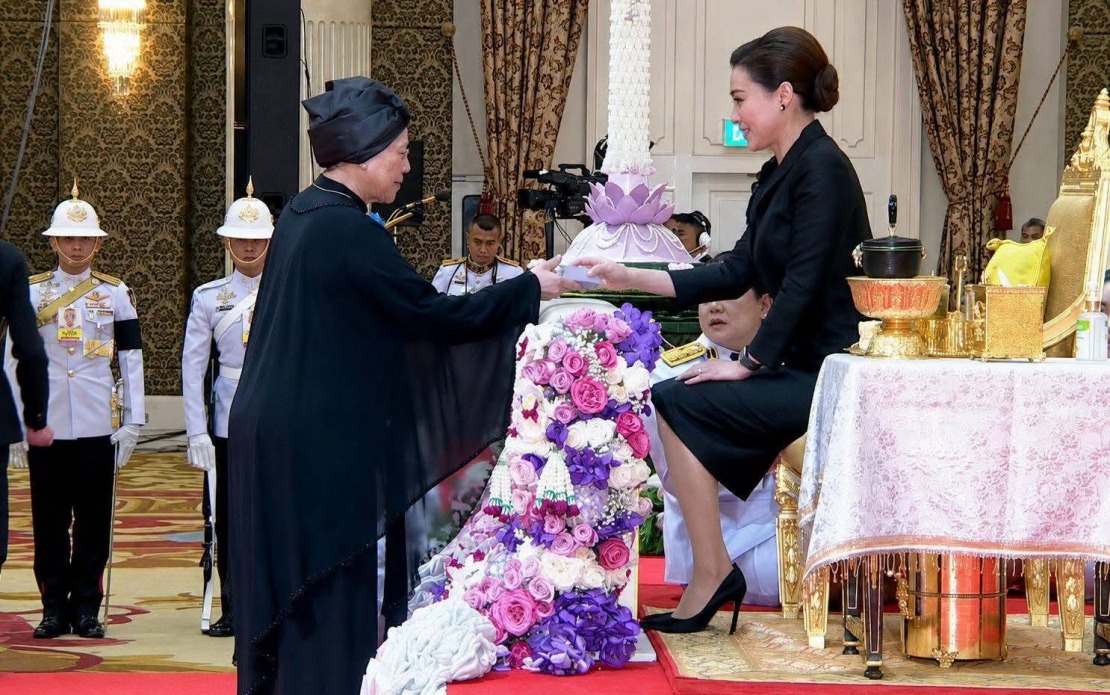
Prime Minister Datuk Seri Anwar Ibrahim has congratulated Prof Emerita Tan Sri Datuk Seri Dr Sharifah Hapsah Syed Hasan Shahabudin on receiving the Outstanding Woman Award for Social Development, conferred by Queen Suthida Bajrasudhabimalalakshana of Thailand. The honour, presented on August 4, reflects not merely an individual achievement but signals broader momentum in how Malaysian women professionals are being recognised internationally for their expertise and dedication to societal advancement.
Anwar, joined by his wife Datuk Seri Dr Wan Azizah Wan Ismail in extending felicitations, positioned the accolade as emblematic of the calibre and capability embedded within Malaysia's female workforce and leadership cohort. The award's international dimension—originating from Thailand's monarchy—carries particular weight in Southeast Asian diplomatic circles, where such recognitions often transcend ceremonial significance and carry implicit acknowledgement of cross-border respect and professional standing.
In remarks shared via social media platform X, the Prime Minister emphasised that Sharifah Hapsah's recognition extended beyond personal accomplishment to represent the broader trajectory of Malaysian women gaining visibility and credibility within global development and social policy frameworks. This framing reflects a deliberate messaging strategy within the MADANI Government to position women's advancement not as a marginal concern but as integral to Malaysia's competitive positioning in the international arena.
The MADANI administration has signalled commitment to expanding institutional pathways for female participation across sectors traditionally dominated by male representation. By publicly celebrating Sharifah Hapsah's achievement, Anwar underscores that such advancement is neither tokenistic nor incidental but reflects deliberate policy orientation. The government's stated intention to ensure women's talent and leadership constitute key pillars of national development addresses longstanding structural barriers within Malaysian institutions.
For Malaysian women professionals navigating careers in academia, governance, and social development, such international recognition carries practical implications. It validates pathways of advancement while simultaneously placing pressure on domestic institutions to create conditions where such excellence can flourish locally. The visibility of achievers like Sharifah Hapsah establishes reference points for younger generations considering leadership trajectories that span government, research, and community engagement.
Anwar's call for the award to inspire continued female participation through knowledge, leadership, and compassion directly invokes the MADANI agenda's foundational principles. MADANI—encompassing prosperity, sustainability, and inclusivity—frames women's participation not as supplementary to development but as essential to its realisation. This rhetorical positioning reflects evolving understanding within Malaysian policymaking that gender diversity correlates with institutional effectiveness and social resilience.
The timing of such recognition during the current parliamentary term carries political significance as well. By publicly celebrating female achievement, the government signals responsiveness to constituencies concerned with women's rights and participation, while simultaneously demonstrating that such advancement generates measurable, internationally-validated outcomes. This narrative counters suggestions that gender-focused initiatives represent administrative burden rather than strategic investment.
Within Southeast Asian context, Malaysia's emphasis on women's leadership positioning positions the nation alongside regional peers pursuing similar advancement strategies. Thailand's conferral of this award to a Malaysian recipient demonstrates the permeable nature of professional recognition within the region, where excellence in social development transcends national boundaries. For Malaysian institutions seeking international partnerships and talent recruitment, such cross-border acknowledgement enhances institutional prestige.
Sharifah Hapsah's specific recognition for social development contributions aligns with Malaysia's stated priorities in healthcare, welfare, and community resilience. Her trajectory exemplifies how expertise in these domains, traditionally undervalued relative to commercial or extractive sectors, increasingly commands international attention and professional prestige. The award signals that Malaysian women are making consequential contributions precisely within areas where regional development challenges are most acute.
Looking forward, the challenge for Malaysian policymakers involves translating such recognition into structural change. Individual awards validate existing excellence but do not automatically expand opportunity pipelines. The MADANI Government's commitment to expanding female participation across sectors requires sustained investment in education, mentorship, institutional reform, and removal of bureaucratic obstacles that constrain women's advancement. Sharifah Hapsah's achievement, celebrated publicly by the Prime Minister, establishes benchmark expectations for similar recognition and advancement throughout Malaysian institutions.
The resonance of this award within Malaysia's policy discourse also reflects broader global momentum toward recognising women's contributions to sustainable development. International frameworks increasingly measure national progress partly through indices of female participation and leadership across sectors. By publicly endorsing Sharifah Hapsah's achievement, Anwar positions Malaysia within this progressive international current while anchoring such positioning to concrete local outcomes.

