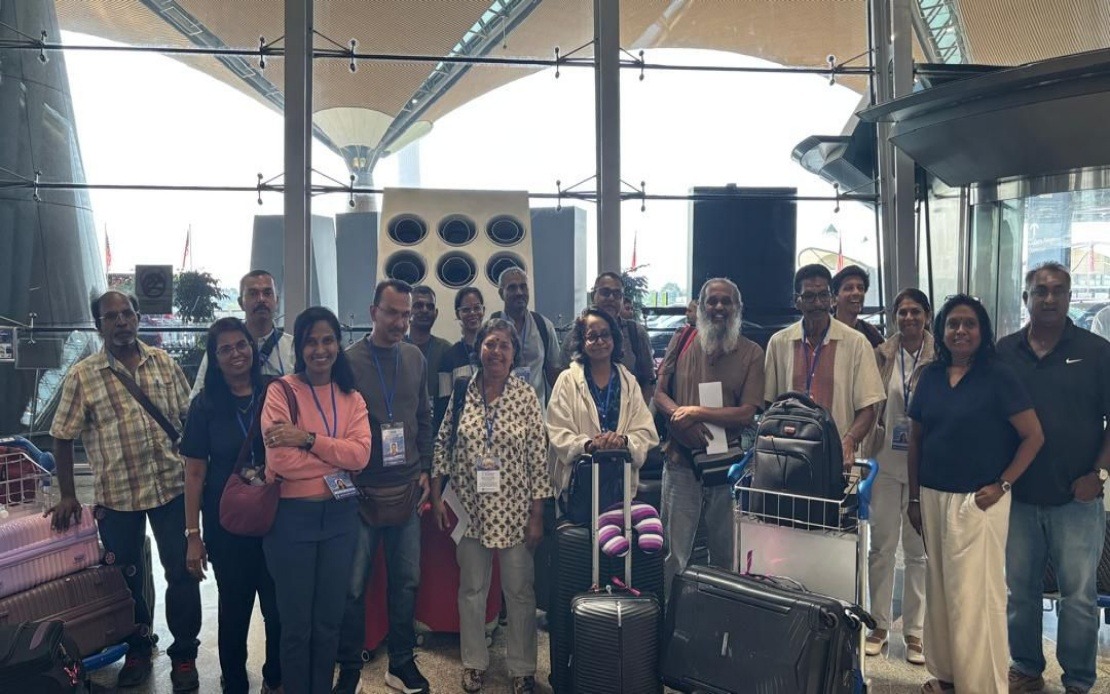
Seventeen Malaysians participating in a religious pilgrimage to Mount Kailash in Tibet have gone silent following catastrophic flash floods that struck Nepal's northern districts on August 26, triggering an urgent search and rescue operation coordinated by the Malaysian government. The group, organised through Nepal-based tour operator Fishtail Tours & Travels, last communicated at 8:18 am Nepal time near the Nepal-Tibet Immigration Checkpoint before all contact abruptly ceased. The incident has sent shockwaves through families in Malaysia waiting for news, with relatives describing the anguish of being cut off from loved ones in a remote and inaccessible region.
R. Logadashini disclosed that four members of her immediate family were among the missing pilgrims: her father S. Raman, aged 59; her mother M. Neelavany, 54; her uncle S. Murukan, 60; and her aunt G. Padmahwathi, 58. The tour group had entered Nepal on August 23 and was scheduled to continue the pilgrimage through to September 5. The final communication received by the family came via WhatsApp at 8:40 am Malaysian time, leaving relatives with no clarity on the group's status or their ability to shelter from the disaster unfolding around them. Logadashini's attempts to obtain information from the travel agency and the Malaysian Embassy in Kathmandu have so far yielded no updates on the situation.
The Ministry of Foreign Affairs (Wisma Putra) reports that fifty-five Malaysians altogether have been flagged as uncontactable following the floods, though the figure includes the seventeen pilgrims and others caught in the affected zone. To date, no official confirmation of Malaysian casualties has been received, leaving families suspended in uncertainty. The Malaysian Embassy in Kathmandu is engaged in intensive coordination with Nepalese authorities, search and rescue teams, travel agencies and other stakeholders to verify the safety and determine the exact locations of the affected Malaysians. Prime Minister Datuk Seri Anwar Ibrahim has intervened directly, ordering all relevant government agencies to prioritise locating and establishing contact with Malaysians impacted by the floods, with diplomatic missions in both Kathmandu and New Delhi mobilised to provide assistance.
The disaster was triggered by heavy rainfall and a glacial collapse in Nepal's Rasuwa and Nuwakot districts, unleashing destructive floodwaters that severed communications infrastructure and destroyed critical road links connecting the affected areas to Kathmandu. This geographical isolation has severely hampered the ability of rescue teams to reach those stranded or injured, compounding the emergency response challenge. The Nepal-Tibet border corridor affected by the flooding is among the busiest trekking and pilgrimage routes in the Himalayan region, regularly traversed by religious devotees heading to Mount Kailash and mountaineers bound for the Everest region, meaning multiple nationality groups may be affected.
In contrast to the alarming situation facing the Fishtail Tours group, another contingent of Malaysian pilgrims has been confirmed safe and unaffected. The team led by renowned Malaysian mountaineer Datuk N. Mohanadas, comprising 56 individuals including 39 Malaysians alongside four Singaporean and three Canadian members, is continuing its Mount Kailash pilgrimage without incident. Mohanadas reported that while his group was aware of the sudden downpour, flash floods and casualties at the Nepal-Tibet border, their location and route remained unaffected by the disaster, allowing them to proceed with their sacred circumambulation of Mount Kailash. The distinction between the two groups underscores how the disaster's impact has been geographically specific, affecting those crossing the border region at the precise moment of the glacial collapse.
The missing Malaysian pilgrims represent a significant cross-section of religious travellers from Malaysia who undertake the challenging Mount Kailash journey for spiritual reasons. This pilgrimage is considered one of the most arduous and meaningful religious journeys undertaken by devotees of Hinduism and other faiths, requiring participants to traverse high-altitude terrain and navigate complex international borders. The fact that seventeen Malaysians are unaccounted for in such circumstances has elevated the incident to a matter of national concern, drawing ministerial attention and coordinating the entire apparatus of Malaysian diplomatic and emergency response capacity in South Asia.
The communications blackout represents a particular challenge in an era of constant connectivity. The last data point families have is now more than twenty-four hours old, leaving significant uncertainty about whether the group sheltered safely, whether injuries were sustained, or whether they remain in the flood zone. Mobile networks in the remote Himalayan region are notoriously unreliable even in normal conditions, and the physical damage to infrastructure from the flooding may mean that restoration of communications could take days even if the group remains unharmed. This technological isolation compounds the emotional toll on waiting families.
The incident highlights the inherent risks associated with adventure and pilgrimage tourism in high-altitude, border regions of South Asia. While Mount Kailash remains a destination of profound spiritual significance, the combination of extreme weather, challenging terrain, and remote location means that disasters can unfold with minimal warning and limited rescue capacity. The flash floods underscore climate change vulnerabilities in the Himalayan region, where glacial instability and unpredictable precipitation patterns are becoming more pronounced. Tourism operators and travellers must increasingly weigh the spiritual rewards of such journeys against genuine physical and logistical hazards.
Malaysia's diplomatic machinery is now engaged in intensive crisis management across two major South Asian capitals. The activation of embassies in both Kathmandu and New Delhi reflects the understanding that information, logistics and rescue coordination may flow through multiple channels, and that regional cooperation will be essential. Nepal's own disaster response infrastructure is already stretched managing domestic casualties and infrastructure damage, so Malaysian officials will need to work within the constraints of an overwhelmed local emergency system while advocating for the safety and priority of their nationals. The coordination challenge is substantial, given the remote location, limited road access and international boundary complications.
For Malaysian families waiting for news, the hours ahead remain intensely anxious. The next critical milestone will be restoration of some form of communication from the region, whether through satellite phones, radio contact by rescue teams or eventually renewed mobile coverage. Officials have indicated they will provide updates as information becomes available, but the reality is that rescue and verification operations in such terrain move slowly. The case underscores the importance of travel insurance, emergency contact protocols and pre-trip communication arrangements that families should establish when relatives undertake journeys to remote international destinations. It also serves as a stark reminder that natural disasters respect neither national borders nor the careful planning of tour operators.

