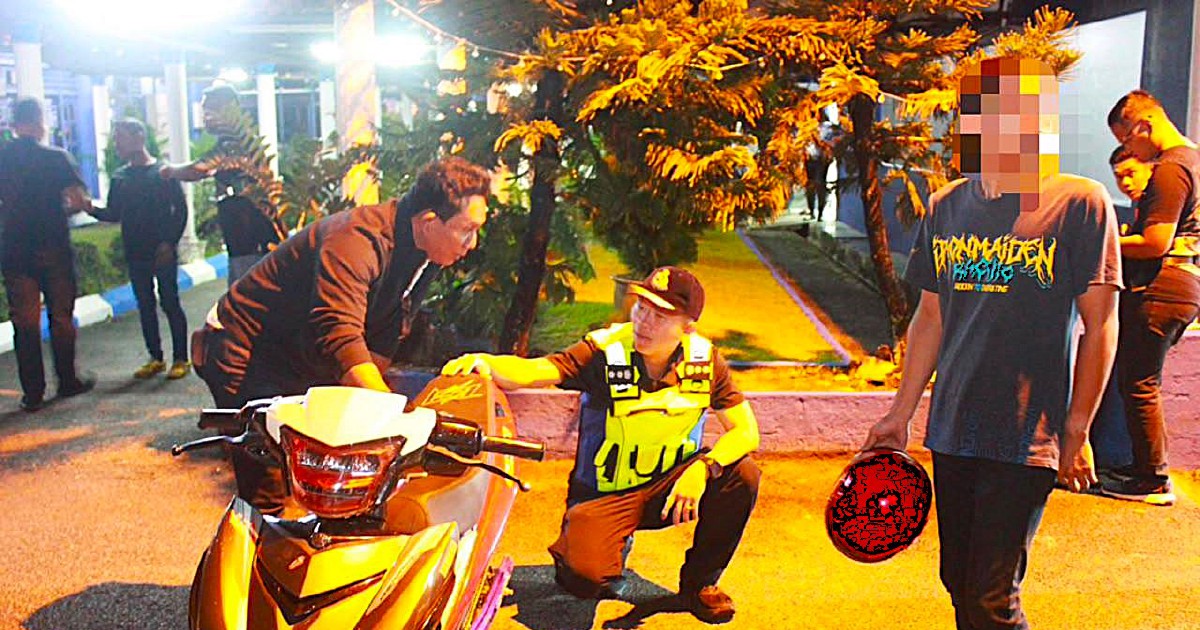
Authorities in Klang executed a targeted enforcement sweep against illegal street racing early today, resulting in the seizure of seven motorcycles and the opening of a criminal investigation into one rider for operating a vehicle in a reckless and dangerous manner. The operation underscores the ongoing commitment by local law enforcement to curtail the prevalence of unauthorised racing activities that have become an increasingly visible concern across the Klang Valley region.
Illegal street racing has emerged as a persistent public order challenge in urban and semi-urban areas of Selangor, with young riders frequently congregating in the dead of night to engage in unregulated competitions on public thoroughfares. These activities pose significant risks not only to the participants themselves but also to innocent motorists and pedestrians who may be traversing the same roads. The early morning timing of today's operation reflects a tactical approach by the Royal Malaysian Police to intercept participants during hours when street racing activity is at its peak and enforcement presence is typically minimal.
The seizure of seven motorcycles represents a substantial material loss for those involved and signals that law enforcement agencies are prepared to escalate enforcement measures beyond issuing traffic summonses. Impoundment of vehicles serves multiple purposes within the criminal justice framework: it removes the instruments through which offences are committed, creates a financial disincentive for participation in illegal activities, and provides authorities with crucial evidence for prosecutorial purposes. The riders affected by this morning's operation will face logistical and financial burdens in attempting to recover their confiscated machines, a consequence that often proves more persuasive than fines alone.
The decision to initiate a formal investigation against one particular rider for reckless and dangerous driving indicates that authorities identified conduct that exceeded the threshold of standard traffic infractions. This classification carries more serious legal consequences and suggests that the rider in question engaged in behaviour deemed to endanger public safety—potentially including excessive speeding, dangerous manoeuvres, or disregard for traffic signals. Charges under reckless and dangerous driving provisions can result in substantial penalties, including imprisonment, hefty fines, and extended periods of license suspension.
For Malaysian readers, particularly those residing in the Klang Valley, this enforcement action reflects a broader pattern of intensified police activity targeting street racing networks. The Klang district, which encompasses both developed urban centres and expanding residential communities, has historically experienced pockets of street racing culture. The geographic proximity to Kuala Lumpur and the extensive road network make the area particularly susceptible to such activities, as riders can quickly relocate if enforcement presence becomes apparent in one location.
The operation carries implications for how regional authorities are recalibrating their approach to tackling organised street racing. Rather than treating such activities as minor nuisances, police forces are increasingly deploying resources for targeted operations during high-activity periods. This represents a shift from reactive responses to proactive enforcement strategies designed to disrupt the networks and gathering points where illegal racing occurs. The timing and execution of today's operation suggest coordination and intelligence gathering that preceded the actual enforcement action.
Community safety concerns have amplified public and political pressure on authorities to address street racing more aggressively. Residents in affected areas have repeatedly raised concerns about noise pollution, traffic dangers, and the general disruption caused by late-night racing activities. Parents and community leaders argue that such conduct normalises traffic law violations among younger members of society and contributes to a culture of disregard for public safety regulations. The seizure of motorcycles demonstrates that authorities are responding to these community concerns with concrete enforcement measures.
The investigation into the rider charged with reckless and dangerous driving will likely involve examination of circumstances surrounding the impounded motorcycles, interviews with witnesses or other participants, and analysis of any available video or audio evidence from the scene. Such investigations can take weeks or months to complete, particularly if authorities seek to establish connections between the individuals involved and identify patterns of repeated offending. Charging decisions will ultimately rest with the public prosecutor, who will evaluate the strength of evidence and the appropriate level of charges based on established legal precedents.
For the broader motorcycle enthusiast community in Malaysia, this operation underscores the critical distinction between legal recreational riding and illegal street racing. Organised track days, motorcycle clubs sanctioned by relevant authorities, and lawful riding activities remain unaffected by enforcement actions targeting illegal racing. However, the operation serves as a warning that participation in unauthorised street racing carries escalating legal consequences as enforcement capabilities improve and sentencing practices become more stringent.
Looking forward, this Klang operation likely represents one element of a sustained enforcement strategy rather than an isolated incident. Police departments across Selangor and other states have signalled their intention to conduct regular operations during identified peak periods for street racing activity. Riders and organisers who continue to participate in illegal racing activities should anticipate increasing operational costs as vehicle impoundment becomes more commonplace, bail and legal expenses accumulate, and the prospect of custodial sentences looms larger. The cumulative effect of such enforcement pressure, when applied consistently and fairly, has historically proven effective in reducing the prevalence of street racing in comparable jurisdictions.

